

Alphabet just did something it almost never does: instead of borrowing, it sold a large block of its own stock — roughly $85 billion of it — to pay for AI compute. Here is exactly what was raised, what is merely authorized, and how much is actually committed.
What Is Alphabet's $85B Equity Raise, and Is It All Committed?
Alphabet's $85 billion equity raise is a three-part stock issuance announced on June 1, 2026 to fund AI infrastructure for Google and Google Cloud — but only part of it is closed cash. It combines a ~$30 billion underwritten public offering, a $10 billion private placement to Berkshire Hathaway, and a $40 billion at-the-market (ATM) program that sells shares over time, expected to start in Q3 2026 . The ATM is authorization, not proceeds in hand.
Quick Answer: Alphabet announced an equity raise on June 1, 2026, first sized at ~$80 billion and upsized to ~$85 billion within 48 hours after the underwritten block was oversubscribed. It funds AI compute. Only the ~$30B public offering and $10B Berkshire placement are committed; the $40B ATM sells shares over time and is not yet cash.
The deal moved fast. It was announced at up to $80 billion, then upsized roughly 48 hours later to the commonly cited ~$85 billion after demand for the underwritten common/capital-stock block outran supply . Press commentary called it one of the largest equity fundraisings on record — larger than the three biggest IPOs combined — though that framing is press-sourced rather than an official ranking, so treat it as plausible-but-unverified .
| Tranche | Size | Mechanism | Timing / certainty |
|---|---|---|---|
| Public offering | ~$30B | Underwritten common/capital stock | Priced and oversubscribed — committed |
| Berkshire Hathaway | $10B | Private placement (anchor) | Committed at announcement |
| ATM program | $40B | Shares sold into open market over time | Expected to begin Q3 2026 — not yet cash |
That distinction matters for anyone modeling the balance sheet. The ~$30 billion underwritten block and the $10 billion Berkshire commitment are firm, but the $40 billion ATM is a program to issue shares gradually, so the full ~$85 billion should not be read as closed proceeds until Alphabet or an SEC filing confirms actual ATM sales . Management tied the raise to AI demand outrunning capacity, with CFO Anat Ashkenazi framing it as a move to optimize financial flexibility .
Final committed proceeds therefore hinge on ATM execution. The exact mechanics — tranche details, share-class split, and how much of the ATM clears — warrant confirmation against Alphabet's 8-K and free-writing prospectus (FWP) filings, neither of which was accessible as primary page text at the time of writing .
Equity Over Bonds: Why Alphabet Reversed Its Capital Strategy
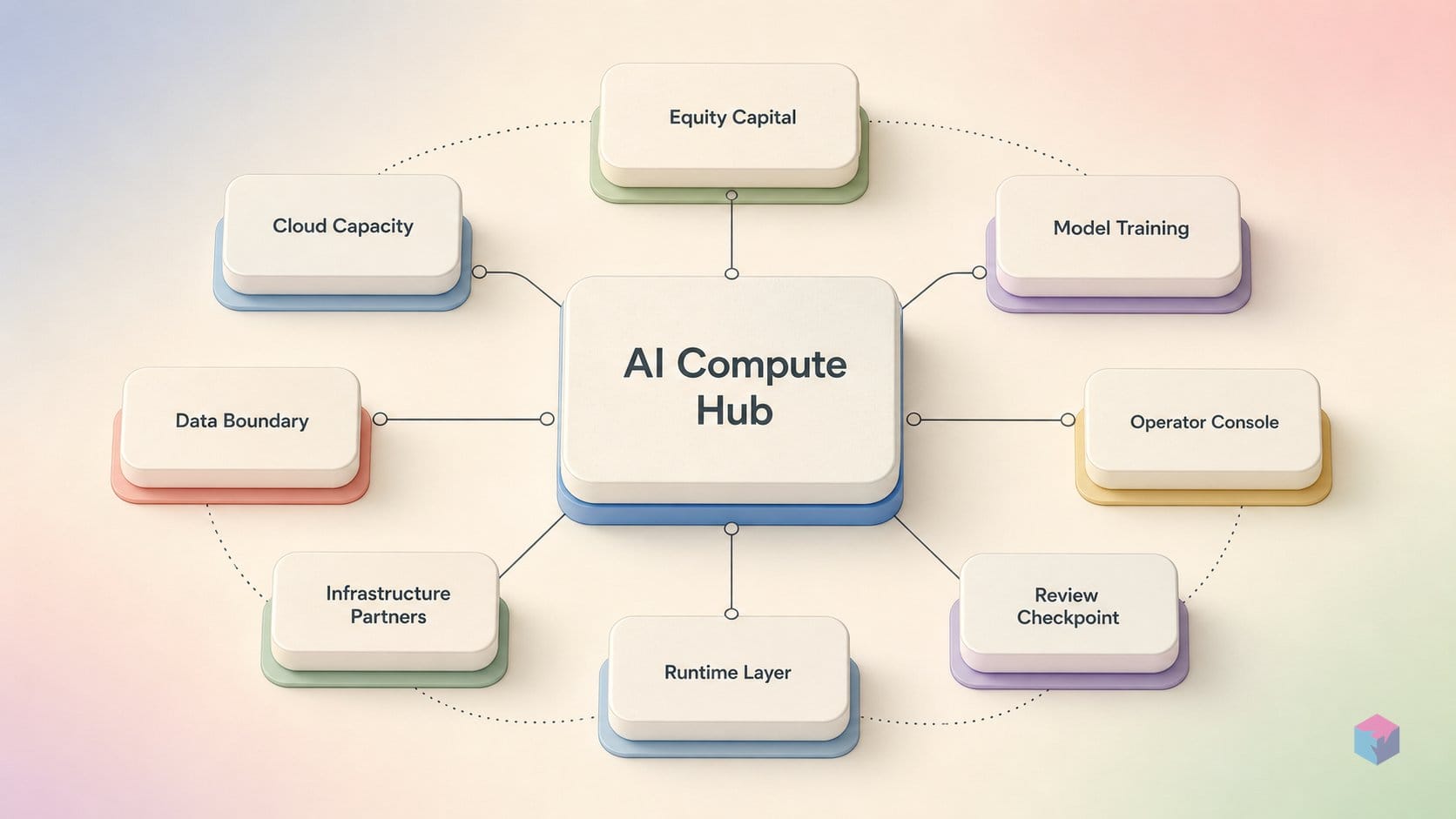
Alphabet chose equity over debt because scheduled repayment obligations become a liability at $180-billion-plus annual capex, and stock issuance carries no coupon and no maturity. This is a reversal: Alphabet has historically been cash-rich and buyback-heavy, and when it did borrow, it favored debt — issuing a 100-year bond and raising tens of billions in debt markets through late 2025 and early 2026 . A large public-equity raise breaks that pattern deliberately.
The logic is leverage headroom. At the scale Alphabet now plans — AI data centers, TPUs, servers, networking, and power — funding the build-out entirely with debt would load the balance sheet with fixed repayment schedules that compound across multiple years of rising spend. Equity sidesteps that. There is no interest to service and no principal due on a fixed date, which preserves flexibility if AI-revenue returns arrive more slowly than the capex curve. The trade-off Alphabet accepts in return is shareholder dilution rather than financial leverage.
CFO Anat Ashkenazi framed the decision in exactly those terms, calling it a strategic proactive move to optimize our financial flexibility . Read against Alphabet's prior posture, "financial flexibility" is the operative phrase: the company is signaling that operating cash flow alone is either insufficient or not the preferred source for the timing and magnitude of the spend now planned, and that it would rather raise permanent capital up front than commit to a repayment calendar it may not want at this point in the cycle.
"A strategic proactive move to optimize our financial flexibility," — Anat Ashkenazi, Chief Financial Officer at Alphabet (source: Alphabet Investor Presentation, 2026-06).
The market priced the cost of that choice immediately. Alphabet shares fell about 4% on June 2, 2026, the day after the planned sale was announced, a direct reflection of dilution sensitivity as investors absorbed the prospect of new common and capital-stock issuance . Management did not treat that reaction as a reason to reconsider; the dilution was accepted as the explicit trade-off for avoiding leverage at this scale. For developers and technical founders watching the AI-capex race, the signal is structural: the largest infrastructure buyer in the market judged that diluting owners was a cleaner way to fund compute than borrowing against it.
The Backlog Doubling That Forced Alphabet's Hand
The raise traces directly to a supply problem inside Google Cloud, where contracted demand now sits far ahead of the compute available to serve it. Cloud backlog — revenue under contract but not yet recognized — roughly doubled in a single quarter, from about $240 billion to approximately $460 billion . That figure is the core justification for the equity offering: Alphabet argues it has already-signed demand it physically cannot fulfill without more data centers, TPUs, servers, networking, and power.
Quick Answer: Google Cloud's backlog nearly doubled in one quarter — from about $240B to roughly $460B in Q1 2026 — representing contracted demand Alphabet cannot serve without more compute. That unserved pipeline, alongside 63% Cloud revenue growth, is the direct trigger for the $85B equity raise.
The underlying business momentum is what makes that backlog credible rather than speculative. In Q1 2026, Google Cloud reported about $20 billion in revenue, up 63% year over year, with operating income tripling to roughly $7 billion at a ~33% operating margin . A unit growing revenue at that rate while expanding margins is not capacity-constrained by choice — it is leaving bookable revenue on the table because the hardware to serve it does not yet exist.
| Google Cloud metric | Q1 2026 | Change |
|---|---|---|
| Revenue | ~$20B | +63% YoY |
| Operating income | ~$7B | ~3× (tripled) |
| Operating margin | ~33% | Expanded |
| Backlog | ~$460B | Up from ~$240B prior quarter |
Management framed the gap explicitly in demand-versus-supply terms. CEO Sundar Pichai said the company is "experiencing strong demand for our AI solutions and services from enterprises and consumers, at levels that are meaningfully exceeding our available supply" . The phrasing matters for how developers should read it: the constraint spans both enterprise Cloud contracts and consumer-facing Gemini workloads, so the build-out is meant to relieve pressure across the entire stack, not one product line.
The acquisition math reinforces the timing. Alphabet's 2026 capital-expenditure guidance was raised to roughly $180–190 billion, up from an earlier $175–185 billion range, specifically to incorporate the Intersect acquisition that closed in March 2026 . A guidance revision driven by a closed deal — rather than a vague aspiration — signals that the spending commitments are already contractual on the buy side too. For a balance sheet funding $180B-plus of infrastructure against a $460B backlog, operating cash flow alone covers the gap only slowly; the equity raise pulls that timeline forward.
The signal for anyone building on Vertex AI or Gemini-family models is concrete: capacity expansion is being funded against demand that is already booked, which makes sustained GPU/TPU availability more likely than a speculative over-build. The backlog is the number that turned a comfortable, cash-rich company into one willing to dilute its owners — and it is the metric to watch each quarter to judge whether the spending is keeping pace.
The Capex Trajectory: $180B in 2026 and Rising in 2027
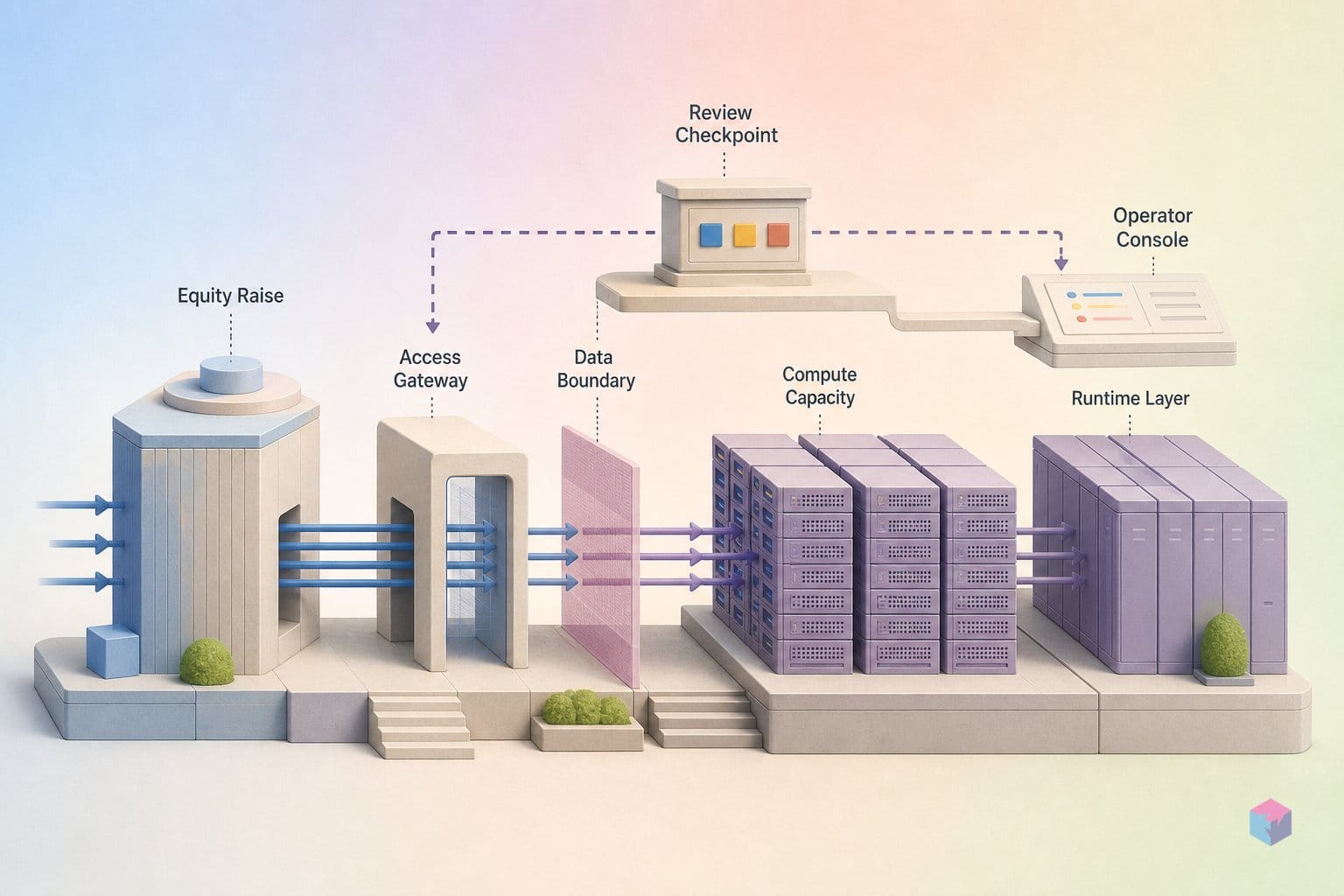
Alphabet's 2026 capital expenditure guidance is roughly $180–190 billion — about six times its 2022 spending and roughly double 2025 levels. That range was raised from an earlier $175–185 billion target to absorb the Intersect acquisition that closed in March 2026 . The $85 billion equity raise exists to fund this curve, and management has told investors the curve steepens: 2027 capex will increase significantly again, with no ceiling communicated.
The first quarter already shows the run-rate. Q1 2026 capex reached $35.7 billion, almost entirely technical infrastructure, split roughly 60% to servers and 40% to data centers and networking equipment . Annualized, that single quarter alone tracks above $140 billion before the second-half acceleration the guidance implies.
| Metric | Figure | Context |
|---|---|---|
| 2026 capex guidance | $180–190B | ~6× 2022, ~2× 2025 |
| Q1 2026 capex | $35.7B | 60% servers / 40% data centers + networking |
| 2027 outlook | "Significantly higher" | No ceiling given to investors |
| Prior guidance | $175–185B | Raised to absorb Intersect (closed March 2026) |
Where the money goes matters for developers tracking capacity. The proceeds underwrite physical build-out — TPU farms, server fleets, long-dated power contracts, expanded data-center footprint, and networking — rather than R&D headcount or acquisitions. That composition is consistent with the Q1 spending mix, where servers and data-center plus networking gear accounted for the entire technical-infrastructure outlay . For Vertex AI and Google Cloud users, this is the line item that translates into GPU/TPU availability and Gemini-family serving capacity.
The open question is duration. CFO Anat Ashkenazi framed the raise as a move to "optimize our financial flexibility" , but flexibility implies the option to repeat it. With 2027 explicitly guided higher and no upper bound disclosed, the prudent reading is that $180–190 billion is a floor for the current cycle, not a peak — and that the equity issuance may be a structural funding source rather than a one-time event. Each quarterly capex print is the check on whether the spend is converting booked demand into served capacity, or simply compounding.
Berkshire's $10B Entry Is Underwater — What That Tells You
Berkshire Hathaway anchored the raise with a $10 billion private placement, split into $5 billion of Class A common stock at $351.81 per share and $5 billion of Class C capital stock at $348.20 per share . That commitment is the signal worth reading closely: an anchor investor with a fixed entry price publicly stakes confidence in the deal, and Buffett's firm has historically avoided large technology positions, which makes a $10 billion tech placement an unusual and notable departure from its pattern .
The signal cuts both ways, because the entry is already underwater. By June 22, 2026, Barron's reported Class A trading near $346.90 and Class C near $346.33, below Berkshire's purchase prices on both tranches within weeks of the placement . The slide compounded an earlier reaction: Alphabet shares fell about 4% on June 2, 2026, the day after the planned sale was disclosed, as investors priced in dilution from new common and capital-stock issuance .
What pushed the price below Berkshire's level was not dilution alone. The same month brought news of AI-talent departures, and that overhang landed alongside the issuance — two separate pressures converging in a single window . For a holder, the takeaway is to separate the two signals. An anchor investor's entry tells you a credible long-horizon buyer underwrote the deal at $348–352; it does not tell you the near-term floor, and Berkshire's timeframe is measured in years, not weeks.
The practical read: a marquee anchor reduces placement risk and lends the raise external validation, but it does not insulate the stock from execution doubts. Dilution mechanics and key-person risk are priced continuously, and a paper loss on a strategic block held by a patient investor is weak evidence about whether Alphabet's compute spend will convert booked demand into returns. Watch the talent-retention trajectory and quarterly results, not Berkshire's mark-to-market, for the answer that actually matters.
The Dilution Trade: What New Share Issuance Means for Alphabet Holders
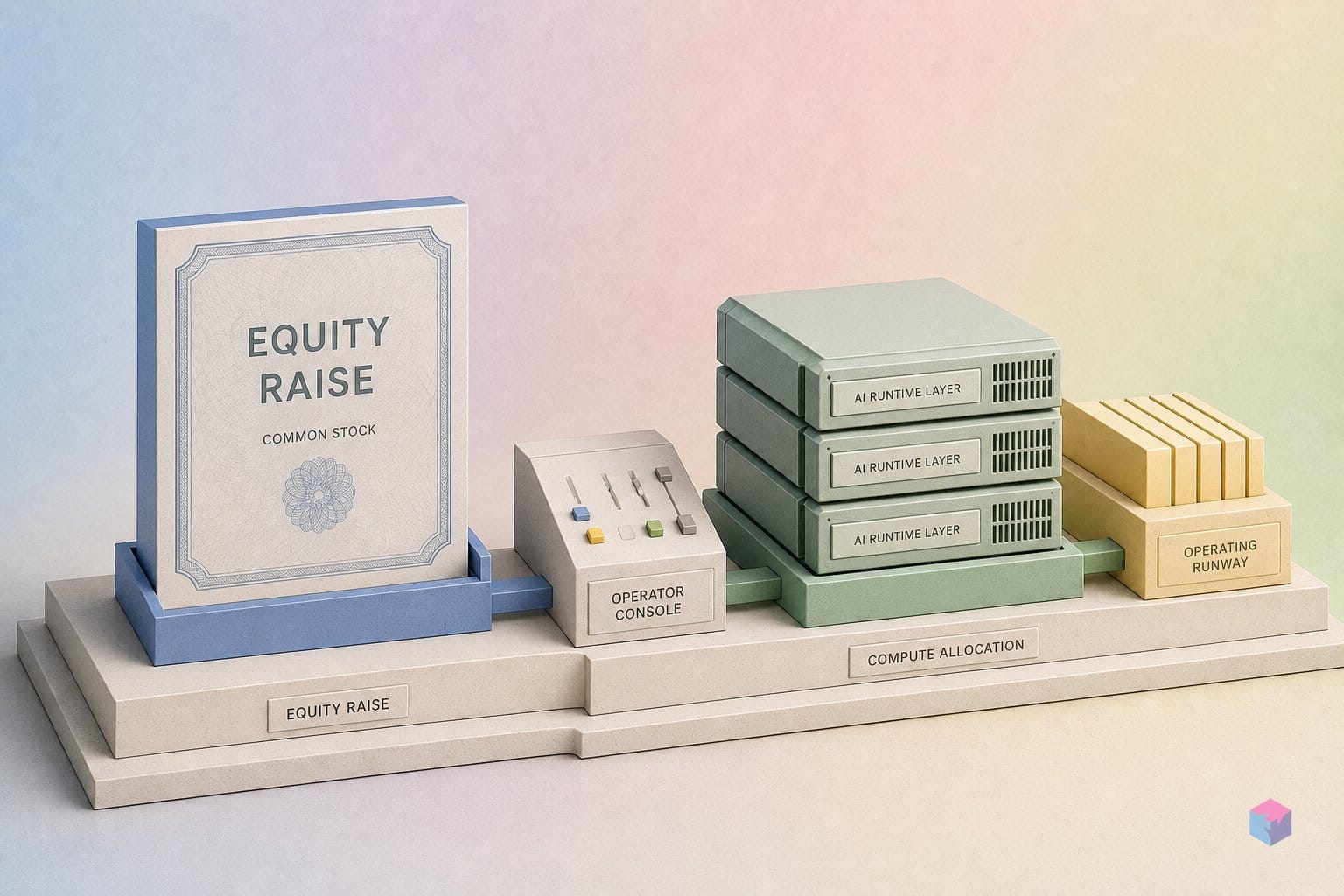
Issuing new equity dilutes existing Alphabet shareholders by expanding the share count, and it directly reverses the company's long-standing posture as one of the market's largest repurchasers of its own stock. For years Alphabet returned cash by buying shares back and shrinking the float; the June 2026 raise does the opposite, selling roughly $30 billion in concurrent underwritten common and capital stock plus a $40 billion at-the-market program on top of the $10 billion Berkshire placement . The trade-off is explicit: more compute capacity now, in exchange for a larger denominator on every per-share metric.
The exact dilution is not yet fixable. The split between Class A common and Class C capital stock, the final number of shares sold under the ATM, and any convertible or preferred terms all await Alphabet's final SEC filings — the 8-K and the free-writing prospectus — before holders can calculate per-share dilution precisely . The market's first read was negative on exactly this point: Alphabet shares fell about 4% on June 2, 2026, the day after the planned sale was announced, reflecting investor sensitivity to dilution before any of the proceeds had been deployed .
Alphabet is not absorbing that dilution in isolation. The raise fits a broader 2026 pattern in which hyperscalers — Microsoft, Amazon, and Meta among them — lean on external capital to finance AI build-outs rather than fund them from operating cash flow alone . CFO Anat Ashkenazi framed the transaction as "a strategic proactive move to optimize our financial flexibility," language that treats dilution as a managed input to capacity planning rather than a distress signal . For developers building on Vertex AI or Gemini-family models, the practical upshot is that the dilution funds the GPU/TPU footprint meant to ease the supply constraints Pichai described.
The open question for holders is recurrence. Management has signaled that 2027 capex will rise significantly again on top of 2026 guidance near $180–190 billion , which leaves unresolved whether this $85 billion event is a one-off or the first in a series of equity raises to fund a multi-year build. A single block, paired with a flexible ATM, is structured to allow repeat issuance; nothing in the disclosed materials commits Alphabet to stopping after one round. The dilution math holders should watch is not this raise in isolation but whether the ATM mechanism becomes a standing capex funding tool.
The ATM Is Not Cash In Hand: What Has and Hasn't Been Raised
The clearest way to read the headline number is to separate proceeds Alphabet has likely banked from proceeds it is still authorized to collect. Roughly $30 billion in concurrent underwritten public offerings and the $10 billion Berkshire Hathaway private placement are discrete, priced blocks. The remaining $40 billion sits in an at-the-market (ATM) program — an authorization to sell shares directly into the open market over time, expected to begin in Q3 2026, not a lump sum already received.
That distinction matters for anyone modeling the raise. An ATM program means proceeds accrue gradually, paced against trading volume and price, and can stretch across months or quarters. Until Alphabet or an SEC filing confirms the volume of shares actually sold under the ATM, the commonly cited ~$85 billion is best treated as authorized capacity rather than fully closed cash. The realized total depends on how much of the $40 billion Alphabet chooses to issue and at what prices.
Several specifics remain unconfirmed in the materials reviewed:
- Final closed proceeds: No primary release or SEC filing text was accessible at the time of writing to confirm the legally closed amount. The authoritative source will be Alphabet's 8-K and FWP filings, which should be checked as they become fully available.
- The "largest equity raise ever" label: This framing is press-sourced — appearing in Bloomberg and Barron's commentary — not an official ranked comparison that was independently verified. Read it as plausible-but-unconfirmed.
- Exact dilution by share class: The split of new issuance across Class A common and Class C capital stock, plus any preferred or convertible terms, is not yet broken out in disclosed materials.
- Berkshire governance terms: Board rights, lockup provisions, and Berkshire's resulting ownership percentage following its $5 billion Class A ($351.81/share) and $5 billion Class C ($348.20/share) commitment are undisclosed.
The concrete takeaway: treat ~$40 billion of the headline as banked and the other ~$40 billion as a tap Alphabet controls. For developers and founders tracking compute supply, the operative signal is not the round number but the mechanism — a standing ATM gives Alphabet a repeatable lever to fund 2026 capex of roughly $180–190 billion and the larger 2027 spend management has flagged. Verify the realized proceeds against the 8-K and FWP before treating $85 billion as money in the bank.
Last updated: 2026-06-24. Transaction mechanics in this article rely on financial press reporting and Alphabet's June 2026 investor presentation; figures should be reconfirmed against final SEC filings as they become accessible.
Frequently asked questions
What is an at-the-market (ATM) equity program, and how does Alphabet's work?
An ATM program lets a company sell newly issued shares at prevailing market prices over time, drip-feeding stock into the open market rather than placing one large block in a single underwritten offering. Alphabet's ATM is sized at $40 billion and is expected to begin in Q3 2026 . The key distinction for anyone modeling the raise: an ATM is authorized capacity, not cash already received. The realized total depends on when, and how much, Alphabet actually draws — so the $40 billion should be treated as a ceiling until SEC filings confirm executed sales.
Why did Alphabet choose equity over debt for this raise?
Alphabet chose equity to avoid scheduled repayment obligations at a capex scale where maturity risk becomes a constraint. The company is no stranger to debt — it issued a 100-year bond and raised tens of billions in debt markets through late 2025 and early 2026 . But CFO Anat Ashkenazi framed the offering as 'a strategic proactive move to optimize our financial flexibility' . Equity fits a multi-year, open-ended spend — roughly $180–190 billion in 2026 capex and rising in 2027 — without locking in fixed coupon and principal payments. The trade-off is shareholder dilution instead of leverage.
Is the '$85 billion record-breaking raise' claim independently verified?
Not fully. The 'record-breaking' label comes from financial press commentary — Bloomberg, Barron's, and analyst remarks calling it larger than the three biggest IPOs combined — rather than from an official ranked comparison . The roughly $85 billion total also bundles in the $40 billion ATM, which issues shares over time rather than delivering upfront cash . Treat the headline as plausible-but-press-sourced until the final SEC filings (8-K and FWP) confirm the closed figure.
What does Berkshire Hathaway's $10B participation signal?
It is a credibility signal that carries a caveat. Warren Buffett's firm has historically avoided large technology positions, so a $10 billion anchor commitment — reportedly split into $5 billion of Class A at $351.81 and $5 billion of Class C at $348.20 — lent weight to the offering . By June 22, 2026, however, shares had slipped below those entry prices, to about $346.90 (Class A) and $346.33 (Class C) on AI-talent departure news, leaving Berkshire's position above market . Governance terms such as board rights or lockups were not disclosed in the materials reviewed.
What does Alphabet's capex trajectory mean for teams using AI services on Google Cloud?
The spending directly targets the supply constraints CEO Sundar Pichai described, when he said demand is 'meaningfully exceeding our available supply' . The 2026 capex plan of roughly $180–190 billion funds more TPU and GPU capacity, expanded data-center footprint, networking, and power . For Vertex AI and Cloud customers, that should ease availability of Gemini-family models and reduce capacity throttling over time. The practical caveat: new infrastructure takes multiple quarters to come online after the capital is committed, so relief is gradual, not immediate.