
Anthropic now has boots on the ground in Seoul — and it arrives in a market where Korean developers were already among its heaviest users worldwide. The move turns a remote, community-driven presence into a staffed local entity with direct sales, enterprise support, and policy work.
Anthropic's Seoul Presence: KiYoung Choi as Director, Hiring Underway
Anthropic formally opened its Seoul office on June 17–18, 2026, its third Asia-Pacific location after Tokyo and Bengaluru . The launch shifts Korea from a remote, community-led footprint to a local team with go-to-market, enterprise support, and on-the-ground policy engagement . The office is open and hiring across a range of roles.
Leading it is KiYoung Choi (Choi Ki-young), named Representative Director, who brings roughly three decades of technology leadership — including prior roles at Google Cloud, Microsoft Korea, Adobe, and Snowflake . International Managing Director Chris Ciauri represented Anthropic at the opening.
Ciauri framed the expansion around safety alignment rather than scale alone, citing a "shared philosophy" on responsible AI between Anthropic and Korea as the rationale for the Seoul push . That positioning matters: the launch was bundled with government and academic partnerships, not a model release.
For builders, the practical signal is access. A local entity typically means faster enterprise onboarding, regional support, and clearer policy channels — useful context as the rest of this brief covers who is already deploying Claude, how fast Korean adoption grew, and where U.S. export controls leave open questions.
NAVER, Samsung, LG CNS, Nexon: Korean Companies on Claude
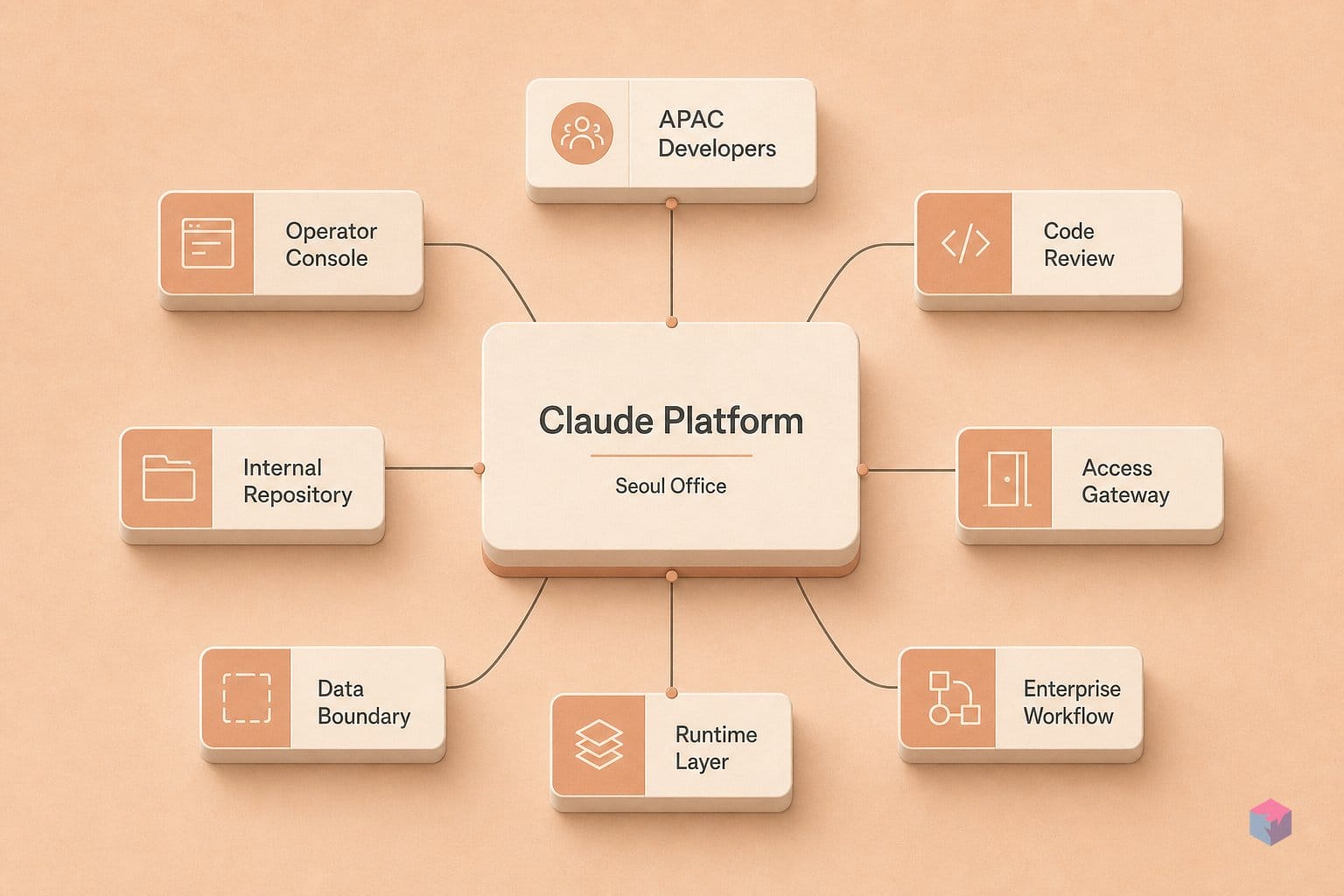
Several of Korea's largest technology and industrial groups were already running Claude in production before the Seoul office opened. NAVER has deployed Claude Code across its entire engineering organization — Anthropic describes it as one of the largest enterprise cases in Asia . The named deployments cluster around two products: Claude Code for agentic software development and Claude Cowork for knowledge work.
Samsung SDS is rolling out Claude — including Claude Cowork and the agentic coding variant — to employees across Samsung Electronics, covering knowledge work, agentic workflows, and software engineering . LG CNS is deploying Claude to thousands of employees, with planned expansion across the wider LG Group .
Gaming is in the mix too. Nexon uses Claude Code for live-service game development — the continuous-update model where code ships against a running title rather than a fixed release .
Adoption routes differ, which matters for builders weighing deployment patterns:
- First-party API: the default path for most named engineering deployments such as NAVER and Nexon.
- Cloud marketplace: Hanwha Solutions consumes Claude via AWS Bedrock with data-residency compliance — region-pinned routing rather than direct API calls .
- Embedded in a platform: Channel Corp builds Claude into its Channel Talk product.
| Company | Use case | Notable scope |
|---|---|---|
| NAVER | Claude Code, full engineering org | Cited as one of Asia's largest enterprise cases |
| Samsung SDS | Claude Cowork + agentic coding | Across Samsung Electronics |
| LG CNS | Knowledge work + dev | Thousands of staff; LG Group expansion planned |
| Nexon | Claude Code | Live-service game development |
| Hanwha Solutions | Claude via AWS Bedrock | Data-residency compliant |
| Channel Corp | Embedded in Channel Talk | Platform serves 230,000+ companies |
The customer list also reaches beyond commercial buyers: nonprofit Good Neighbors Korea is named among adopters, signaling that the local push covers public-interest as well as enterprise use . For developers, the takeaway is concrete: the Korean reference accounts span web platforms, chip and electronics groups, gaming, and IT services — and they consume Claude through at least three distinct integration paths.
Korea's Claude Adoption: 6x Growth Before Anthropic's Seoul Arrival
Korea was already a top market for Claude before the office opened. Korean users rank in Anthropic's global top five by both overall and per-capita usage, and Korea sits among the top 12 countries for Claude.ai specifically . The Seoul launch, in other words, follows demand rather than creating it — staffing a market that grew on its own first.
The clearest signal is on agentic coding. Anthropic says Korea's Claude Code user base grew 6x in the four months before the launch, one of the fastest regional ramps it has reported . The headline detail: a Korean software engineer currently ranks as the world's top Claude Code user .
The regional picture frames why Seoul came third in Asia-Pacific:
- More than 25% of all Claude Code users are now in Asia-Pacific .
- Anthropic's Asia-Pacific run-rate revenue grew over 10x in the past year .
- Large regional business accounts — each worth $100,000+ in annual revenue — are up 8x .
For developers, the takeaway is that these numbers are about Claude Code, not chat. The growth is concentrated in agentic coding workloads — the same product NAVER, Nexon, and Samsung SDS deploy internally — which suggests Korean usage skews toward production engineering rather than casual experimentation .
Treat the per-capita and ranking figures as Anthropic's own reported metrics; the company has not published the underlying methodology, so they read as directional momentum rather than audited statistics. The verifiable point stands: demand was strong enough to justify a staffed entity, startup credits, and the developer programs that shipped alongside it.
For Korean Developers: Hackathons, Builder Programs, and Replit Mentorship
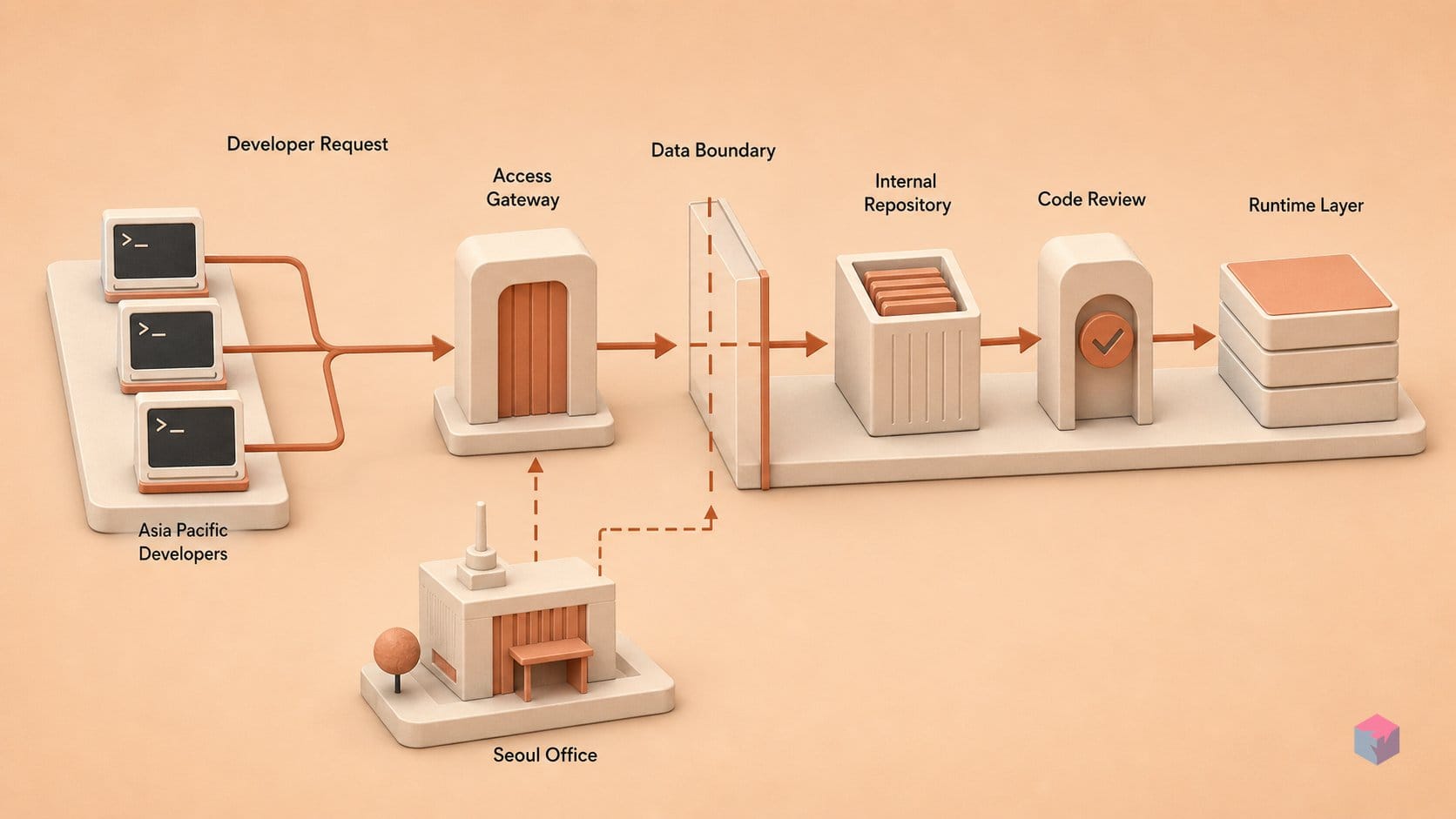
The developer programs shipped with the office, not ahead of it. Anthropic's Claude for Startups program is now active in Korea for the first time, letting qualifying startups apply for credits and direct support from the company . Before the Seoul entity, that channel was not available locally — Korean teams followed Claude through remote and community-led efforts.
A staffed office changes the engagement model. Instead of relying on remote-first outreach, Anthropic can run events, mentorship, and credit programs on the ground. Several concrete activities landed alongside the launch:
- Claude Build Day — co-hosted with BASS Ventures for more than 100 founders and developers .
- Claude Meetups — community gatherings that have drawn hundreds of Korean developers since September 2025 .
- Push to Prod hackathon — planned with Replit, Korea Investment Partners, and Korea Investment Accelerator, where teams build with Claude Code under Anthropic and Replit mentorship .
The Replit partnership is the most practical signal for builders: it pairs an agentic coding workflow with hands-on mentorship rather than a one-off talk. For a developer or technical founder, the takeaway is access — credits to offset early API spend, plus events where you ship working code against real review.
"We share a philosophy on AI safety," — Chris Ciauri, International Managing Director at Anthropic, framing the company's local engagement (source: Korea Times).
One caveat: dates and headcounts here come from Anthropic's own announcement. The hackathon is planned, not completed, so eligibility rules and timing for Claude for Startups and Push to Prod are worth confirming directly before you budget around them.
MSIT Memorandum: What Korea's Science Ministry Agreed to With Anthropic
The MSIT memorandum is the policy spine of the Seoul launch. Anthropic signed a Memorandum of Understanding with Korea's Ministry of Science and ICT (MSIT) to support safe and responsible AI adoption across the country's public sector . It is not a product deal or a model contract — it is a commitment to evaluate and govern how Claude gets used inside Korean government work.
The most concrete technical line in the MOU is language. Anthropic will work with the Korea AI Safety Institute to evaluate model safety specifically in Korean — not by extrapolating from English-centric benchmarks . For builders, that matters: Korean-language refusal behavior, jailbreak resistance, and harmful-content detection are distinct evaluation targets from their English equivalents, and a local safety institute running them is a meaningfully different signal than a vendor self-report.
The MOU scope also names AI-enabled cybersecurity threats as a shared concern . That inclusion is worth flagging, because it sits directly alongside concurrent U.S. export-control scrutiny on cyber-capable frontier models — a tension the next section unpacks. The agreement signals cooperation on threat mitigation even as access to the most advanced models remains a separate, unresolved question.
Anthropic frames the whole arrangement as aligned with Korea's AI Framework Act, positioning the company's safety posture as a fit with how Seoul intends to regulate AI .
"We share a philosophy on AI safety," — Chris Ciauri, International Managing Director at Anthropic, describing the foundation for the MSIT engagement (source: Korea Times).
One reading caveat: an MOU is a statement of intent, not an enforceable specification. The Korean-language safety evaluations, the cyber-threat workstream, and the public-sector deployment guidelines are described as goals rather than shipped deliverables. If you are planning public-sector or regulated-industry work on Claude in Korea, treat the framework as direction-setting and confirm specific compliance terms directly before you build against them.
NAIRL Consortium: KAIST, Yonsei, POSTECH, and 60 Academics on Claude
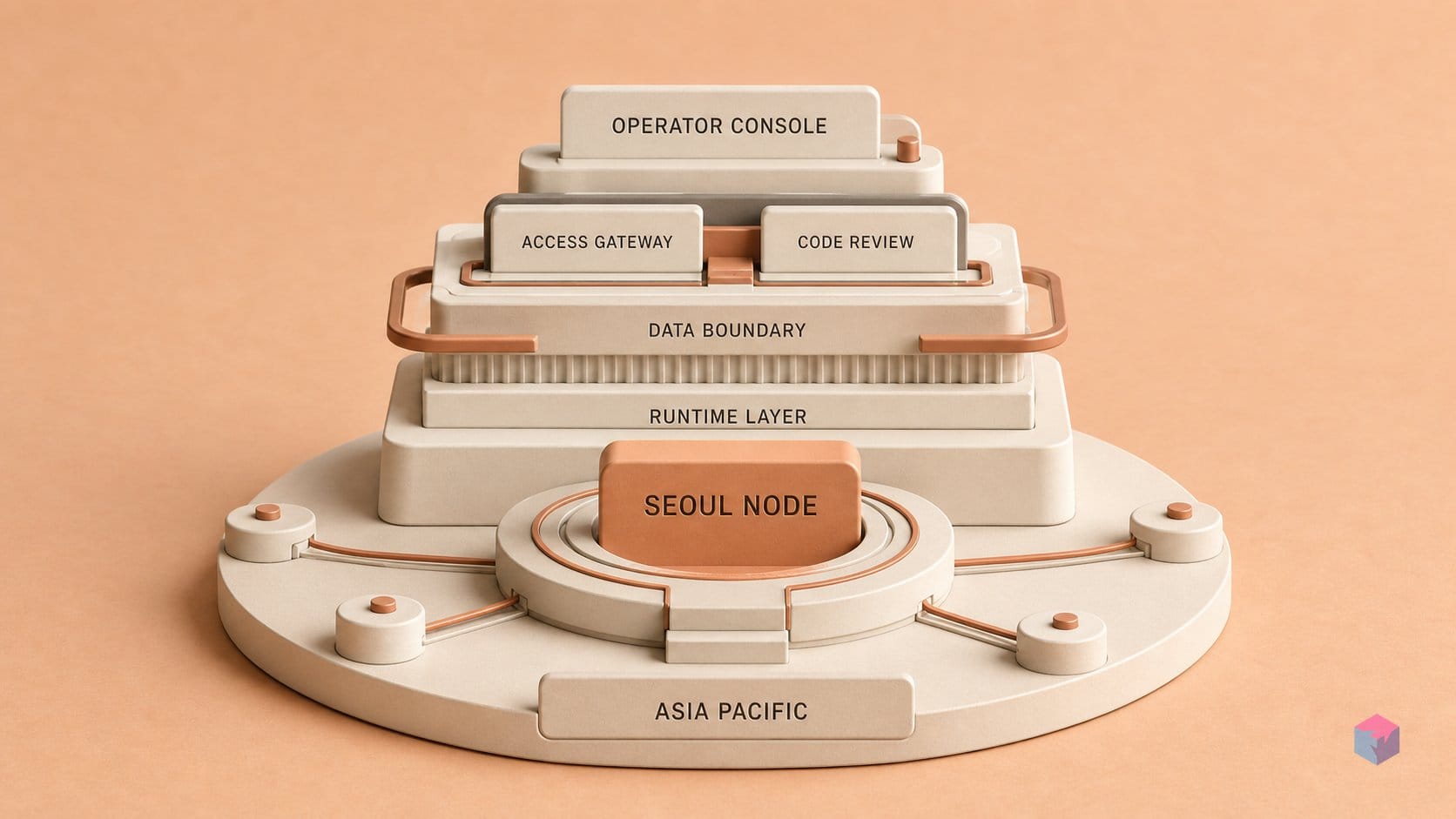
The research arm of the launch is a collaboration with the National AI Research Lab (NAIRL), a consortium spanning KAIST, Korea University, Yonsei University, and POSTECH . Under it, up to 60 NAIRL-affiliated researchers gain direct Claude access for work on AI safety, model evaluation, alignment, and robustness . The distinction worth flagging: this is first-party model access for joint evaluation, not arms-length grant funding.
That difference matters for the kind of work it enables. Alignment and robustness research depends on probing a model's actual behavior — measuring refusal boundaries, red-teaming failure modes, scoring evaluations against the deployed weights. Sampling a public API or reasoning from indirect approximations gives you a degraded view of the system you are trying to characterize. Direct access lets the four universities run evaluations against the real target.
The focus areas map closely onto Anthropic's own internal safety agenda, which makes this less a sponsorship and more a shared workstream:
- Model evaluation — building and running benchmarks against Claude rather than approximating from outputs.
- Alignment — studying how the model's behavior tracks intended objectives under adversarial pressure.
- Robustness — probing failure modes and stability across edge cases and distribution shifts.
It also pairs naturally with the Korean-language safety evaluation work routed through the government safety track, giving the academic consortium a frontier system to evaluate and the public sector a research base to draw on. For Korean researchers, the practical upshot is a seat closer to the model: safety-critical work on a first-party Claude deployment instead of inference from black-box API sampling .
How U.S. AI Regulations Create Uncertainty for Korean Institutional Claude
The largest open question around the Seoul launch is access, not adoption. Multiple outlets paired the office opening with reports that U.S. AI export restrictions may limit Korean institutional access to Anthropic's most advanced models — particularly capabilities relevant to cybersecurity — even as enterprises and researchers ramp up everyday Claude Code use . That tension sits directly underneath the public-sector and academic partnerships described above.
A caution for builders parsing the coverage: some secondary press cited specific "restricted model" names, but those names do not match Anthropic's known Claude naming conventions and could not be traced to a readable primary source. Treat them as unverified extraction artifacts, not confirmed facts — repeating them as real model versions would mislead anyone planning around them.
Here is what is actually verifiable versus what is not:
- Verifiable: The Seoul launch is occurring against a backdrop of evolving U.S. export-control policy that may constrain which frontier-capable models Korean public-sector and research users can access .
- Unconfirmed: The exact scope, the specific affected model versions, and the timeline — none are documented in primary sources, and officials reportedly declined to comment on details .
- Unaffected (for now): No model restriction touched the deployments announced at launch — NAVER, Samsung SDS, LG CNS, and Nexon are already in production on Claude Code and Cowork.
This is the most fragile part of the story, sourced to press rather than an official filing. The practical takeaway: Korean teams building with Claude Code or shipping through AWS Bedrock face no announced blocker today, and the Seoul office adds local support, startup credits, and a government safety track. The watch item is narrower — whether export policy eventually gates the top-tier, cyber-capable frontier models for public-sector and research institutions. Track it through primary sources, not extracted model names.
Last updated: 2026-06-24.
Frequently asked questions
How do I apply for Claude for Startups in Korea?
Apply through Anthropic's Claude for Startups program, which went live in Korea alongside the Seoul office launch in June 2026 . Qualifying startups receive credits and direct Anthropic support. The program was not available locally before the launch.
Does my Korean company need to use AWS Bedrock to access Claude, or is the direct API available?
Both paths work. The direct Anthropic API is available to Korean companies; AWS Bedrock is one routing option, not a requirement. Hanwha Solutions chose Bedrock specifically for data-residency compliance . Pick Bedrock when you need region-compliant routing or marketplace billing; otherwise the first-party API is the simpler default.
What exactly does the MSIT MOU commit Anthropic to in Korea?
The Memorandum with the Ministry of Science and ICT covers three areas: Korean-language model safety evaluation with the Korea AI Safety Institute, support for safe AI adoption across the public sector, and work on AI-enabled cybersecurity threats . It mandates no specific product deployments, pricing, or timelines — it is a cooperation framework, not a procurement contract.
Are U.S. export controls actually blocking Claude for Korean universities or government agencies?
Unconfirmed. Press reports cite specific restricted model names that do not match Anthropic's known Claude naming, and those claims could not be verified from primary sources . The verifiable position is narrower: U.S. policy is evolving and may affect access to advanced or cybersecurity-capable models for institutions . No official scope, affected versions, or timeline has been published.
Why did Korea's Claude adoption outpace neighboring markets like Japan or Singapore?
Anthropic has not published a country-by-country comparison, so any ranking is inference. The research points to three drivers: early large-scale enterprise adoption at NAVER, Samsung and LG; an active Claude Meetup community drawing hundreds of developers since September 2025 ; and a developer base already building heavily — Korea's Claude Code users grew 6x in four months . Organic demand preceded the office, reversing the usual market-entry order.