

Every AI assistant treats your conversation as its own private property. Hit a rate limit or want a second model's take, and you start over — re-typing the context the last chatbot already understood.
Siloed chatbots and the re-explain penalty
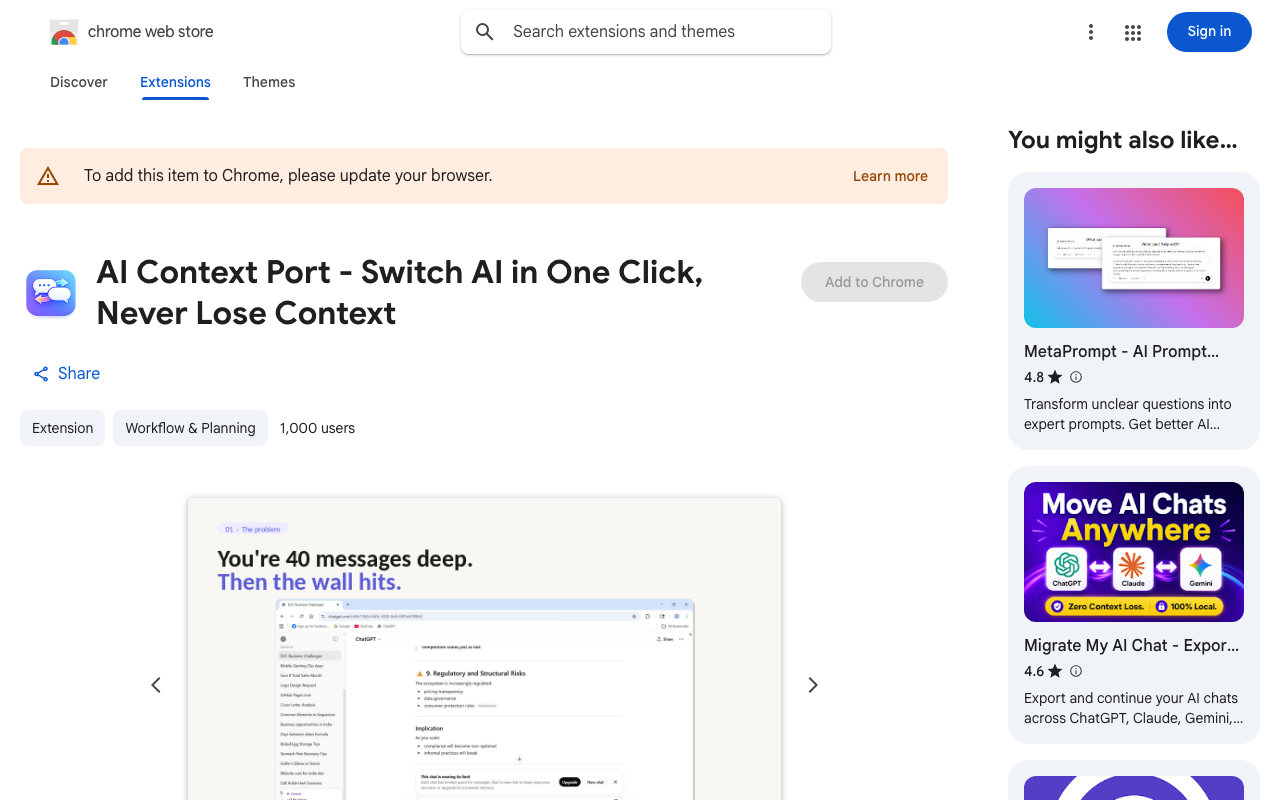
Each AI chatbot locks conversation history to its own platform, so hitting a daily rate ceiling or wanting a second opinion means re-explaining everything from scratch in a fresh tab. The cost is concrete: reintroducing a 20-message session in a new chat can burn an estimated 500–1,000 tokens of setup before you ask a single new question — pure overhead that grows with every model switch.
A cluster of Chrome Manifest V3 extensions emerged across late 2025 and 2026 to close this handoff gap. The pattern is shared across all of them: one click packages the live conversation — messages, relevant memory, and custom instructions — into a portable bundle; another click replays that bundle into a fresh ChatGPT, Claude, or Gemini chat, auto-injected so the thread continues where it left off . Products like AI Context Port (v1.0.1, updated May 10, 2026) build directly on this rate-limit-triggered transfer loop .
How MV3 add-ons capture a live chatbot and replay into a fresh tab
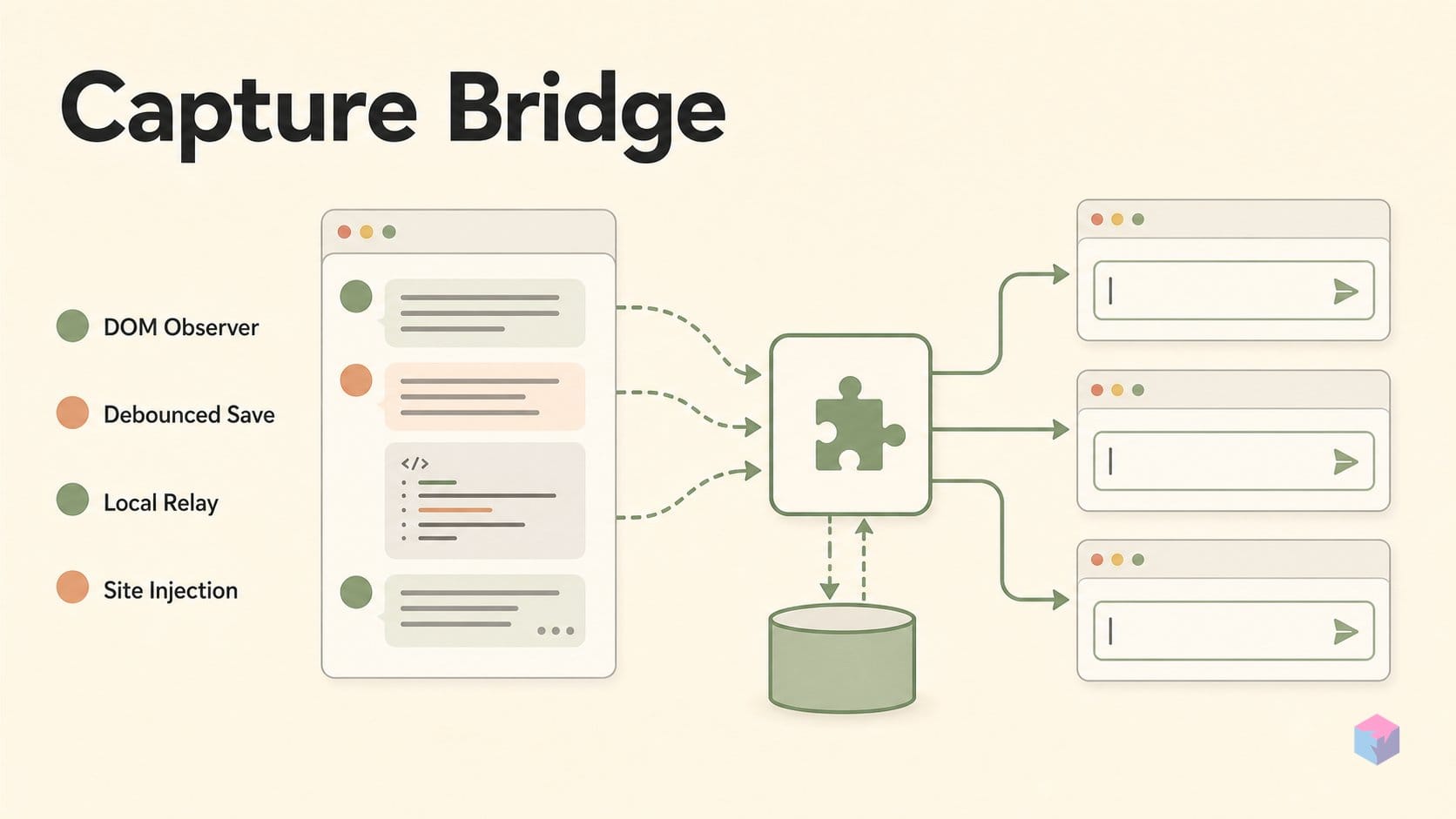
Under the hood, these Manifest V3 tools are DOM-scraping bridges, not API clients. A content script attaches a mutation observer to the rendered chat page and captures new messages and code blocks as they appear, debounced at roughly 1.5 seconds so a burst of streaming tokens becomes one clean save rather than hundreds. Context-Sync (v1.1.0, released April 5 2026) is the clearest open reference for this loop .
Capture and replay both fight framework internals. The extension stores the bundle in chrome.storage.local, which doubles as a cross-platform relay — for local-only tools there is no server round-trip. Injection then targets each site's specific input element: ProseMirror for ChatGPT, Quill for Gemini, and native textarea setters for DeepSeek. Gemini is the fussiest case, requiring triple-fired Angular event chains so the framework registers the injected text and survives hydration .
Compression is optional and privacy-aware. Add a Gemini 2.5 Flash API key and user and assistant text are compressed in parallel; leave it blank and everything stays local. Either way, code blocks are extracted verbatim and never sent to the compression model, so a snippet survives the handoff byte-for-byte .
How AI Context Port, ContextSwitchAI, and Context-Sync stack up
The four leading bridges split along one axis: how much they automate and where compression runs. AI Context Port is the closest to a rate-limit rescue tool. It ships as v1.0.1, last updated May 10 2026, with roughly 1,000 Chrome Web Store users . It is freemium: the free tier caps you at 5 saved conversations and 3 daily transfers, while Pro unlocks unlimited saves plus context editing. All data stays local with no account required .
| Tool | License / model | Compression | Notable trait |
|---|---|---|---|
| AI Context Port (v1.0.1) | Freemium, local-only | None (Pro adds context editing) | Auto pop-up on limit hit |
| ContextSwitchAI | Free / Pro, CWS-listed | ~70% token cut (Pro) | ChatGPT, Gemini 2.0, Claude 3.5 |
| Context-Sync (v1.1.0) | MIT, open source | Optional Gemini API | Code blocks kept verbatim |
| Continuity | MIT, Phase 1 | Summarizes to fit limits | Adaptive selector learning |
ContextSwitchAI leans on compression, claiming its Pro tier trims token usage by roughly 70% and supporting ChatGPT, Gemini 2.0, and Claude 3.5 . Context-Sync (v1.1.0, MIT, ~14 GitHub stars, released April 5 2026) makes compression opt-in via a Gemini key, preserves code blocks byte-for-byte, and needs zero server . Continuity (MIT, Phase 1, 0 stars) is earliest-stage but adds adaptive selector learning so broken DOM selectors self-update after a site UI refresh, and it spans ChatGPT, Claude, Perplexity, Gemini, and Copilot .
Selector rot, malicious clones, and unverified compression claims
Every one of these tools shares a structural weakness: to move a conversation it reads and writes the rendered DOM through undocumented CSS selectors and framework internals — ProseMirror on ChatGPT, Quill on Gemini, native textareas on DeepSeek. A routine UI refresh on chatgpt.com or claude.ai can silently break either capture or replay until a maintainer patches the selectors, which is exactly why Continuity ships "adaptive selector learning" as a headline feature . Because the scraping runs without any official API sanction, longevity depends on provider UIs staying scrapeable — and on providers tolerating the practice.
The trust surface is larger than selector rot. To read a full chat, an extension needs host permissions, and Chrome's own documentation notes those permissions can let an add-on read tab content, access cookies, and monitor or modify network requests depending on the APIs it requests . That access is precisely what bad actors abuse. An arXiv study of 5,551 AI-themed Chrome Web Store extensions identified 154 previously undetected malicious ones — 29 of them GenAI-related — with behaviors spanning query hijacking, redirection, and data exfiltration . Separately, reporting on OX Security described two malicious AI extensions with more than 900,000 combined users quietly exfiltrating chat-related data every 30 minutes. The study's authors treat these AI-themed listings as a distinct and under-scrutinized risk class rather than isolated bad apples — a warning worth heeding, since a context bundle collapses your most sensitive AI conversations into a single, highly portable artifact.
Compression is the softest evidence of all. ContextSwitch and ContextSwitchAI advertise roughly 55–70% token reduction , but as of mid-2026 those numbers are vendor self-claims with no published independent benchmarks. Treat both the savings and the safety as unverified until an audited listing backs them.
Portability without add-ons: what the AI makers natively offer
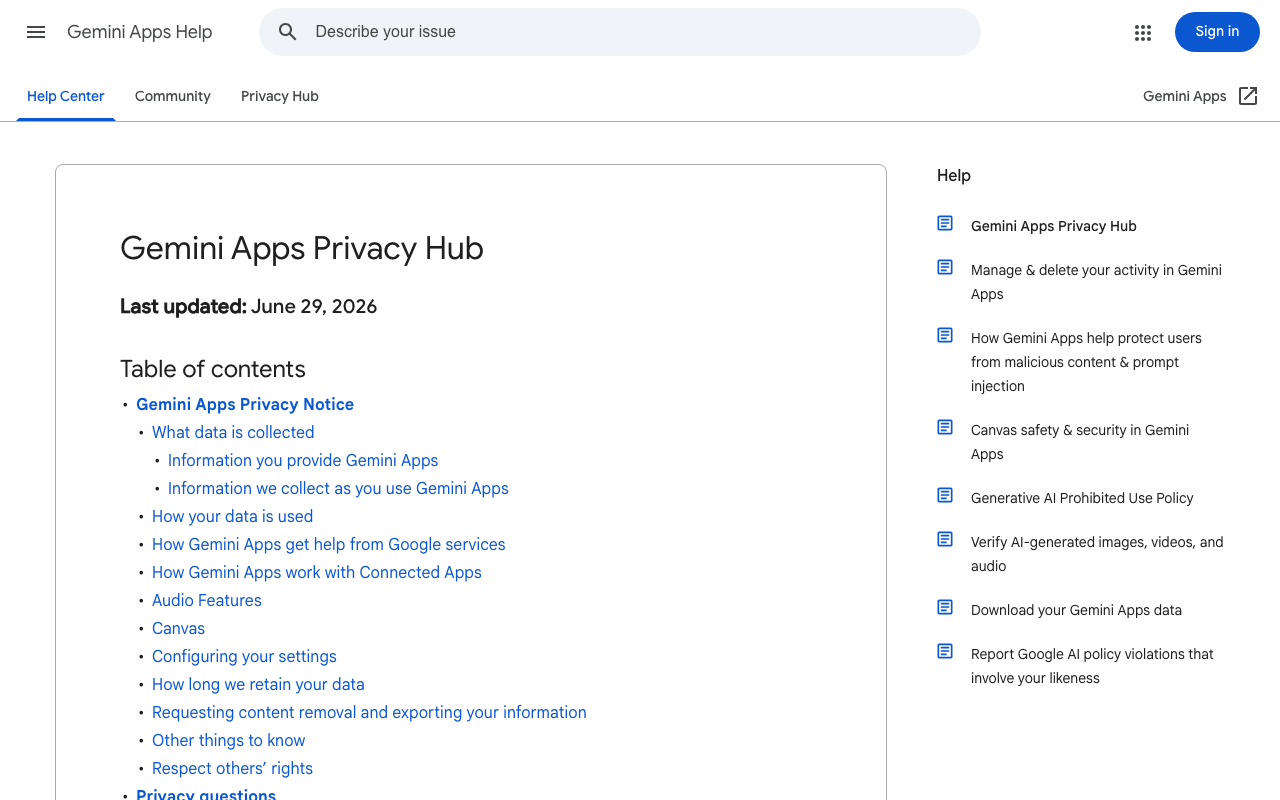
The vendors themselves are now the strongest reason to distrust a scraping add-on for anything but live handoffs. OpenAI lets signed-in Free, Plus, Pro, and eligible Edu users request a ZIP export of their full chat history and account data, but processing can take up to 7 days and the download link expires after 24 hours — and it is unavailable to Business or Enterprise workspaces . Google's Gemini rolled out Import Memory and Import Chat History on desktop consumer accounts, accepting ZIP uploads up to 5 GB while excluding business, enterprise, and under-18 accounts . Anthropic made a memory-import flow available to free Claude users via settings, but The Verge described it as a way to copy personalization signals from rival platforms — not a full chat-history replay .
The net verdict is that these are complementary tools, not interchangeable ones. Native export/import handles slow, account-level migrations — days of latency, ZIP files, personalization state — while a trustworthy third-party bundle handles the live, mid-session handoff the video pitched. If you need to move an active conversation the moment a limit hits, an add-on is still the only path; for durable migration, reach for the vendor's own flow first.
Frequently asked questions
Do these extensions store my conversation history on a remote server?
Not by default. All four reviewed tools — AI Context Port, ContextSwitch, ContextSwitchAI, and Context-Sync — claim to keep saved conversations in chrome.storage.local, meaning the bundle lives in your browser with no account or server. The one deliberate exception is Context-Sync: it sends user and assistant message text to Google's Gemini 2.5 Flash API only if you paste in your own Gemini API key for compression, and even then code blocks are extracted and preserved verbatim rather than transmitted . Freemium Pro tiers that advertise cloud compression may route text through a backend, so read each extension's Chrome Web Store privacy policy before installing .
What breaks when ChatGPT or Claude refreshes its UI?
Capture and replay break, silently. These add-ons are DOM-scraping bridges, not API clients, so they depend on undocumented CSS selectors and framework internals — ProseMirror for ChatGPT, Quill plus Angular event chains for Gemini, native textarea setters for DeepSeek . A redesign on chatgpt.com or claude.ai can stop the extension from reading the conversation or injecting it into the new tab until the developer ships a selector patch. Continuity is the only reviewed project built around "adaptive selector learning" that aims to update broken selectors as UIs shift; every other tool requires a manual developer fix .
Are the 55–70% token-reduction claims from compression independently verified?
No. As of mid-2026 the 55–70% figures are vendor self-claims — ContextSwitch advertises up to roughly 70% and ContextSwitchAI markets its Compressed Chat Memory Format, but no published independent benchmark confirms either number . Real-world ratios almost certainly vary by conversation type, the model doing the compressing, and how much filler or duplication a given chat contains. Treat the headline percentage as marketing, not a measured guarantee.
Can I just export from ChatGPT and import into Claude instead of installing an extension?
Only partially, and not for a live handoff. OpenAI's official export gives signed-in users a ZIP of chat history, but generation can take up to 7 days and the download link expires after 24 hours — useless the moment you hit a rate limit mid-session . Anthropic's Claude import flow is designed to pull personalization signals from rival products rather than replay a full conversation . Third-party extensions exist precisely to fill the real-time gap those slow, account-level vendor flows leave open.
Which Chrome permissions should raise a red flag before installing one of these?
Host permissions scoped to chatgpt.com, claude.ai, and gemini.google.com are expected and necessary — the extension has to read and write those pages to work. Red flags are permissions beyond those specific domains: access to all URLs, the ability to monitor or modify network requests, or calls to unrecognized origins . The risk is concrete: an arXiv study of 5,551 AI-themed Chrome Web Store extensions flagged 154 as previously undetected malicious, 29 of them GenAI-related, with behaviors including query hijacking and data exfiltration . Because a context bundle concentrates your most sensitive chat content into one portable file, an over-permissioned add-on is exactly what you don't want reading it.
Enjoyed this article? Subscribe to get new stories by email whenever they're published.