
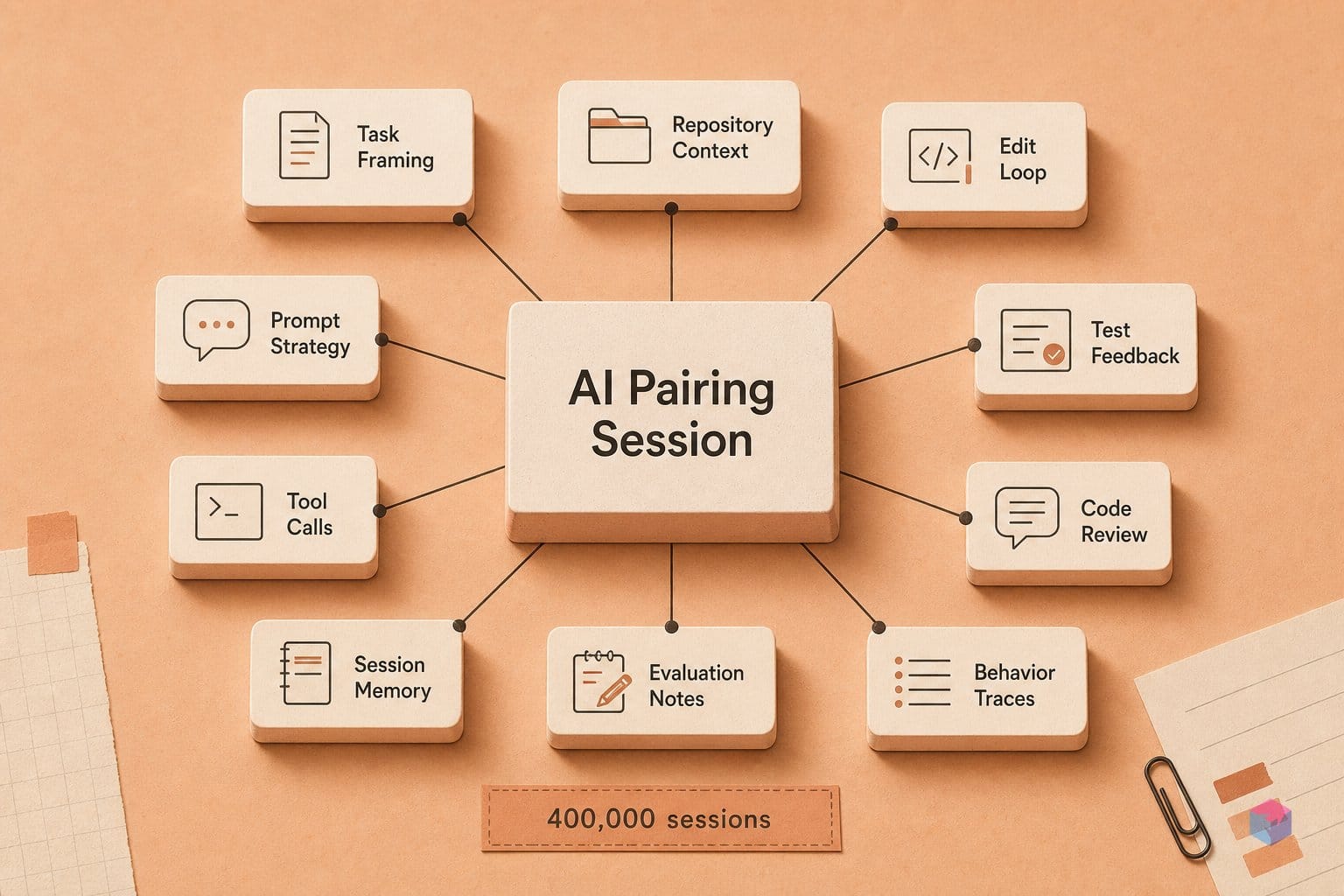
Anthropic just put numbers on a question every developer pairing with an AI has felt intuitively: who is actually driving? The answer, drawn from nearly 400,000 real sessions, is a clean split — you steer, Claude does.
Steering vs. Doing: The 70/80 Divide
In interactive Claude Code work, humans decide what to do while the model decides how. Automated classifiers attribute roughly 70% of planning decisions to users and roughly 80% of execution decisions to Claude . That is the headline finding of "Agentic coding and persistent returns to expertise," published June 16, 2026 as the coding-specific companion to Anthropic's Economic Index . Read it as a behavioral snapshot of how people delegate, not a total-traffic audit.
The dataset is 398,198 interactive sessions randomly sampled from traffic between October 2025 and April 2026, drawn from 234,751 users . Each session was coded — no human reviewer saw raw transcripts — across nine work modes: building, fixing, testing, orchestrating, operating, understanding, planning, analyzing, and communicating .
Scope matters for how you read the split. The study deliberately excludes Anthropic's internal use, zero-human-turn "headless" automation calls, third-party IDE integrations, and SDK usage, so it captures interactive work through the CLI, Claude.ai, and the desktop app rather than total Claude Code usage . In other words, the 70/80 divide describes humans and agents in a conversation — not fire-and-forget pipelines where the human turn count is zero by design.
The framing carries a claim worth stating plainly: "humans mostly decide what to do while Claude decides how to do it," per Anthropic's research team. The rest of this article tests what that division actually buys you — and where the numbers deserve skepticism.
Interaction Shape: Four Turns, Ten Actions, 2,400 Words
A typical Claude Code session is short and lopsided. Anthropic's June 2026 study finds the median interactive session runs about four human-agent turns, with each user prompt triggering roughly 10 Claude actions and about 2,400 words of output on average . That is the practical shape of the 70/80 divide: a handful of human messages, each unpacking into a dense burst of agent work.
The average hides a heavy tail. About 2% of sessions average more than 100 actions per prompt, roughly 1 in 270 exceed 200, and about 1 in 2,300 exceed 500 . These are the sessions where a single prompt sets off a long autonomous chain — the behavior most people picture when they imagine "agentic" coding, even though it is not the norm.
How much control the user cedes changes the volume directly. When Claude is allowed to handle planning as well as execution, action counts per turn roughly double — about 16 versus about 8 when the user keeps execution decisions in hand . Delegating the "how" is what inflates the action count.
One caveat bounds all of these figures: they describe interactive use through the CLI, Claude.ai, and desktop app only. The study deliberately excludes headless calls, third-party IDE integrations, and SDK usage , so total Claude Code traffic via API and SDK is not represented — and likely dwarfs this sample.
Debugging Down, Operating Up: The Composition Trend
Claude Code usage is broader than writing code, and its composition is shifting away from debugging. In a current-snapshot breakdown, direct code work accounts for about 56% of interactive sessions — building new or changed code (25%), fixing broken code (26%), and testing or orchestrating (5%) — while operating software (deploying, configuring, running pipelines, monitoring) takes 17%, planning or understanding systems 14%, and analysis or prose/document work 13% . That is a plurality on code, but nearly half the workload sits elsewhere.
The seven-month trend is sharper than the snapshot. Across the October 2025–April 2026 window, fixing fell from about 33% to 19% of interactive sessions, operating software climbed from about 14% to 21%, and writing plus data analysis roughly doubled from about 10% to 20% .
| Work mode | Start of window (~Oct 2025) | End of window (~Apr 2026) |
|---|---|---|
| Fixing broken code | ~33% | ~19% |
| Operating software | ~14% | ~21% |
| Writing + data analysis | ~10% | ~20% |
Anthropic reads this as a move from line-by-line debugging assistance toward end-to-end agentic delegation — developers handing off whole workflows rather than single lines . The value estimates track the same direction: the typical task's estimated economic value rose about 27% on average, with building tasks up ~43%, operating up ~34%, and fixing up ~32% . One caveat travels with those figures — they are model-estimated using Claude Haiku 4.5 and Opus 4.7, not observed revenue . Read them as a signal that the delegated units of work are getting larger, not as a measured dollar return.
Non-Programmers Nearly Match Programmers: The Occupation Gap
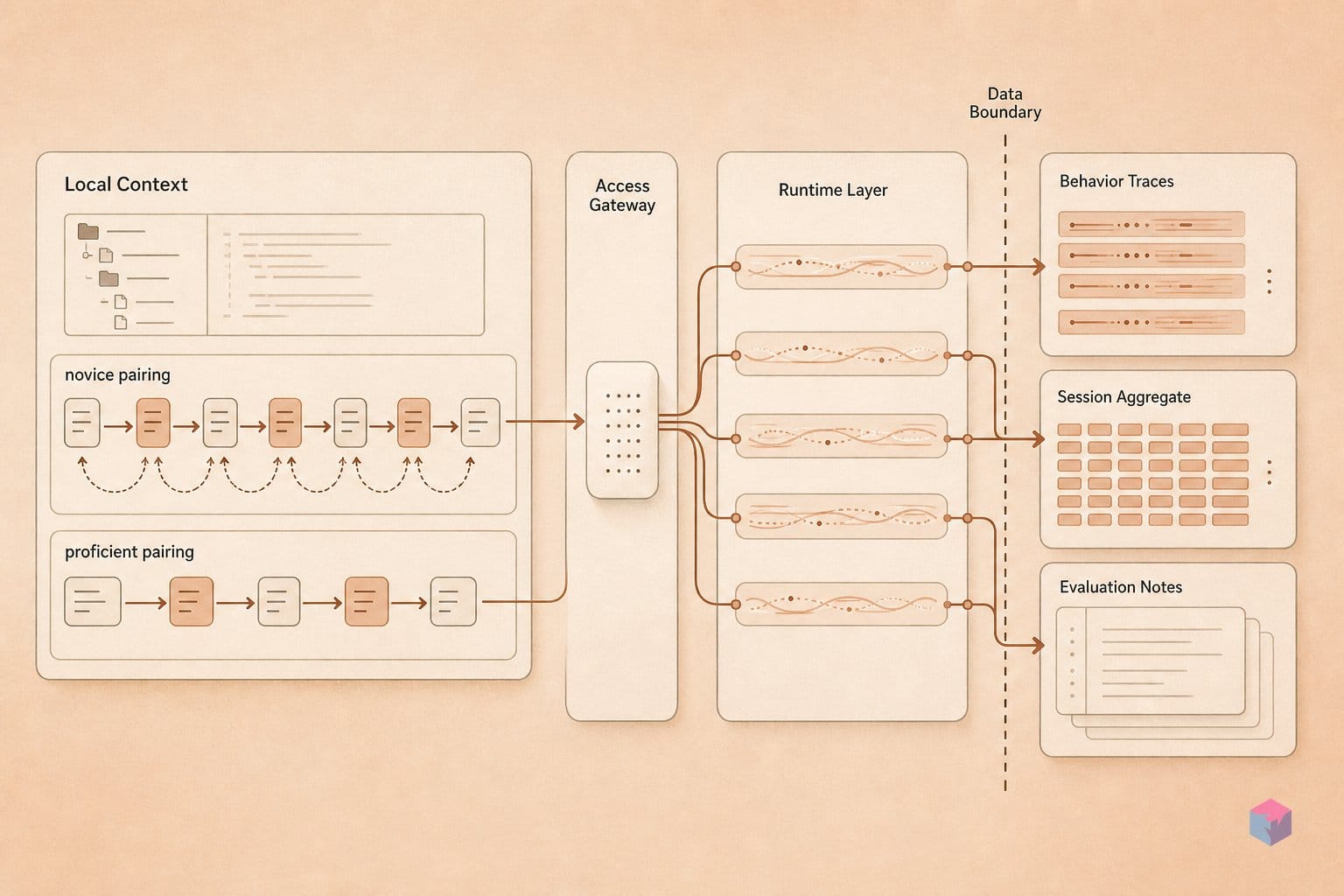
Domain expertise, not coding proficiency, is what separates successful Claude Code sessions — and the occupation data is the strongest evidence for it. Anthropic infers the user's occupation in about 70% of sessions from transcript signals such as project files, vocabulary, and referenced artifacts, with the classifier explicitly instructed not to assume that a coding user is a software developer . When it does that, the gap between programmers and everyone else turns out to be narrow.
In code-producing sessions, software-related users reach verified success about 34% of the time, versus about 29% for non-software occupations — a five-point spread. Partial success is effectively a tie: 89% vs 88%. Across the ten largest inferred occupation groups, every group lands within about seven percentage points of software/math users on verified success .
The largest identifiable group is Computer and Mathematical occupations, followed by Business and Financial Operations, Arts/Design/Media, Management, and Life/Physical/Social Sciences . That spread of accountants, designers, scientists, and managers writing working code is the point: the ability to steer Claude tracks command of a domain more than the ability to write code by hand.
One result cuts against intuition. Management occupations sit slightly above software and math users on verified success — but Anthropic flags this as a possible measurement artifact rather than a real edge . Managers may simply be more likely to explicitly confirm that a task is done in the transcript, which is exactly the signal the classifier reads as "verified success."
"The ability to steer Claude comes more from command of a domain than from the ability to write code, and a working grasp of a field captures most of the benefit while deep specialization adds only a little more." — Anthropic, Agentic coding and persistent returns to expertise (source: Anthropic Research)
Novice to Proficient: How Expertise Multiplies the Return
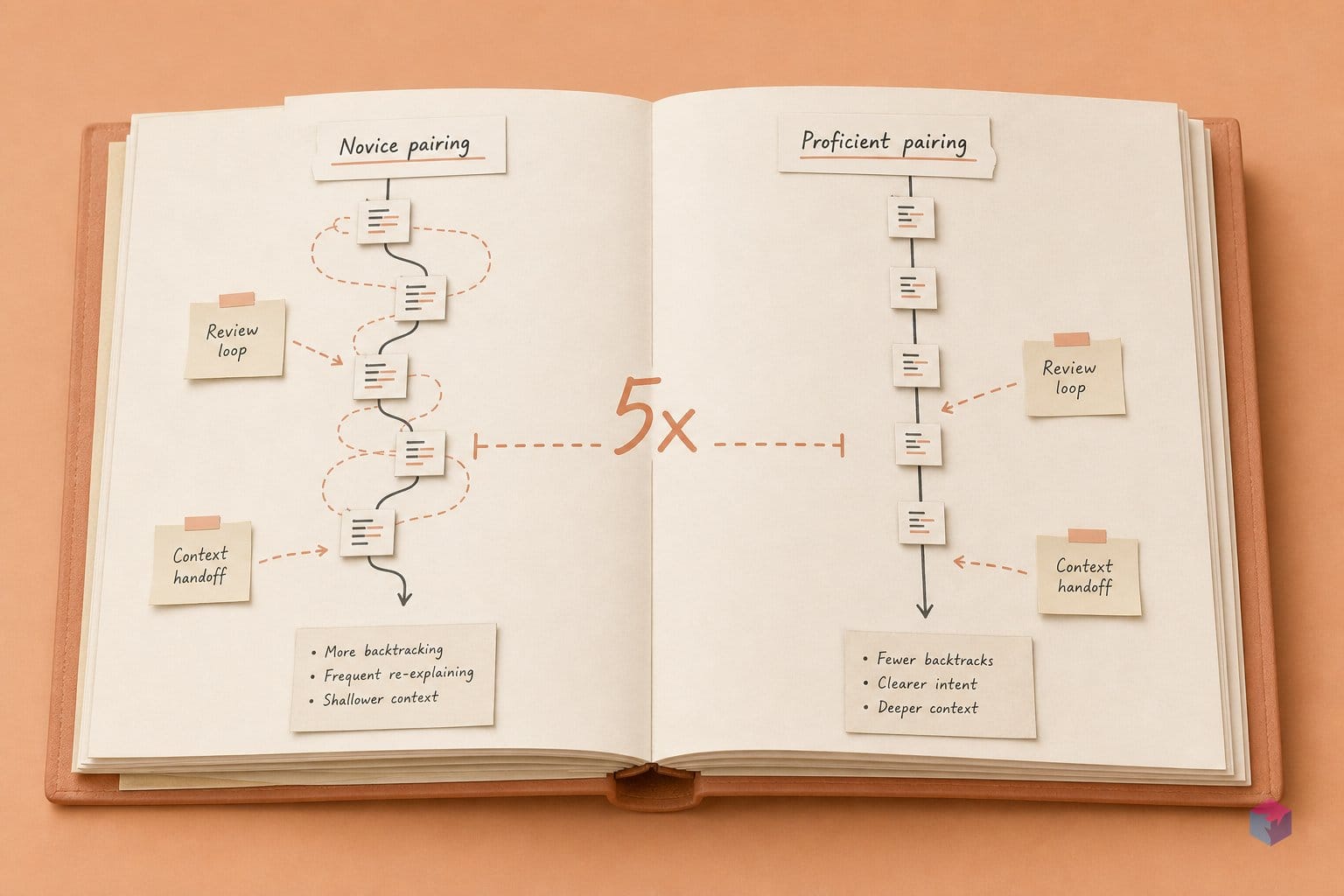
Within a domain, expertise multiplies what a session produces rather than deciding whether anything gets produced at all. Anthropic rates each session from novice to expert using signals visible in the transcript: framing precision, targeted verification, the quality of corrections, and domain reasoning . Novice-rated sessions reach verified success 15% of the time and partial success 77% of the time, while intermediate-and-above sessions reach 28–33% verified and 91–92% partial . The gap concentrates in full completion, not in getting anything done.
The volume difference per prompt is larger. Expert sessions extract about 12 Claude actions and roughly 3,200 output words, versus about five actions and 600 words for novices — a 2.4× action multiplier and a 5× output multiplier . It scales smoothly: each incremental expertise step adds about 9% more actions and 13% more output .
| Expertise tier | Verified success | Partial success | Actions / prompt | Output words |
|---|---|---|---|---|
| Novice | 15% | 77% | ~5 | ~600 |
| Intermediate+ | 28–33% | 91–92% | — | — |
| Expert | up to ~33% | ~92% | ~12 | ~3,200 |
Expertise also shows up when a session goes wrong. Verified recovery from a troubled session rises from about 4% for novices to about 15% for experts, and novices abandon troubled sessions with no code written 19% of the time, versus 5–7% for every other tier . The practical read: near-anyone can nudge Claude to a partial result, but the operators who frame precisely, verify against the right targets, and correct with domain reasoning are the ones who convert that momentum into fully completed, shipped-quality work — and who salvage a run instead of walking away empty-handed.
Why the Productivity Multipliers Should Be Read as Directional
The multipliers are useful signals, not settled facts — every headline number in this study is Anthropic studying its own product on its own infrastructure, using classifier-inferred proxies rather than self-reported ground truth. "Expertise," "occupation," and "success" are all machine-labeled from transcripts; no human reviewer confirmed that a rated expert was an expert or that a "verified success" shipped. Incentive bias and selection effects apply, because the population is early adopters on Anthropic-controlled surfaces, so treat the 5× output gap and 27% value lift as directional.
The privacy design compounds the validation problem. Anthropic's Clio system anonymizes and aggregates transcripts so researchers never inspect individual sessions . That is good for user privacy, but it also means the classifier's accuracy cannot be externally audited against the raw records it scored. The methodology itself is candid about the machinery: classifier calls generally ran on Claude Sonnet 4.6 at temperature 0.2, with transcripts middle-truncated at 5,000 characters per turn and 25,000 overall, while task-value estimation used Claude Haiku 4.5 and Opus 4.7 .
The value estimates are the softest link. Anthropic cannot observe whether generated code was ultimately shipped, retained, or economically useful — the ~27% task-value lift is model-based imputation, not measured developer or organizational outcomes . External evidence complicates that figure directly. A public SWE-chat dataset of about 6,000 coding-agent sessions — 63,000 user prompts and 355,000 tool calls — found only about 44% of agent-produced code survives into commits, users push back in about 44% of turns, 41% of sessions had agents author nearly all committed code, and 23% had humans write all of it .
"The safest synthesis: Claude Code is already shifting software work from line-by-line implementation toward task delegation and review, but the evidence is strongest for early adopters on Anthropic-controlled surfaces, and the specific multipliers should be treated as directional rather than definitive." — synthesis drawn from the study appendix (source: arXiv, 2026-06)
Read the numbers as a compass heading, not a coordinate. The direction — delegation up, review as the bottleneck — is corroborated across independent datasets; the exact magnitudes are not.
What This Means If You're Pairing with AI
If you pair with Claude Code, the practical lesson is that command of your domain outweighs raw programming fluency. Because software and non-software occupations reach verified success within about seven percentage points of each other , the leverage comes from stating domain-specific requirements precisely — invest in prompt clarity and targeted verification over syntax recall.
The output gap reinforces this. Expert sessions extract roughly 12 actions and 3,200 words per prompt versus about five actions and 600 words for novices — a 5× output multiplier . Experienced use is not just more frequent; it is structurally different. Sharper framing and tighter feedback loops compound, and verified recovery from trouble rises from about 4% for novices to 15% for experts .
The composition trend is a tooling signal. With operating software up from about 14% to 21% of sessions and fixing down from 33% to 19% , evaluate whether your AI pairing setup supports deployment, configuration, and monitoring — not only editor-side text generation.
Treat every multiplier as directional. It is consistent across 398,198 interactive sessions and partly echoed by external commit-survival data, where only about 44% of agent code reaches commits , but it is not validated against shipped production outcomes. The takeaway: build domain fluency, treat review as the bottleneck, and instrument your pipeline — not just your editor.
Frequently asked questions
What exactly did Anthropic's Claude Code study measure?
Anthropic's June 16, 2026 report, "Agentic coding and persistent returns to expertise," analyzed 398,198 interactive sessions randomly sampled from traffic between October 2025 and April 2026, drawn from 234,751 users. It covered the CLI, Claude.ai, and desktop app, and excluded headless calls, third-party IDE integrations, SDK usage, and Anthropic's own internal use. Automated classifiers read transcripts — no human reviewers saw raw content — and coded each session across nine work modes: building, fixing, testing, orchestrating, operating, understanding, planning, analyzing, and communicating .
Why do non-programmers nearly match programmers at AI pairing success?
Because steering an AI effectively draws more on command of a subject area than on the ability to write code. In code-producing sessions, software-related users reached verified success about 34% of the time versus 29% for non-software occupations, and both groups reached at least partial success at nearly the same rate — 89% versus 88%. Among the ten largest inferred occupation groups, every group landed within about seven percentage points of software users on verified success. Anthropic's reading: a working grasp of a field captures most of the benefit, and deep specialization adds only a little more .
How much does expertise improve Claude Code output per prompt?
Expert sessions extract substantially more per prompt than novice sessions. Anthropic reports expert-rated sessions average about 12 Claude actions and 3,200 output words, versus about five actions and 600 words for novices — roughly a 2.4× action multiplier and a 5× output multiplier. Each incremental expertise step adds about 9% more actions and 13% more output. Because partial-success rates stay high across all levels, the gap shows up mainly in fully verified completion rather than in getting nothing done .
What are the main caveats in Anthropic's report?
The study has real limits. It is Anthropic studying its own product, so selection and incentive effects apply, and "expertise," "occupation," and "success" are classifier-inferred proxies rather than self-reported facts. The Clio privacy system anonymizes and aggregates data so researchers never inspect individual sessions, which limits ground-truth validation. Anthropic also cannot observe whether generated code was ultimately shipped or retained. External research complicates the picture: a public SWE-chat dataset found only about 44% of agent-produced code survives into commits . Treat the specific multipliers as directional, not definitive.
Does the 398k-session dataset represent all Claude Code usage?
No. The 398,198-session sample covers interactive use only — the CLI, Claude.ai, and the desktop app. Zero-human-turn headless automation calls, third-party IDE integrations, and SDK usage are all deliberately excluded . That means total Claude Code traffic is substantially larger than this sample, and the findings describe interactive human-in-the-loop sessions rather than the full population of ways developers drive the tool.