
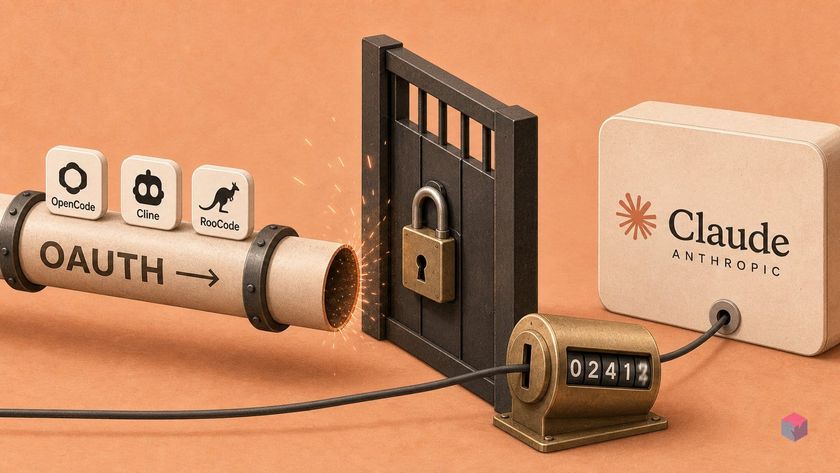
The capacity argument behind the 2026 editor shutoff
If your OpenCode, Cline, or RooCode setup stopped talking to Claude sometime in early 2026, it wasn't a bug — it was policy. Anthropic deliberately cut subscription OAuth off from third-party tools, and it did so in stages.
The first stage was quiet. On January 9, 2026, Anthropic deployed server-side enforcement and the OAuth flows in OpenCode, Cline, and RooCode began failing silently — no deprecation notice, no grace period. A February 19, 2026 Terms of Service update then added an explicit clause barring Free/Pro/Max OAuth tokens from third-party tools and the Agent SDK, and the full cutoff landed on or around April 4, 2026.
Boris Cherny, Head of Claude Code, framed it as capacity prioritization: subscription capacity was provisioned for the official CLI, not for third-party OAuth consumption . Anthropic offered a single transition sweetener — a one-time $200 credit for Max subscribers, redeemable only through April 17, 2026, with no rollover and no grandfather clause.
What to arrange before reconfiguring OpenCode, Cline, or RooCode
Before touching any editor config, secure a payment path: generate an Anthropic API key at console.anthropic.com. It takes under two minutes and is the required credential for direct per-token billing in any third-party editor now that subscription OAuth is blocked . Enterprise teams have an alternative: AWS Bedrock or GCP Vertex AI, which each editor exposes as a separate provider option in its settings panel alongside the raw API-key path .
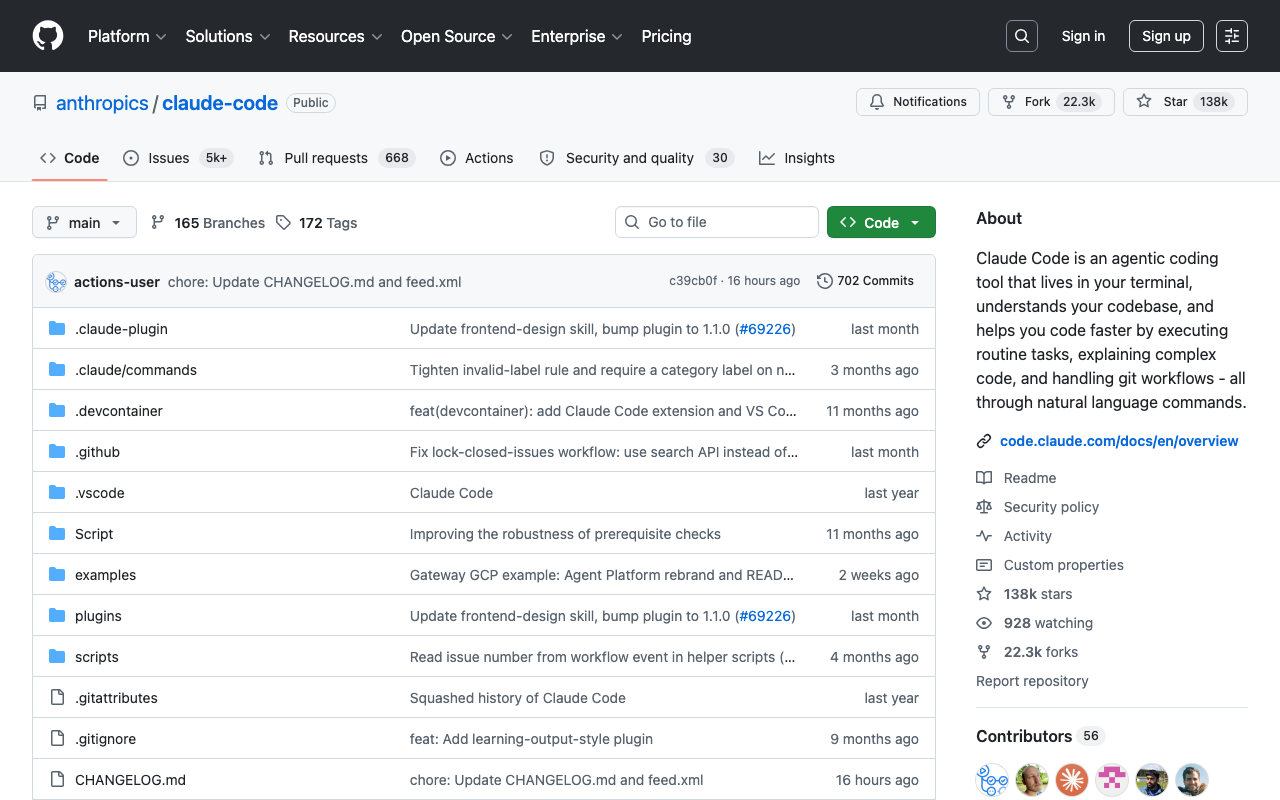
If you use the official Claude Code CLI (anthropics/claude-code, ~138k GitHub stars) exclusively, none of this applies — that surface was never affected and needs no reconfiguration .
Finally, estimate expected daily token volume before committing. Heavy agentic sessions on large codebases can run $30–50+/day on per-token billing, which may exceed a flat Max plan .
How to reconfigure OpenCode, Cline, and RooCode after the cutoff
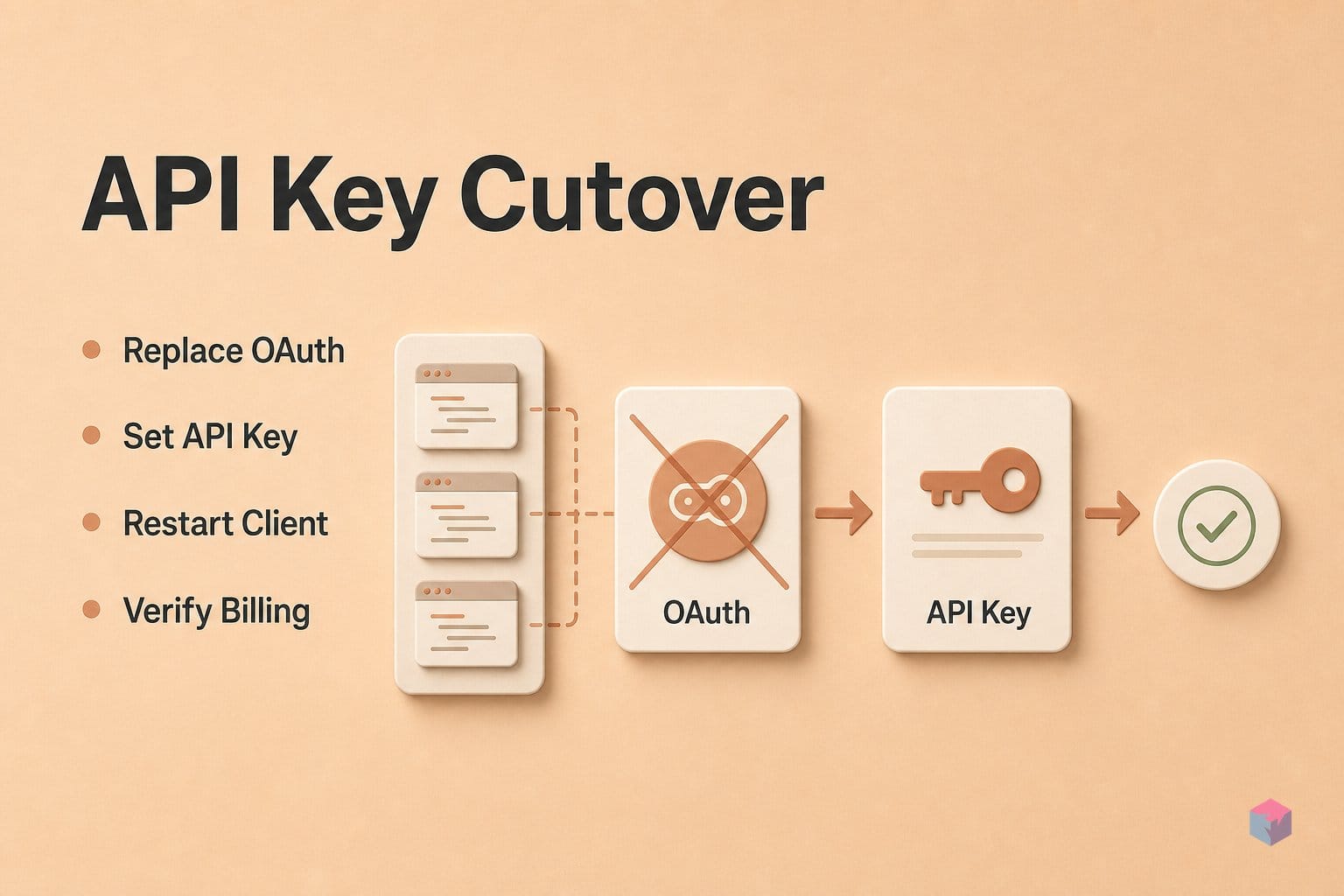
Reconfiguring each editor means swapping subscription OAuth for a direct API key, then confirming the client actually switched paths. The mechanics differ per tool but share one shape: point the provider at ANTHROPIC_API_KEY, restart, and verify billing lands. Server-side blocking of Pro/Max OAuth tokens completed on or around April 4, 2026 , so the OAuth path is dead — API keys, Bedrock, or Vertex are the working options.
| Tool | Reconfiguration path |
|---|---|
| OpenCode | Replace the ANTHROPIC_AUTH_TOKEN (OAuth value) with ANTHROPIC_API_KEY in your env file, restart the daemon, and check the status bar — it should flip from 'Subscription' to 'API'. |
| Cline (VS Code) | Open Settings, disable 'Use Anthropic Account', enable 'Anthropic API', and paste the key. Bedrock and Vertex appear as separate provider options in the same panel. |
| RooCode (VS Code Cline fork) | Identical provider-panel flow: open Roo settings, find the provider switcher, select 'Anthropic API', and enter the key. |
OpenCode, Cline, and RooCode were among the clients affected when server-side checks first landed on January 9, 2026 , so each needs the switch. To verify, send a test prompt and confirm charges appear in the console.anthropic.com usage dashboard within 60 seconds. If nothing appears, a cached OAuth token is likely still in use — clear it explicitly and restart before retrying.
Mistakes to avoid after you shift to pay-per-request
The costliest mistake is treating an API session like the old Max plan: long agentic runs re-send the entire context window on every turn, so input tokens accumulate silently and dominate the bill in a way the flat subscription never charged for. Run /compact in lengthy sessions to trim context bloat before it inflates input counts, and set a max_tokens cap in your editor settings wherever the client exposes one. Measure before you commit: ccusage (17.2k GitHub stars) produces per-session, daily, and billing-window breakdowns across Claude Code, Codex, OpenCode, Amp, Goose, and Gemini CLI — run it against a representative workload before locking into a new arrangement. If per-token Claude spend is prohibitive for your volume, note that OpenAI extended Codex subscription access to Cline, RooCode, and OpenHands (~80k GitHub stars) as a subsidized counter-move worth testing side by side.
What to explore after reconfiguring: community extenders and ecosystem choices
Once your billing path is stable, treat the community layer as optional depth, not a requirement. The standard starting point is hesreallyhim/awesome-claude-code (~50k stars ), a curated catalog of skills, subagents, MCP servers, statuslines, and cost monitors. For provider flexibility, Claude Code Router (musistudio, 35.8k stars ) is a local control plane for fallback chains and credential pools; install via desktop artifacts or npm install -g @musistudio/claude-code-router (gateway at 127.0.0.1:3456, management UI at 127.0.0.1:3458). And Superpowers — accepted into Anthropic's official plugin marketplace on January 15, 2026 — runs through the official CLI via /plugin install superpowers, so the OAuth cutoff never touches it.
Before committing to any of these, vet it in a disposable repo, inspect the generated .claude/settings.json, and run ccusage to confirm the real cost delta. Extend deliberately — one category at a time — and let measured spend, not star counts, decide what stays.
Frequently asked questions
Does the official Claude Code CLI still use my Pro or Max subscription after April 2026?
Yes. The official CLI (anthropics/claude-code) was never affected by the OAuth block and continues to draw on your Pro or Max subscription capacity as before. The server-side checks that landed on January 9, 2026 and the full cutoff around April 4, 2026 targeted only third-party tools authenticating with subscription OAuth tokens. Official CLI users need no reconfiguration.
Can I still use Cline or RooCode with Claude after the April 2026 cutoff?
Yes, but not through subscription OAuth. Cline and RooCode still reach Claude models via an Anthropic API key (pay-per-token) or by routing through AWS Bedrock or GCP Vertex . Direct API access works normally — the only thing removed is the shortcut that let these tools consume your Pro/Max included capacity. You will need to generate and configure a separate API key.
Why did Anthropic cut off third-party OAuth access?
Boris Cherny, Head of Claude Code, framed the change as capacity prioritization: Pro and Max subscription capacity was provisioned for the official CLI, not for third-party consumption through OAuth tokens . A February 19, 2026 Terms of Service update added an explicit clause barring Free/Pro/Max OAuth tokens from third-party tools and the Agent SDK. No refund or grandfather clause was offered beyond a one-time credit redeemable by April 17, 2026.
Is there a cheaper alternative to Anthropic API billing for Cline and RooCode?
There are two practical options. OpenAI extended Codex subscription access to Cline, RooCode, and OpenHands as a direct counter-move, letting you keep a subscription model for those tools . Alternatively, teams with existing cloud contracts can route Claude through AWS Bedrock or GCP Vertex at negotiated rates. Which is cheaper depends on your usage volume and whether you already hold a discounted cloud agreement.
What is the practical difference between OAuth subscription billing and API key billing?
OAuth let third-party tools piggyback on your Pro or Max included capacity with no marginal per-prompt cost — you paid a flat monthly fee. API key billing, managed through console.anthropic.com, charges per token with no monthly floor. The trade-off matters for heavy agentic sessions: work that felt free under a subscription can cost materially more pay-as-you-go, so measure real token spend before committing to a workflow.
Enjoyed this article? Subscribe to get new stories by email whenever they're published.