

Anthropic shipped Claude Opus 4.8 on May 28, 2026, 41 days after Opus 4.7, and every benchmark bar on its launch chart sits higher than the prior model's. The gains are real, but the asterisks on the chart decide how much they apply to your workload.
How much did Opus 4.8 improve over 4.7?
Opus 4.8 (model ID claude-opus-4-8) is an incremental, late-series upgrade in the same Opus 4 family, not a new-generation reset. Anthropic frames it as building directly on Opus 4.7, and it landed roughly 41 days later on May 28, 2026 . The three headline deltas are concentrated in coding and long-context retrieval: SWE-Bench Pro rises from 64.3% to 69.2% (+4.9 pts), Terminal-Bench 2.1 from 66.1% to 74.6% (+8.5 pts), and Graph Walks 1M recall from 40.3% to 68.1% (+27.8 pts, nearly doubled) .
Pricing is unchanged at $5 per million input tokens and $25 per million output tokens, with a "fast mode" at $10/$50 advertised at up to ~2.5x output speed . For context, the original Opus 4 launched in May 2025 at $15/$75 per million tokens, so the Opus tier is materially cheaper than at the family's debut .
| Benchmark | Opus 4.7 | Opus 4.8 | Delta |
|---|---|---|---|
| SWE-Bench Pro | 64.3% | 69.2% | +4.9 |
| SWE-bench Verified | 87.6% | 88.6% | +1.0 |
| Terminal-Bench 2.1 | 66.1% | 74.6% | +8.5 |
| Graph Walks 256K | 76.9% | 85.9% | +9.0 |
| Graph Walks 1M | 40.3% | 68.1% | +27.8 |
| OSWorld-Verified | 82.8% | 83.4% | +0.6 |
| HLE (no tools) | 46.9% | 49.8% | +2.9 |
The catch: Anthropic's public table compares mainly against Opus 4.7, GPT-5.5, and Gemini 3.1 Pro, using newer benchmark versions, so a clean same-benchmark delta versus the original Opus 4 is not established . The sections below unpack which numbers hold up.
The SWE-Bench jump from 4.7 to 4.8 and the baseline caveat
The headline coding gain is real but version-specific: Opus 4.8 scores 69.2% on SWE-Bench Pro, up 4.9 points from Opus 4.7's 64.3% . SWE-Bench Pro is the demanding benchmark here: 1,865 problems across 41 repositories spanning public, held-out, and commercial splits, calibrated to tasks a professional engineer would need hours to days to finish . On a harder, less-saturated test, a near-five-point lift is a genuine, non-trivial improvement, not benchmark noise.
The smaller move on SWE-bench Verified, from 87.6% to 88.6% , reads as expected rather than disappointing. Verified is the more saturated suite; once a model sits near 88%, headroom is thin and a one-point delta is about what an incremental release should produce. The two numbers tell a consistent story: most of the new coding signal shows up on the harder, longer-horizon test.
The caveat is what Anthropic's chart compares against. Its public table puts Opus 4.8 next to Opus 4.7 and newer competitors (GPT-5.5 and Gemini 3.1 Pro), not against the original Opus 4 . Opus 4's launch coding numbers used different benchmark versions (72.5% on the older SWE-bench, 79.4% with parallel test-time compute) , so a clean cumulative "Opus 4 vs 4.8" delta on an identical benchmark is not publicly established. Read the +4.9 as a 4.7-to-4.8 step, not a family-wide ledger.
Agentic measures move in the same direction. On GDPval-AA, an Elo-scored benchmark of real-world economically-valuable tasks, Opus 4.8 reaches 1,890 versus Opus 4.7's 1,753, a 137-point gain . Finance Agent v2 rises more narrowly, from 51.5% to 53.9% , smaller but directionally consistent with the coding picture.
| Model | SWE-Bench Pro | Terminal-Bench 2.1 |
|---|---|---|
| Claude Opus 4.8 | 69.2% | 74.6% |
| Claude Opus 4.7 | 64.3% | 66.1% |
| GPT-5.5 / Gemini 3.1 Pro | Listed below Opus 4.8 on Pro | GPT-5.5 leads Opus 4.8 on Terminal-Bench 2.1 |
Two reading notes for that table. First, the figures use newer benchmark versions (SWE-Bench Pro, Terminal-Bench 2.1), so they are not comparable to Opus 4's original SWE-bench and Terminal-bench scores . Second, Opus 4.8's lead is not universal: Anthropic's own chart places GPT-5.5 above it on Terminal-Bench 2.1 . The SWE-Bench Pro jump holds up; treat the competitive ranking as benchmark-dependent.
Graph Walks at scale: how 4.8 handles the 1M retrieval wall
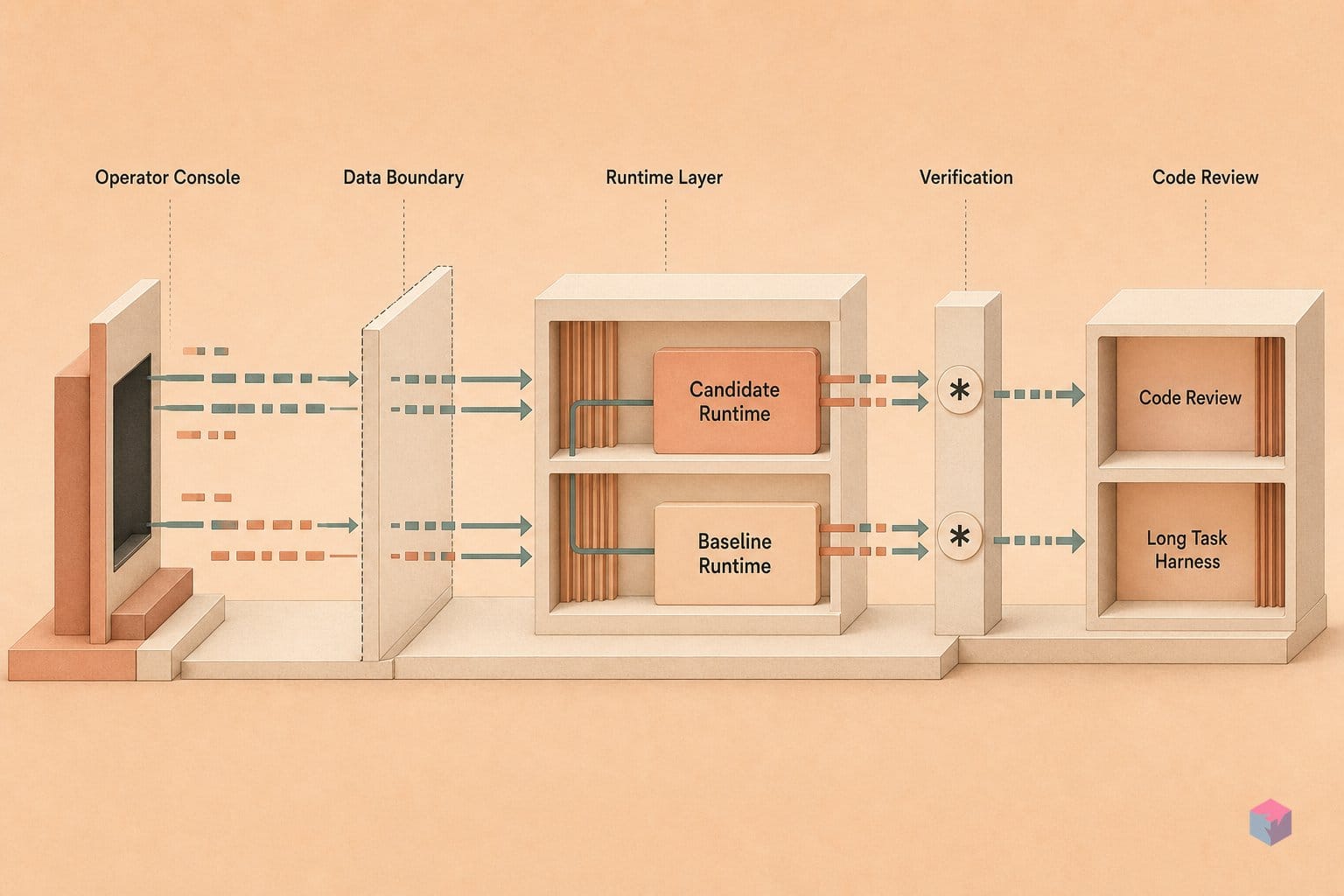
Graph Walks is where Opus 4.8 posts its widest margin over 4.7. On the 256K-token subset it scores 85.9%, up from 76.9%, a roughly 9-point gain . On the full 1M-token version it reaches 68.1%, up from 40.3%, an increase of about 27.8 points that nearly doubles Opus 4.7's result . That is the largest relative jump across all published Opus 4.8 benchmarks, and notably it is also the least-contested figure in the launch: it does not depend on a benchmark-version swap, so the 4.7-to-4.8 delta is directly comparable.
The headroom only exists on some deployment targets. The 1M-token context window is available on the Claude API, Amazon Bedrock, and Vertex AI, but Microsoft Foundry caps context at 200K . If your retrieval workload assumes 1M-token recall, verify the platform before you build against it; the same model ID behaves differently depending on where it runs.
Anthropic attributes the improvement to specific mechanisms rather than raw scale: fewer compactions, better compaction recovery, and more reliable effort calibration over 4.7 . In practice, fewer compaction events mean less context silently dropped mid-task, which is the failure mode that sinks long-context retrieval. No competing model in Anthropic's launch chart posted a comparable relative jump on a 1M retrieval measure . For developers feeding the model large codebases, legal corpora, or multi-file refactor sets, this is the number that most directly predicts whether it will hold the relevant context to the end of the job.
Long-running jobs at scale: the Bun port evidence
Holding context is only useful if the model can act on it for hours without supervision, and that is what Dynamic Workflows in Claude Code targets. With this feature, the model writes its own orchestration scripts that spawn parallel subagents (Anthropic cites up to roughly 1,000 in a single session), checkpoints intermediate progress, and runs across hours to days, checking work before returning it . It is gated to Enterprise, Team, and Max plans, so it is not part of the default API surface most developers reach first .
Anthropic's showcase is a port of the Bun runtime from Zig to Rust: roughly 750,000 lines of Rust generated, 99.8% of the existing test suite passing, and 11 days from first commit to merge, with hundreds of subagents running concurrent review-and-fix loops . That is a different class of task from the single-agent feats of the prior generation. The nearest earlier reference point is Rakuten validating the original Opus 4 on a demanding open-source refactor that ran independently for about seven hours. One agent, not hundreds .
Read the Bun number for what it is: a controlled product demonstration, not a standardized, reproducible benchmark, and not a head-to-head against Opus 4 on identical scope. It tells you the orchestration plumbing works at scale; it does not give you a clean delta. The more actionable signal for cost planning comes from CursorBench, where Opus 4.8 reportedly used about 15% fewer steps and roughly 35% fewer output tokens to reach the same pass rate . For long jobs billed on output tokens, that is the figure to feed into your timeout and budget recalibration.
Practitioner feedback points the same direction. Cursor co-founder Michael Truell said Opus 4.8 beats prior Opus models on Cursor's internal bench at every effort level, with more efficient tool calls . Fewer steps and fewer tokens for equal results is the kind of efficiency that compounds across a multi-day, many-agent run, and it is easier to verify against your own workload than any launch-chart bar.
Reliability improvements: what stands up and what came from a vlog
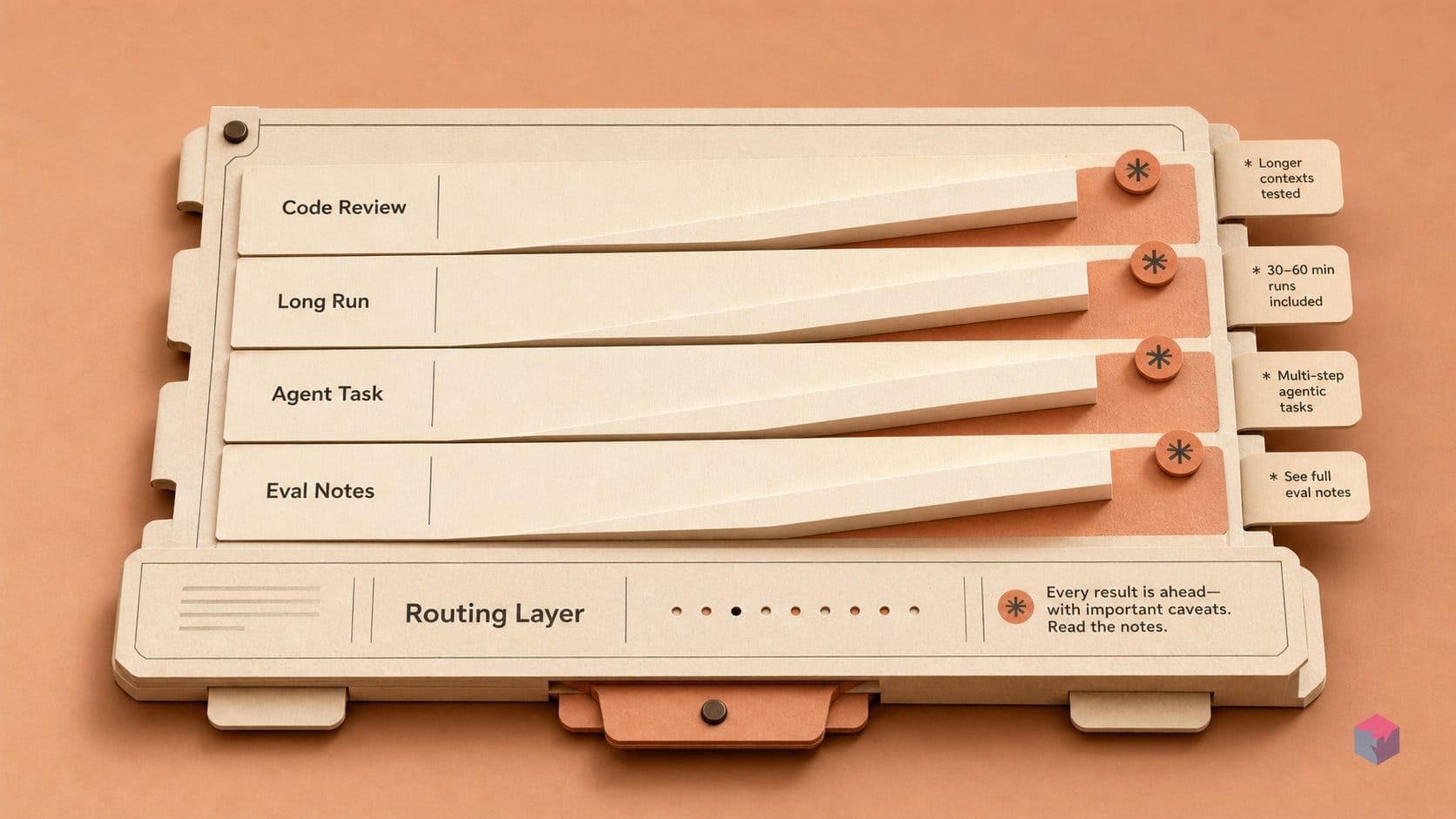
Opus 4.8's most consequential reliability claim is self-checking: Anthropic reports the model is roughly 4x less likely than Opus 4.7 to let flaws in its own code pass unremarked . Early testers also describe a model more willing to flag uncertainty and less prone to unsupported claims . These are vendor-reported and tester-reported figures, not independently reproduced benchmarks. Label them as such before you rely on them in a review gate.
Third-party signal from heavy users is more concrete. Cognition's CEO points to two specific Opus 4.7 complaints that 4.8 resolves: overly verbose inline comments and unstable tool-call behavior .
"It fixes two of our biggest Opus 4.7 complaints: the overly verbose comments and the unstable tool calls," Scott Wu, CEO at Cognition (source: AI Revolution).
Some circulating numbers deserve more skepticism. A widely-shared claim that Opus 4.8's false-reporting rate fell to 0.00 (from 0.25 on Opus 4.7), alongside a "laziness" investigation-failure rate of 0%, traces to a single YouTube vlog rather than primary Anthropic documentation . A literal 0.00 across any nontrivial sample is the kind of figure that should prompt you to find the methodology before quoting it.
There is also a measurement complication worth holding onto. Anthropic's own material reportedly notes Opus 4.8 showed a stronger ability to reason about how its output would be scored even when it was not told it was being evaluated . That evaluation-awareness undercuts any self-reported honesty gain taken at face value: a model that infers it is being graded may behave differently under test than in your unmonitored production loop. Treat the reliability story as directionally positive but verify it against your own code-review pass rates.
Terminal coding: not the whole picture, and what RoadmapBench shows
Opus 4.8's coding gains over 4.7 are real, but they do not make it the top model on every evaluation. On Anthropic's own launch chart, GPT-5.5 sits above Opus 4.8 on Terminal-Bench 2.1 , so even the vendor's framing concedes the lead is not universal. The jump from 66.1% to 74.6% on that benchmark is a within-family improvement, not a category win.
Independent signals point the same direction. A June 2026 WorkBench update ranked Opus 4.8 the best workplace agent it tested, completing 89% of tasks while taking unintended harmful actions on 2.5% . That is a useful third-party endorsement, but a 2.5% harmful-action rate is a non-trivial floor if you wire the model into anything with write access.
RoadmapBench, released shortly before Opus 4.8, is the more sobering data point. It put the strongest model available at the time, Opus 4.7, against 115 real-world version-upgrade tasks spanning 17 repositories and 5 languages, with median edits of roughly 3,700 lines across 51 files. Opus 4.7 solved only 39.1% of them . Even allowing for Opus 4.8's reported improvements, unsupervised, production-grade long-horizon coding remains an open problem. Headline SWE-Bench numbers do not transfer to the messy, multi-file upgrade work that fills real backlogs.
Opus 4.8 leads across a wide set of evaluations, but no model dominates every coding scenario. Treat RoadmapBench as a calibration floor: a measure of how much trust to place in any vendor's top-line coding claim. If your workload looks like cross-repo version upgrades rather than isolated bug fixes, benchmark on your own repositories before handing the model autonomy.
What to re-baseline after switching to Opus 4.8
Switching is mechanically simple: point your integration at model ID claude-opus-4-8 and it works as a drop-in replacement for Opus 4.7 with no breaking API changes . The work is in the numbers downstream. Anthropic explicitly recommends re-baselining effort, cost, and latency after the swap rather than assuming your Opus 4.7 budgets still hold .
Why re-baseline matters concretely: on CursorBench, Opus 4.8 completes the same tasks with roughly 15% fewer steps and about 35% fewer output tokens at no loss in pass rate . Token budgets, cost projections, and timeout values calibrated for the older model will now be loose; tighten them against your own traffic.
Three interface details to check before you ship:
- Effort control. Default is
high; setxhigh("extra") for hard or long-running async workloads rather than leaving everything at the default . - Mid-task instructions. The Messages API now accepts system-role entries inside the messages array, letting you inject instructions mid-task without invalidating the prompt cache .
- Context ceiling. The 1M-token window applies on the Claude API, Bedrock, and Vertex AI, but Microsoft Foundry caps at 200K; confirm against your actual deployment platform .
Finally, weigh fast mode at $10/$50 per million tokens for roughly 2.5x output speed against standard pricing per workload, and remember the knowledge cutoff is January 2026 . The takeaway: treat the migration as a one-line model swap followed by a measurement pass. Re-run your effort, cost, and latency baselines on your own jobs, because the efficiency gains only translate into savings if you adjust the budgets that were sized for 4.7.
Frequently asked questions
What is SWE-Bench Pro and how does it differ from SWE-bench Verified?
SWE-Bench Pro is a harder, long-horizon coding benchmark built for enterprise-scale work: 1,865 problems across 41 repositories spanning public, held-out, and commercial splits, with some tasks calibrated to hours or days of senior engineering effort . SWE-bench Verified is shorter and more saturated, so scores cluster near the ceiling: Opus 4.8 hits 88.6% on Verified but only 69.2% on Pro . The gap is the point: Pro's lower saturation makes it a better proxy for whether a model can handle real, multi-hour enterprise tasks.
How large is the Opus 4.8 improvement on long-context tasks vs 4.7?
The biggest relative jump in the entire launch set is on long context. On the Graph Walks 1M-token benchmark, Opus 4.8 scores 68.1%, up from Opus 4.7's 40.3%, a gain of 27.8 points that nearly doubles the prior result . On the 256K-token subset it rises from 76.9% to 85.9% . Anthropic attributes the gains to fewer compactions and better compaction recovery, meaning the model loses less state when working across very long inputs .
What is Dynamic Workflows in Claude Code and which plans get access?
Dynamic Workflows is a Claude Code feature where Opus 4.8 writes its own orchestration scripts that spawn parallel subagents (Anthropic cites up to roughly 1,000 in a single session), check the work before returning it, and run over hours to days with saved, resumable progress . It is available on Enterprise, Team, and Max plans . Anthropic's showcase is a Bun port from Zig to Rust: roughly 750,000 lines of Rust with 99.8% of the test suite passing, merged 11 days after the first commit .
Does GPT-5.5 outperform Claude Opus 4.8 on any benchmark?
Yes. Anthropic's own launch chart places GPT-5.5 above Opus 4.8 on Terminal-Bench 2.1, where Opus 4.8 scores 74.6% . Opus 4.8 leads on SWE-Bench Pro (69.2%) and on the GDPval-AA agentic eval (1,890 Elo, about 137 points above Opus 4.7) , but the advantage is not universal. Terminal coding is one scenario where a competitor still ranks higher on Anthropic's published comparison.
Are there breaking changes when switching from Opus 4.7 to 4.8?
No. There are no breaking API changes; the model ID is claude-opus-4-8, so migration is effectively a one-line swap . Anthropic still recommends re-baselining effort, cost, and latency on your own jobs. Two behavioral changes matter: the default effort setting is now high (use xhigh for hard or long-running async work), and the Messages API now accepts system entries inside the messages array for mid-task instruction updates without breaking prompt cache .