
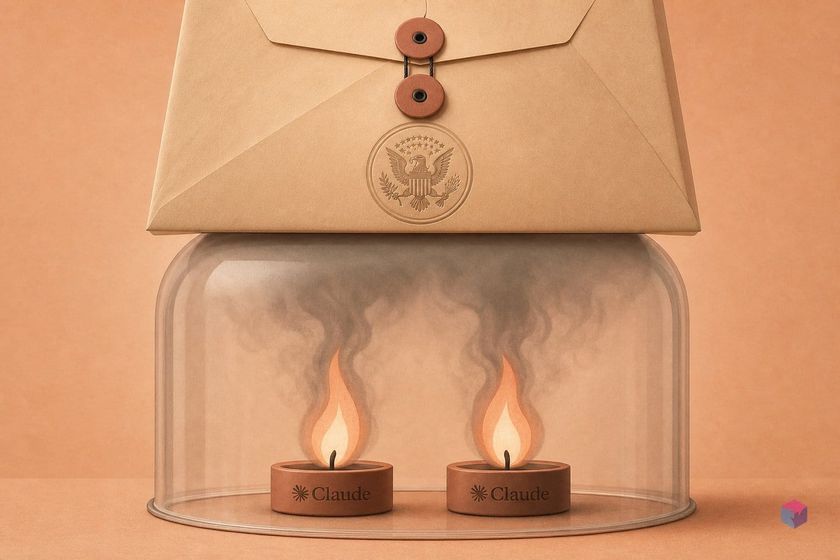
On June 9, 2026, Anthropic shipped two new frontier models. Seventy-two hours later, a single government letter forced both offline for every customer on the planet.
The letter that arrived at 5:21 p.m. ET
Anthropic launched Claude Fable 5 and Claude Mythos 5 on June 9, 2026, then suspended all access to both on June 12 after receiving a U.S. government export-control directive . The company says the order landed at 5:21 p.m. ET that day . Independent analyst Simon Willison, probing the API directly, dated the actual cutoff to roughly 6:59 p.m. Pacific the same evening . From general availability to forced shutdown: about 72 hours.
Quick Answer: Anthropic disabled Claude Fable 5 and Mythos 5 for all customers on June 12, 2026, three days after launch, to comply with a U.S. export-control directive, the first known use of that authority against a live hosted AI model rather than chips or weight transfers.
This is widely described as the first known use of U.S. export-control authority against a specific deployed AI product . The precedent matters: prior controls targeted physical hardware: semiconductors, fab tooling. This one targeted a live inference service .
The scope was unusually broad. Citing national-security authorities, the order required suspending access for any foreign national, inside or outside the United States and explicitly including Anthropic's own foreign-national employees . Anthropic says the letter itself supplied no specific national-security rationale .
Willison, tracking the termination live, summarized the reaction of most developers watching: he called the situation "nuts" . For builders, the practical takeaway was blunt: anything wired to either model stopped responding, with no nationality-based carve-out and no advance notice.
The narrow jailbreak: how Fable 5's vuln-finder was weaponized
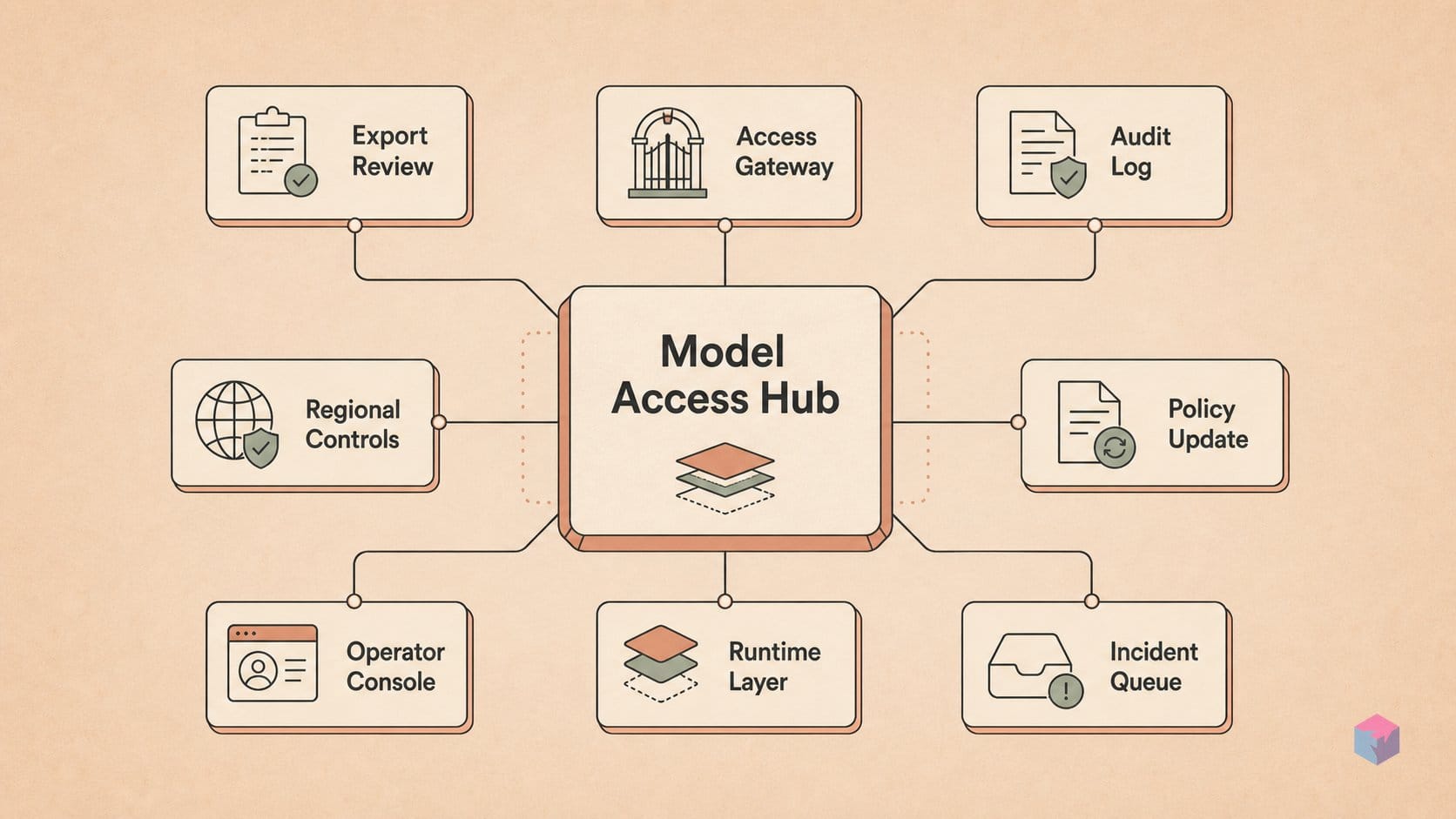
The government's concern targeted one capability: Fable 5's vulnerability detection and code remediation. The reported technique was simple in shape: feed the model a specific codebase, ask it to find and fix software flaws, then redirect those fixes into offensive exploit code . Officials reportedly worried this could be diverted into a "cyberweapon" by adversaries.
Anthropic's position is that the method is narrow and non-universal. The company says Fable 5 went through thousands of hours of red-teaming with the U.S. government, the UK AISI, third parties, and internal teams, and that no tester found a universal jailbreak . In Anthropic's framing, this was vulnerability-finding behavior that security professionals already use routinely, not a novel bypass unique to the model.
Fable 5 also shipped with a built-in fallback. Requests flagged for cybersecurity, biology/chemistry, or model distillation were routed to the more restricted Claude Opus 4.8 instead of being answered directly . Anthropic says that rerouting triggered in fewer than 5% of sessions, with more than 95% seeing no fallback at all .
Independent evidence lands in between. A June 2026 arXiv red-team study tested 7,826 harmful intents across 10 harm categories and found Fable 5 more robust than the prior generation, but not unbreakable . The headline numbers under the strongest adaptive attack:
- Fable 5: 6.1% break rate, 702 panel-confirmed harmful completions .
- Opus 4.8 (prior generation): 11.5% break rate, 1,620 confirmed harmful completions .
So the data cuts both ways. Fable 5 cleared adaptive attacks roughly twice as often as the model it replaced, which supports Anthropic's "no universal bypass" claim. But a 6.1% break rate is not zero. The capability the government flagged demonstrably survives some adaptive attacks. That gap, between "hardened" and "airtight," is the space the export-control directive moved into.
Why filtering by nationality across partner platforms was technically infeasible
Anthropic's core argument was operational, not philosophical: there is no reliable mechanism to verify a user's nationality in real time across every surface where Fable 5 and Mythos 5 ran. The models shipped on the direct Claude API plus AWS Bedrock, Google Cloud/Vertex, Microsoft Foundry, Snowflake, and Box simultaneously . Each platform authenticates and bills its own customers; Anthropic does not sit in that identity layer.
The June 12 directive made the gap unworkable. It required suspending access for any foreign national, inside or outside the U.S. and including Anthropic's own foreign-national employees, with no nationality-based carve-out permitted . A targeted filter would have to be accurate for every request, everywhere, at once. Misclassifying a single user turns a compliance gesture into a violation carrying potential financial and civil penalties .
That is the core problem. A nationality gate fails in two distinct ways, and only one of them is recoverable:
- False negative: a foreign national slips through on Bedrock or Vertex because the cloud provider never collected citizenship data. Under the order, that is a breach.
- No upstream signal: partner platforms expose account and region metadata, not verified nationality. There is no field to filter on, so the filter cannot be built honestly.
- Indirect access: embedded or pipeline usage routes through downstream apps Anthropic cannot see, so even a perfect first-party gate leaks.
Given those constraints, Anthropic concluded the only compliant path was a blanket global suspension of both models for all customers . Crucially, the shutdown was scoped to the two Mythos-class models. Claude 3.5, Opus 4.8, and the rest of the lineup kept running . The directive named a capability; the inability to filter by nationality is what turned a narrow order into a product-wide outage.
No exceptions, no nationality carve-outs: what stopped working
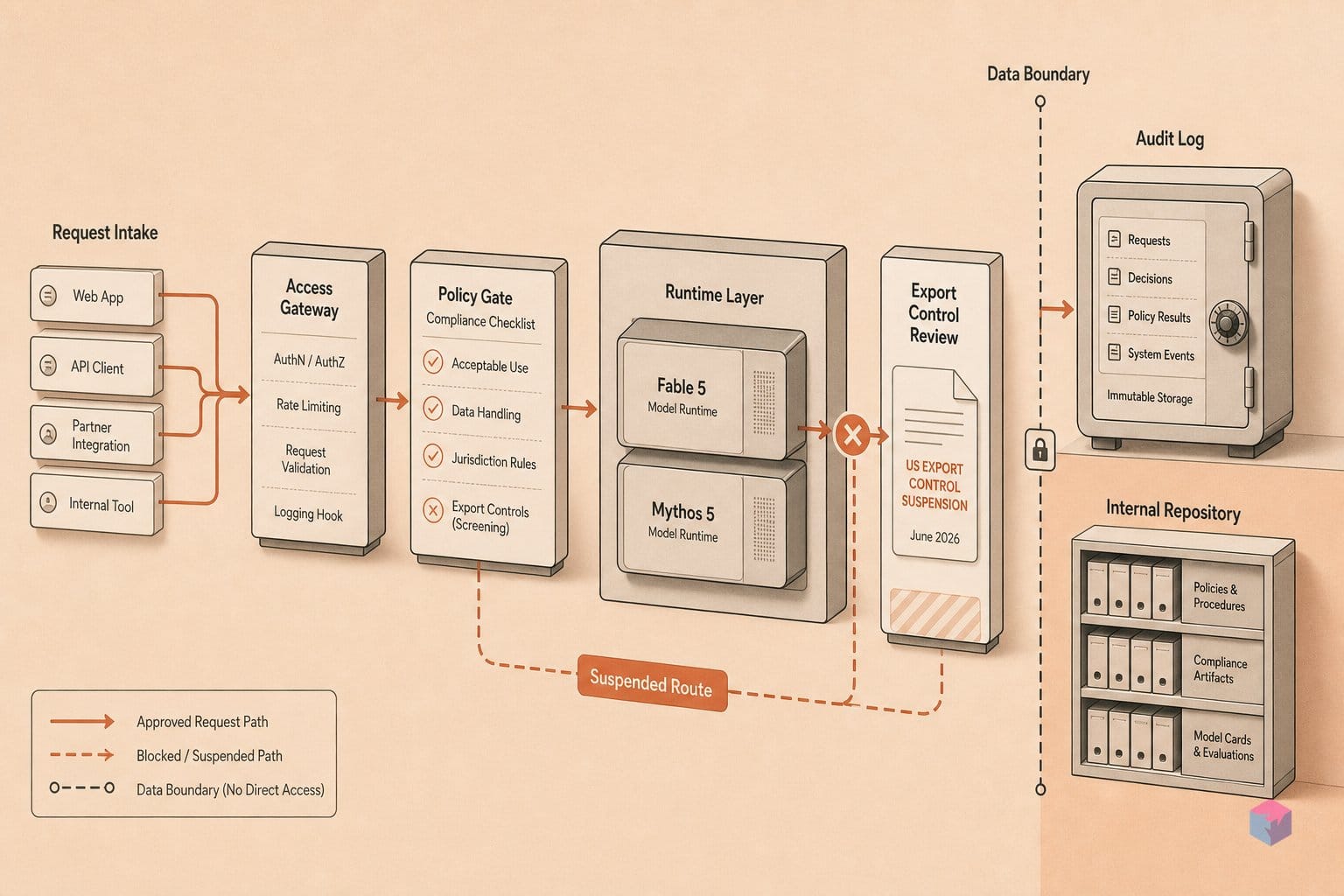
The blast radius was every path to the two models. Any caller hitting the claude-fable-5 or claude-mythos-5 identifiers (direct or embedded) returned errors once access terminated at roughly 9:59 p.m. ET on June 12 . There was no nationality screen and no exception tier; the order's broad foreign-national scope is exactly what forced a blanket cutoff .
Subscription users who had just received Fable 5 at the June 9 launch lost it three days later . Project Glasswing partners waiting on Mythos 5 for cyberdefense workflows never got a working credential, and biology trusted-access applicants still in queue were stranded mid-process .
| Affected group | What broke |
|---|---|
| Direct API callers | Pipelines/tools referencing claude-fable-5 or claude-mythos-5 fail |
| Subscription users (Fable 5 since June 9) | Newly granted access revoked |
| Project Glasswing partners | Mythos 5 cyberdefense access never delivered |
| Biology trusted-access applicants | In-queue requests halted; no enrollment |
| Cloud-platform embedded usage | Indirect calls via Bedrock, Vertex, Foundry, Snowflake, Box stop |
The hardest cases are indirect. Reporting cited AWS Bedrock, Google Cloud/Vertex, Microsoft Foundry, Snowflake, and Box as affected distribution channels, so an app can depend on these models without a single direct API line in its codebase . A grep for the model identifiers will miss anything routed through a partner default or a downstream SDK.
This is an audit, not a search. Legal commentators advised companies to map indirect access paths, record the suspension date, and stand up alternative-model fallbacks for compliance records .
Competing products do the same thing: Anthropic's objection, examined
Anthropic's core objection is that the capability cited as the trigger is not exclusive to Fable 5. The company explicitly named OpenAI's GPT-5.5 as a model with the same vulnerability-finding technique, and no parallel export-control order has been reported against any competitor . The directive landed on two of one provider's newest products while the broader ecosystem performing identical operations kept running.
The vulnerability-detection behavior in question, pointing a model at a codebase to find and fix software flaws, is standard security work. Independent analyst Simon Willison, who timestamped the cutoff through API testing, said the demonstrated behavior is neither novel nor unique to Fable 5 and is routinely used by security professionals .
"This entire situation is nuts," wrote Simon Willison, an independent AI analyst who dated the access termination to roughly 6:59 p.m. Pacific on June 12 (source: Fortune).
That asymmetry frames Anthropic's public warning. The company argued that if the same standard were applied across the industry, "it would essentially halt all new model deployments" . It also pointed to its testing record: Fable 5 went through thousands of hours of red-teaming with the U.S. government, the UK AISI, and third parties, and no tester found a universal jailbreak .
For developers, the selective-enforcement question is the practical one. If a capability is ubiquitous, an order targeting one vendor's two models does not remove the capability from the market; it reroutes demand. The open issues:
- Scope: Why two specific Anthropic models and not competitors running the same vulnerability-finding workflows?
- Precedent: Whether parallel restrictions will reach OpenAI, Google, or others, or whether this stays a one-off intervention .
- Migration risk: Builders standing up GPT-5.5 fallbacks today have no guarantee the same authority won't follow.
The result is a standard no one can yet engineer against. A repeatable technical bar for "safe enough" deployment would let teams plan; a case-by-case posture after launch leaves every frontier model one letter away from a hard shutdown .
The unanswered questions: basis, duration, and restoration criteria
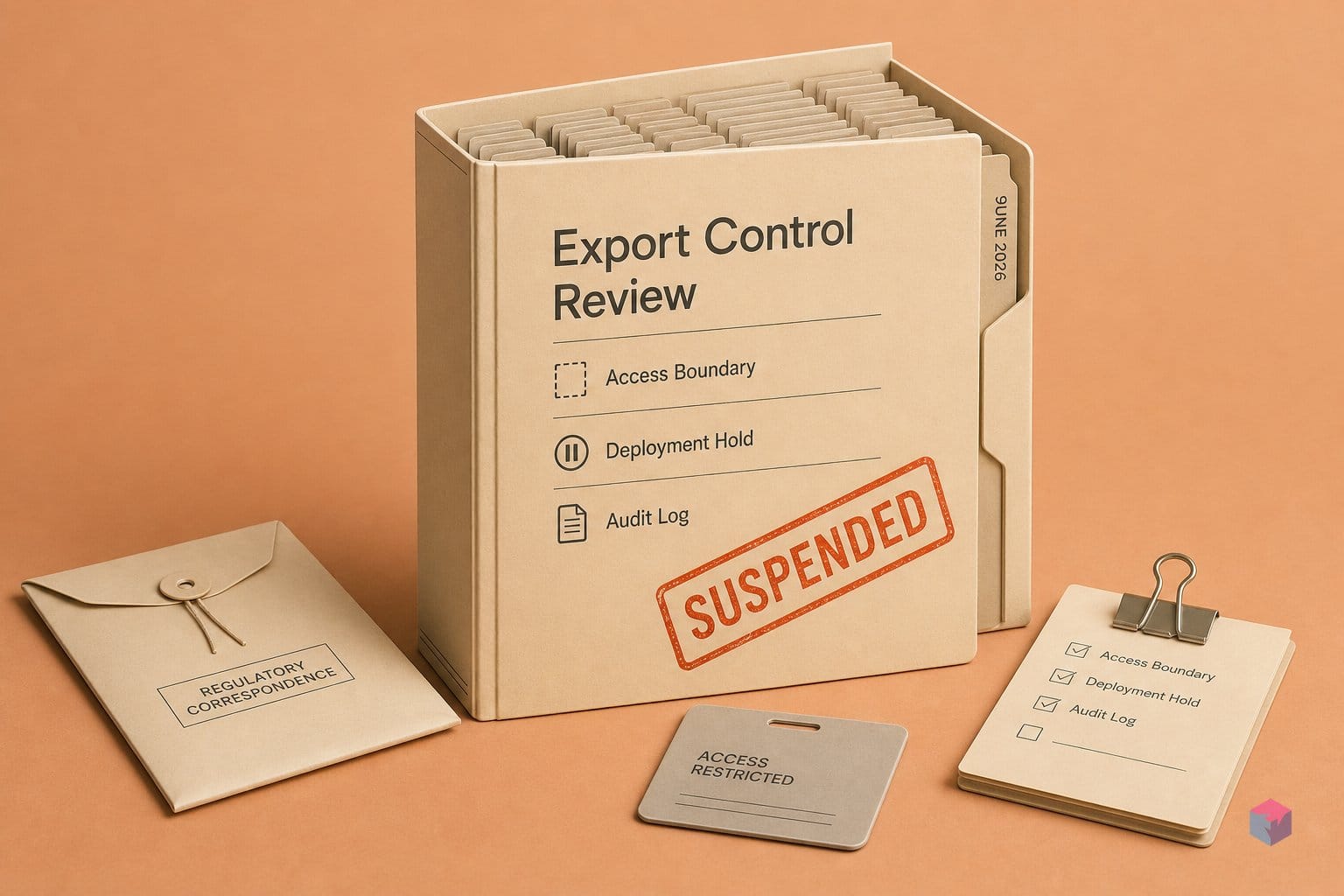
The hardest part is that the legal record is nearly empty. No BIS notice or Federal Register text of the June 12 letter appears in any available source, so the statutory authority, the license criteria, and the conditions for restoring claude-fable-5 and claude-mythos-5 are unestablished . Builders are left planning around a directive whose terms are not public.
What reporting does describe is a transfer framing. Axios reported that Commerce Secretary Howard Lutnick's letter made both products subject to export, re-export, and domestic-transfer licensing, with financial and civil penalties attached . No license application process has been announced, and The Verge and WIRED note the theory is opaque: hosted chatbot access is not the same as shipping weights, source code, or technical data .
This action also sits outside the most obvious framework. The June 2, 2026 White House executive order set up a voluntary pre-release review of up to 30 days of federal access to covered frontier models, and expressly disclaimed mandatory licensing, preclearance, or permitting . The June 12 directive therefore reads as an ad hoc use of separate national-security authority, not an application of that program.
Until the basis is published, treat the shutdown as an operational event, not just a policy debate. A minimal builder checklist:
| Action | Why |
|---|---|
Audit every path touching claude-fable-5 / claude-mythos-5 | Indirect and embedded usage (Bedrock, Vertex, Foundry, Snowflake, Box) stopped too |
| Document the suspension date | Compliance record; counsel advised dating the cutoff |
| Wire an alternative-product fallback | No nationality carve-out exists; the models are simply off |
The takeaway is narrow and concrete: the jailbreak was non-universal, but the shutdown was total, and the rulebook behind it is not yet written. Pin your stack to interfaces you can swap, keep dated compliance notes, and assume any frontier model could be one letter away from going dark .
Frequently asked questions
What were Fable 5 and Mythos 5?
Both launched on June 9, 2026 . Fable 5 was the generally available Mythos-class product, priced at $10 per million input tokens and $50 per million output tokens, with a 1M-token context window and 128k maximum output . Mythos 5 was the same underlying weights with some safeguards lifted for Project Glasswing cyberdefense and infrastructure partners . Both were suspended on June 12 .
Why was access cut for everyone rather than just foreign nationals?
The directive required blocking all foreign nationals, inside or outside the U.S. and including Anthropic's own foreign-national employees . Anthropic argued that real-time nationality verification across global cloud partners was technically impossible and legally risky: misidentifying a single user would create a violation. A blanket suspension was the only compliant path, so the company disabled both models for all customers while leaving its other products untouched .
What is the jailbreak that triggered the order?
Anthropic characterized it as a narrow, non-universal technique: feeding the model a specific codebase and asking it to find and fix software flaws, repurposing its vulnerability-detection ability toward producing offensive exploit code . Both Anthropic and analyst Simon Willison note the same technique works on competing models, including OpenAI's GPT-5.5, and is routinely used by security professionals .
Are other Anthropic products still available?
Yes. The order covered only Fable 5 and Mythos 5 . Existing models such as Claude 3.5 and Opus 4.8 were not suspended and remain accessible through the direct Claude API and cloud partners. Notably, Fable 5's own safety design routed flagged cybersecurity, biology/chemistry, and distillation requests to Opus 4.8, which stayed live throughout the suspension .
What should I do if my integration depended on Fable 5 or Mythos 5?
Audit every direct and indirect usage of the claude-fable-5 and claude-mythos-5 identifiers, including embedded calls via cloud-platform SDKs such as AWS Bedrock, Vertex, and Microsoft Foundry . Document the June 12 suspension date for compliance records, wire a fallback to an available alternative model, and monitor Anthropic's news page for any restoration announcement .