
If you opened your Windsurf editor on June 2 and saw it relaunch as "Devin Desktop," nothing broke — your IDE was renamed, not replaced. The wave-themed editor many developers adopted in 2024 now ships under Cognition's autonomous-agent brand, and the move is the last step in an acquisition that closed nearly a year earlier.
Why Windsurf Is Now Called Devin Desktop
Windsurf is now Devin Desktop because Cognition — the company behind the autonomous coding agent Devin — has finished folding the IDE into its main brand. Cognition acquired Windsurf on July 14, 2025 under a definitive agreement covering the product, IP, trademark, brand, and team . At that point Windsurf reported $82M ARR, 350+ enterprise customers, and hundreds of thousands of daily active users . The June 2, 2026 over-the-air rename is the unification step, not a shutdown.
Quick Answer: Windsurf became Devin Desktop on June 2, 2026 via a standard over-the-air update — same editor, extensions, keybindings, and settings. It is a rebrand following Cognition's July 14, 2025 acquisition of Windsurf ($82M ARR), not a forced migration or product shutdown.
The product underneath is identical: the same editor, extensions, keybindings, LSPs, settings, and in-progress work all carry forward, delivered as a routine update . The redirect plumbing confirms the handover — windsurf.com/blog/windsurf-2-0 now issues a 308 permanent redirect to devin.ai .
Cognition is explicit about continuity:
"Devin Desktop is the new name for Windsurf — the same IDE, with your plans, pricing, extensions, settings, workflows, in-progress work, and access intact." — Cognition, Devin Desktop FAQ (source: docs.devin.ai)
For long-time users, this is the second rename in two years: Codeium became Windsurf in 2024, and Windsurf became Devin Desktop in June 2026 . The name on your title bar changed; your project did not.
Devin Local: The Cascade Successor That Ships With Caveats
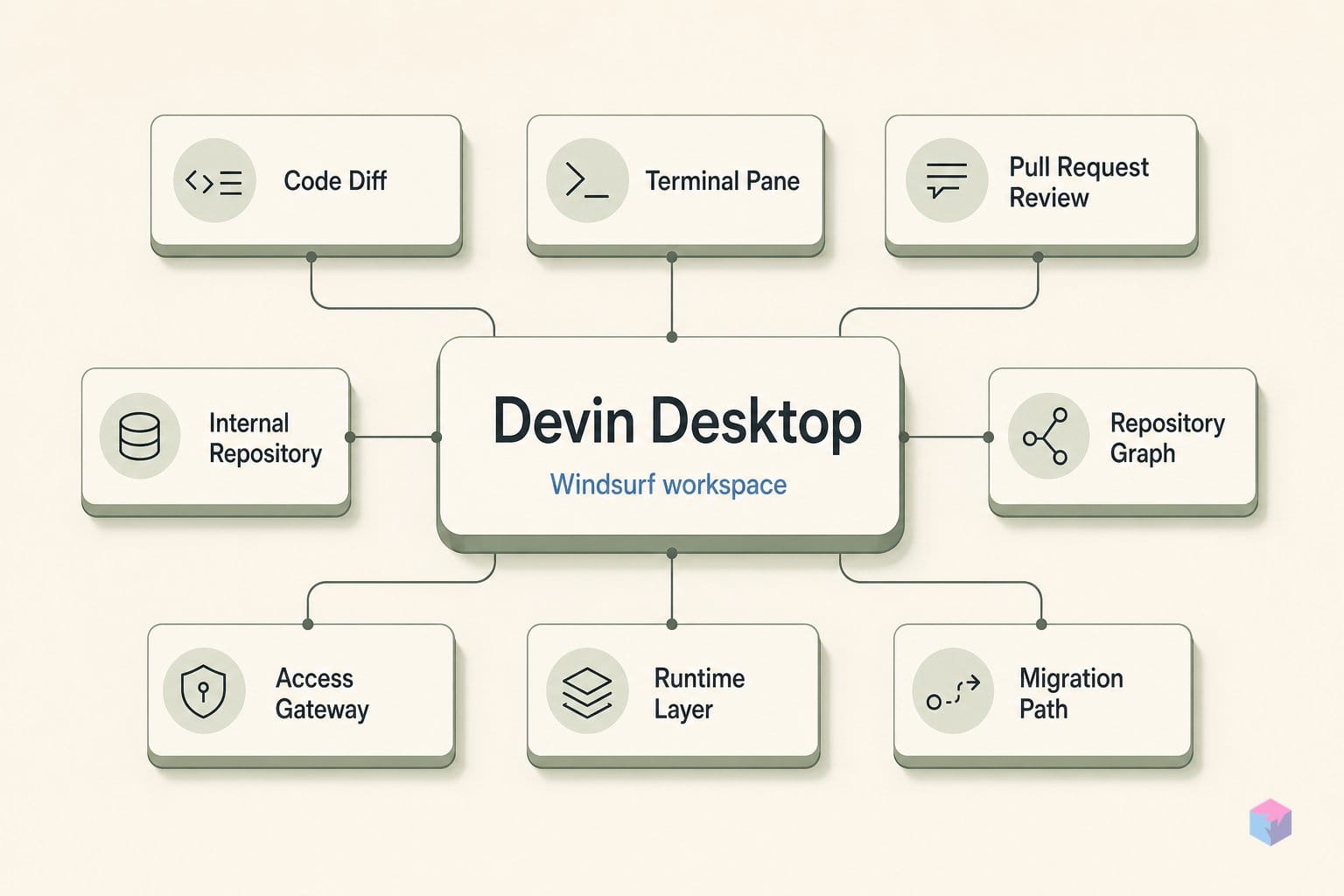
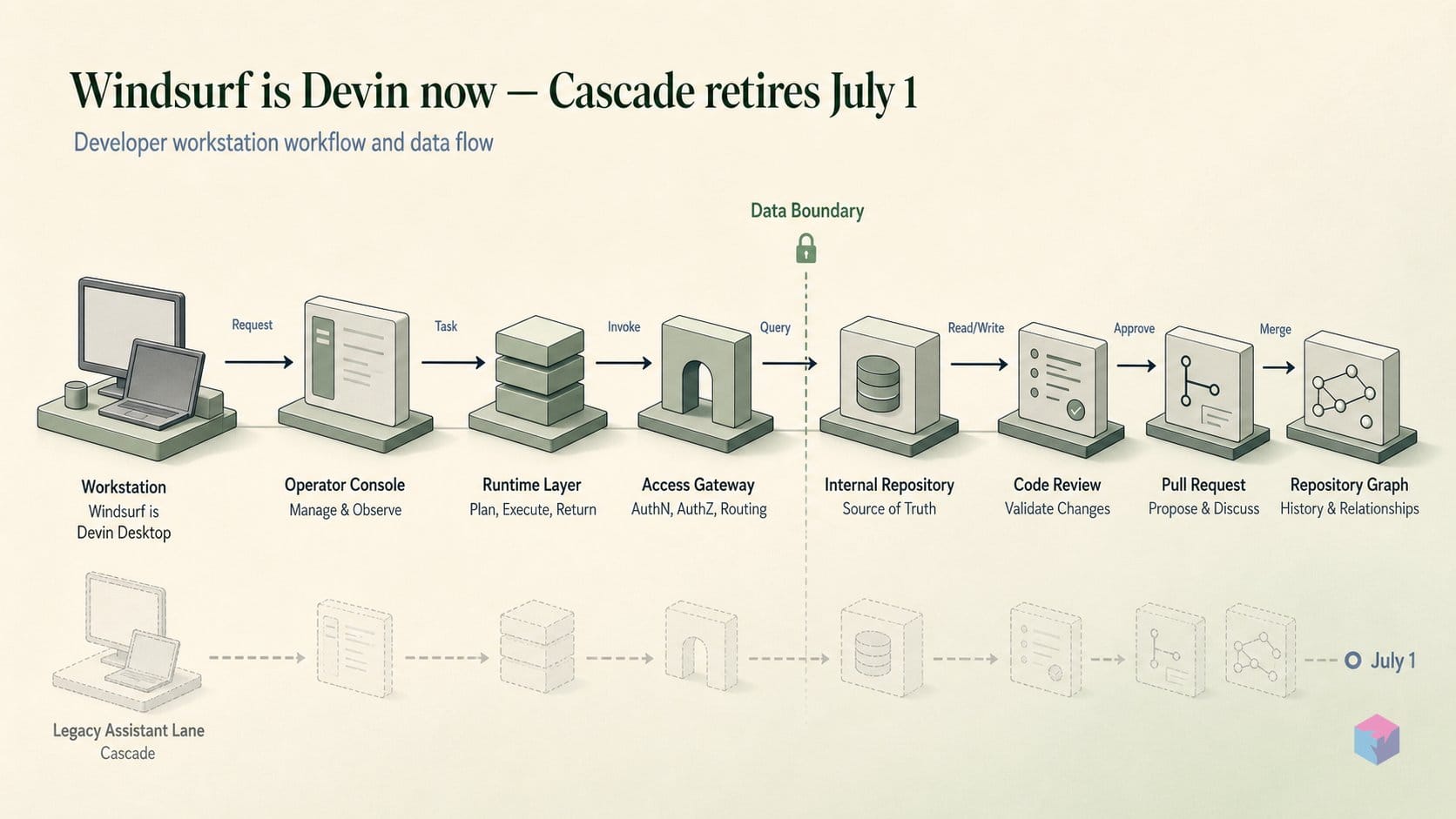
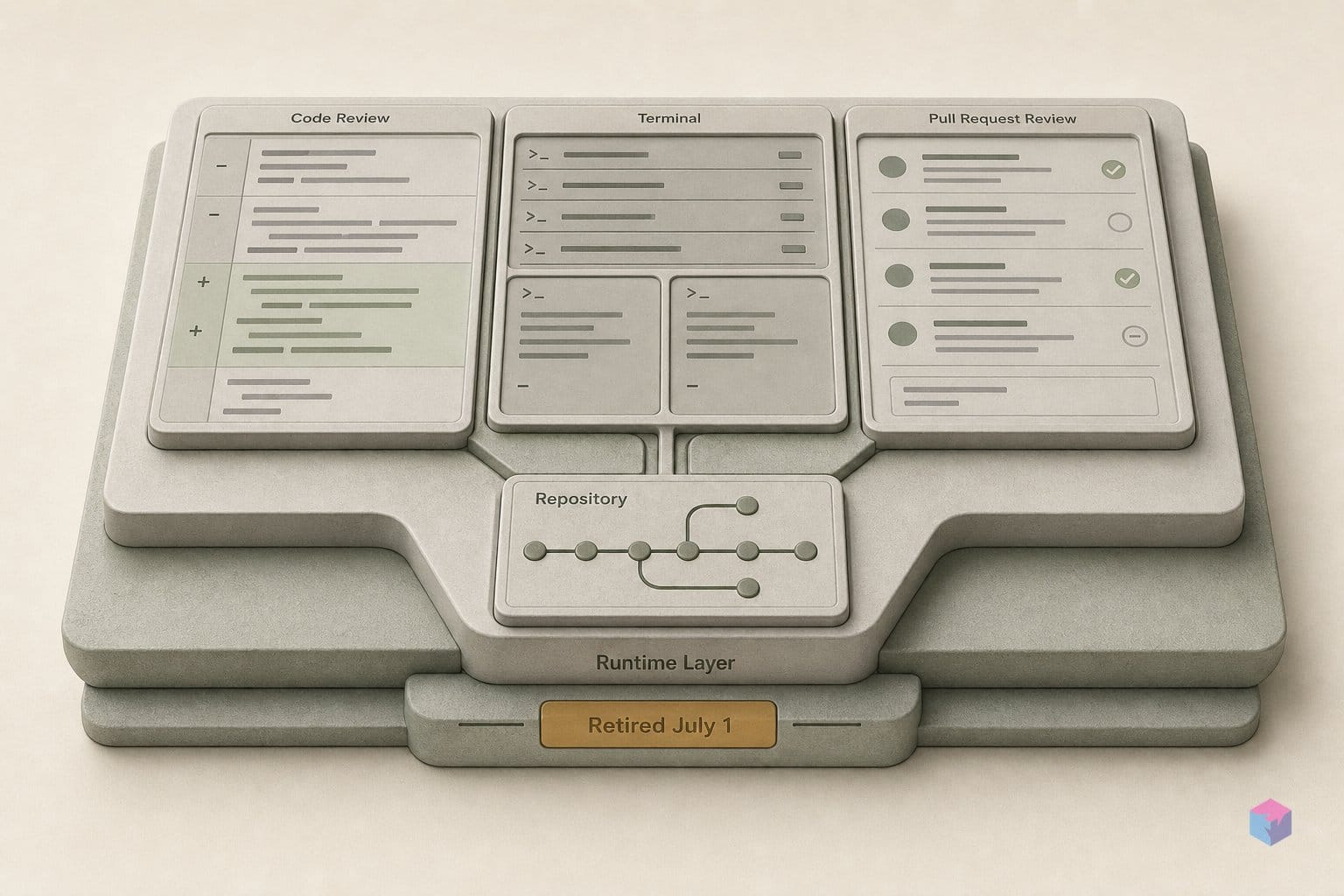
Devin Local is the new default local agent in Devin Desktop, positioned as the direct successor to Cascade. It is a ground-up rewrite in Rust that Cognition claims is up to 30% more token-efficient than Cascade, with native subagent support built in . It became the default on June 2, 2026, the same day Windsurf became Devin Desktop, while legacy Cascade stays available through July 1, 2026 to let teams migrate incrementally rather than all at once .
The token-efficiency claim and the Rust rewrite are the headline pitch, but the launch ships with real gaps. Devin Local is currently in preview, and at launch it is missing six capabilities that Cascade users may depend on. If your workflow leans on any of these, Cascade is the safer choice until July 1.
| Capability | Cascade | Devin Local (at launch) |
|---|---|---|
| Persisted Memories | Available | Not yet |
| Workflows | Available | Not yet |
| Codemaps | Available | Not yet |
| App Deploys | Available | Not yet |
| Conversation Sharing | Available | Not yet |
| Fast Context UI | Available | Not yet |
So if you rely on persisted Memories to carry project conventions between sessions, on saved Workflows to script repeated tasks, or on App Deploys to ship straight from the editor, switching to Devin Local today means losing those until they land . The window to stay on Cascade closes July 1, which is the practical deadline for testing whether the parity gaps affect your team.
There is one hard boundary worth flagging: Devin Local is not supported in the Windsurf JetBrains plugin. JetBrains users remain on Cascade until that plugin is updated, so the June 2 default switch does not reach them automatically . For VS Code-based Devin Desktop users, the local-only scope is also explicit by design — Devin Local runs on your machine with access to local files, tools, and environment, distinct from the cloud Devin sessions that spin up their own VMs.
For builders who already lean on Cascade tutorials and the Windsurf editor, the underlying editing experience is unchanged (video: Tech With Tim) — what shifts is the agent doing the work underneath it. The recommendation is straightforward: test Devin Local now, keep Cascade as a fallback through July 1, and verify the missing six against your actual workflow before the default becomes the only option.
Command Center and Spaces: The Dashboard Behind Devin
The Agent Command Center is a Kanban-style dashboard that surfaces every running agent session in one view — local Devin Local instances and cloud Devin sessions running on separate VMs — sorted into four columns: In Flight, Blocked, Ready for Review, and Done . It is the structural shift from editing in a single file to supervising a fleet, and it landed with the Windsurf 2.0 release in April 2026 before becoming the front door of Devin Desktop .
Around that board sit Spaces, which bundle tasks, agent sessions, pull requests, files, and shared context around a single project. The practical payoff: a session created inside a Space inherits the Space's context, so parallel agents work from shared task state instead of re-onboarding to the project each time . If you have run several agents against the same repo and watched each one rediscover the build setup, that re-learning tax is what Spaces is meant to remove.
Cloud Devin is the capability that makes the board worth watching. You plan work locally, then hand a task off to Devin, which provisions its own cloud VM — with browser and computer-use capabilities — and keeps working after your laptop is closed, returning a pull request to the editor for review . That is what allows the 4–12 hour autonomous sessions Cognition reports for Devin to run unattended.
Access is built into self-serve plans. Devin Cloud is included in self-serve Devin Desktop tiers, drawing from a shared usage quota rather than a separate add-on, and new users who connect GitHub receive up to $50 in extra usage credits to try it . One caveat worth flagging before you plan around it: some docs describe cloud rollout as gradual, and enterprise entitlement can still depend on a separate commercial setup .
How ACP Makes Devin Desktop Vendor-Neutral
ACP — the Agent Client Protocol — is the mechanism that lets Devin Desktop run agents it didn't build. At launch, compatible third-party runtimes execute inside the editor and surface in the same Command Center Kanban as native Devin sessions, with no separate pane or silo . The named supported agents are Codex, Claude Agent, OpenCode, and in-house ACP-compatible agents — meaning you can drive a Claude or OpenAI-backed agent through the same orchestration surface you use for Devin itself.
The practical payoff is context, not just coexistence. Third-party sessions run inside Spaces and inherit the same shared task state — open files, pull requests, prior agent work — that native Devin sessions draw from . So a Codex session and a native Devin session working on the same project read from one project memory rather than each re-learning the codebase. They also report status into the same in-flight / blocked / ready-for-review / done columns, so a mixed fleet stays legible from one board.
The plumbing runs both directions. The CLI exposes a devin acp command that runs Devin itself as an ACP server over stdio — JSON-RPC over stdin/stdout — so ACP-aware editors such as Windsurf and Zed can embed Devin as a guest agent . ACP is a host/client contract, and Devin can sit on either side of it.
The honest caveat: the protocol is defined, but parity is not. The launch announcement establishes that third-party agents run inside Devin Desktop — it does not establish that they perform equivalently to native Devin on integration depth, latency, or cost-per-task . Treat ACP multi-agent orchestration as a capability to benchmark on your own workloads, not a settled equivalence. The wiring is real; the relative quality is still an open question you'll have to measure.
What Admins Must Update Before the OTA Arrives
Before the over-the-air update lands, IT teams need to update three things: the allowlisted app binary name, any tooling keyed to Windsurf config paths, and internal documentation that references the old brand. The rename took effect on June 2, 2026, and it changes the executable name from Windsurf to Devin — Devin.app on macOS, Devin.exe on Windows, and Devin/devin on Linux . MDM profiles or endpoint security tools that allowlist only "Windsurf" by name will block the renamed binary after the update unless you add Devin to the allowlist first.
Config and extension directories also move. Most are migrated automatically, but any backup script, dotfile sync, or compliance scanner pointed at the old paths needs repointing. Workspace directories prefer .devin and fall back to .windsurf during the transition .
| Platform / asset | Old (Windsurf) | New (Devin) |
|---|---|---|
| macOS support dir | ~/Library/Application Support/Windsurf | ~/Library/Application Support/Devin |
| Windows app data | %APPDATA%\Windsurf | %APPDATA%\Devin |
| Linux config | ~/.config/Windsurf | ~/.config/Devin |
| Extensions | ~/.windsurf/extensions | ~/.devin/extensions |
Not everything moves, and that matters for firewall and proxy rules. Several update and telemetry endpoints stay legacy-branded and need no intervention: update.windsurf.com, windsurf-stable.codeiumdata.com, codeiumdata.com, and the ~/.codeium directory all remain in active use . If your egress allowlist already permits those hosts, leave them as-is — renaming them will break updates.
"The Windsurf JetBrains plugin keeps its name and is not rebranded," per Cognition's transition documentation (source: Devin Desktop docs and Cognition).
That last point is the easy win: JetBrains shops have no allowlist or path work to do, because the plugin is explicitly excluded from the rename . The OTA arrival may vary by user, so stage the allowlist change before June rollout completes rather than after a blocked launch generates tickets.
What You Pay and What You Get: Plan Breakdown
Devin Desktop sells on five tiers as of June 2026: Free at $0, Pro at $20/month, Max at $200/month, Teams at $80/month base plus $40/month per full developer seat, and Enterprise at custom pricing . The most relevant detail for individual builders is what Pro bundles: cloud agents, frontier model access across OpenAI, Claude, and Gemini, and free SWE-1.6 plus leading open-source models, with usage beyond the quota billed at API rates . Max is positioned for heavy Devin Cloud workloads — the long-running cloud VM sessions that keep working after you close the laptop.
| Tier | Price (USD) | Aimed at |
|---|---|---|
| Free | $0 | Trial / light local use |
| Pro | $20/mo | Individual devs; frontier models + free SWE-1.6 |
| Max | $200/mo | Heavy Devin Cloud workloads |
| Teams | $80/mo base + $40/mo per dev seat | Small teams |
| Enterprise | Custom | Org-wide deployment |
Existing Windsurf customers do not face a billing migration. Current Windsurf pricing carries forward unchanged, including legacy Windsurf Enterprise plans, and there is no forced switch to ACUs (Automated Compute Units) to use Devin Desktop . Devin Cloud is included with self-serve Devin Desktop plans, drawing from a shared usage quota, and new users who connect GitHub get up to $50 in extra usage credits to test it .
One caveat enterprise buyers should not gloss over: self-serve inclusion is not an automatic enterprise entitlement. Devin Cloud remains a separate SKU in some enterprise contexts and may require a Cognition Platform agreement plus explicit admin enablement before seats can use it . If you manage a contracted org, confirm whether Devin Cloud is covered before assuming your developers can hand off cloud tasks on day one.
SWE-1.5 in Devin Desktop: Speed, Quality, and the Verification Gap
The model layer is where Devin Desktop's claims get most aggressive — and where developers should apply the most skepticism. Cognition reports its proprietary agentic line, SWE-1.5, running at roughly 950 tokens per second — about 13× the speed of Claude Sonnet 4.5 and 6× Haiku 4.5 — while holding near-Sonnet-4.5 output quality . SWE-1.6 is the current-generation successor and ships free on Pro, so the headline performance tier is now bundled into the $20/month plan rather than gated behind frontier-model usage .
Devin itself — the orchestrating agent, not the inference model — is reported at 75–78% on SWE-bench Verified, with autonomous sessions running 4–12 hours and integrations across Slack, Linear, Jira, and GitHub . If accurate, that is a top-of-leaderboard figure. The caveat is the word "if": the launch material cites no independent third-party replication, and the speed multipliers are vendor-reported relative comparisons, not externally audited benchmarks.
The correct due-diligence step is to cross-reference these numbers against published independent signals — Artificial Analysis or LiveBench — before committing a team's workflow or budget to them. Treat the tokens-per-second and SWE-bench claims as a vendor baseline to verify, not a settled result.
"A benchmark number you cannot reproduce is a marketing number until a neutral leaderboard confirms it — check Artificial Analysis or LiveBench before you migrate." — editorial verification stance, cross-referenced against Cognition's published model claims (source: Devin/Windsurf models documentation).
Context matters too: Cognition has been shipping model-backed surfaces in quick succession — Devin for Terminal on April 28, 2026 and Devin Review for automated PR review on May 6, 2026 . That cadence signals active deployment well beyond the IDE. The concrete takeaway: adopt Devin Desktop for the orchestration model it now offers, but verify the SWE-1.5/1.6 speed and SWE-bench claims against an independent leaderboard before you treat them as fact.
Frequently asked questions
Do existing Windsurf users need to take any action to get Devin Desktop?
No manual action is needed for the IDE itself. Devin Desktop arrives as a standard over-the-air update — the same editor, extensions, keybindings, and workflows, now under the Devin name . The one exception is administrative: organizations that allowlist applications by binary name in MDM or endpoint tools must add 'Devin' before the June 2, 2026 update, or the renamed app (Devin.app, Devin.exe, devin) may be blocked after it lands .
Does the rename change my pricing or subscription?
No. Cognition states that all plans, pricing, extensions, settings, workflows, in-progress work, and access carry forward unchanged through the rename . Legacy Windsurf Enterprise plans are not forced to switch billing models, and users do not need to move to ACU-based billing to use Devin Desktop . Devin Cloud can remain a separate SKU in enterprise contexts, so self-serve inclusion does not automatically grant enterprise entitlement.
What is Devin Local missing compared to Cascade?
Six Cascade capabilities are absent from Devin Local at launch: persisted Memories, Workflows, Codemaps, App Deploys, Conversation Sharing, and Fast Context UI . Devin Local became the default on June 2, 2026 and is still in preview, but legacy Cascade remains available through July 1, 2026 so teams that depend on those features can migrate incrementally .
Can I run Claude Agent or Codex inside Devin Desktop?
Yes, through the Agent Client Protocol (ACP). Codex, Claude Agent, and OpenCode are listed as ACP-compatible agents at launch, alongside in-house ACP-compatible agents . They appear in the same Command Center Kanban view, run inside Spaces, and share project context like native Devin sessions. The CLI confirms the plumbing: the devin acp command runs Devin as an ACP server over JSON-RPC on stdin/stdout for ACP-aware editors .
Is the JetBrains plugin being rebranded to Devin?
No. Cognition has explicitly stated the Windsurf JetBrains plugin keeps its name and is not rebranded . Devin Local is also unsupported in the JetBrains plugin at launch, so JetBrains users continue on Cascade until the plugin is updated .