
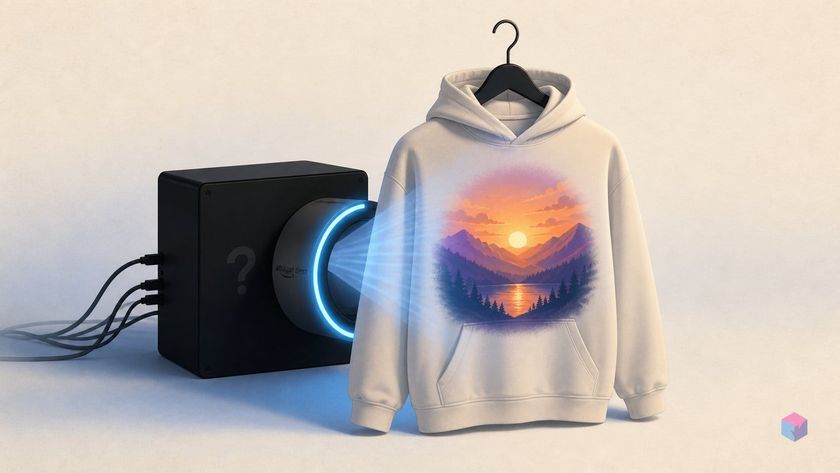
Amazon just turned its shopping app into a print shop. Describe a graphic in plain English, and Alexa for Shopping spits out artwork, drops it on a hoodie or tumbler, and Prime-ships the result — no design tool, no third-party seller, no separate checkout.
What Alexa for Shopping Now Lets U.S. Buyers Do
On June 8, 2026, Amazon launched a consumer-facing generative-AI feature that lets U.S. shoppers design and order custom merchandise from inside the Amazon Shopping app and the desktop site, powered by its Alexa for Shopping assistant . The feature is U.S.-only at launch, with no international rollout reported . No seller account is required — any customer becomes a de facto designer.
You trigger it two ways: tap the Alexa icon in the bottom-right of the Shopping app, or type "customize" in the search bar and pick the drop-down . Then describe a design in natural language. Amazon's own example prompt — "a sunset over mountains with retro 80s colors" — signals the intended use case: unbranded, one-off personalized goods, not brand-licensed merch .
The launch catalog spans apparel and drinkware:
- Shirts: T-shirts, V-necks, long-sleeve shirts, polo shirts, jerseys, tank tops, raglans
- Outerwear: quarter-zips, hoodies, sweatshirts
- Drinkware: tumblers, water bottles
The Verge tested the flow and confirmed prompts producing shirt, hoodie, and water-bottle designs that routed into purchase and sharing . Amazon says it plans to expand the catalog over time .
Designing is free; the buyer pays only for the physical product they order . Everything downstream runs through Amazon's existing Merch on Demand print-on-demand pipeline — Amazon handles manufacturing, fulfillment, shipping, and customer service end to end . The practical effect: the traditional design → print → fulfillment stack, once spread across separate vendors, collapses into a single prompt, a checkout, and a Prime-shipped product.
Alexa Generates Artwork; Amazon Handles Printing and Fulfillment
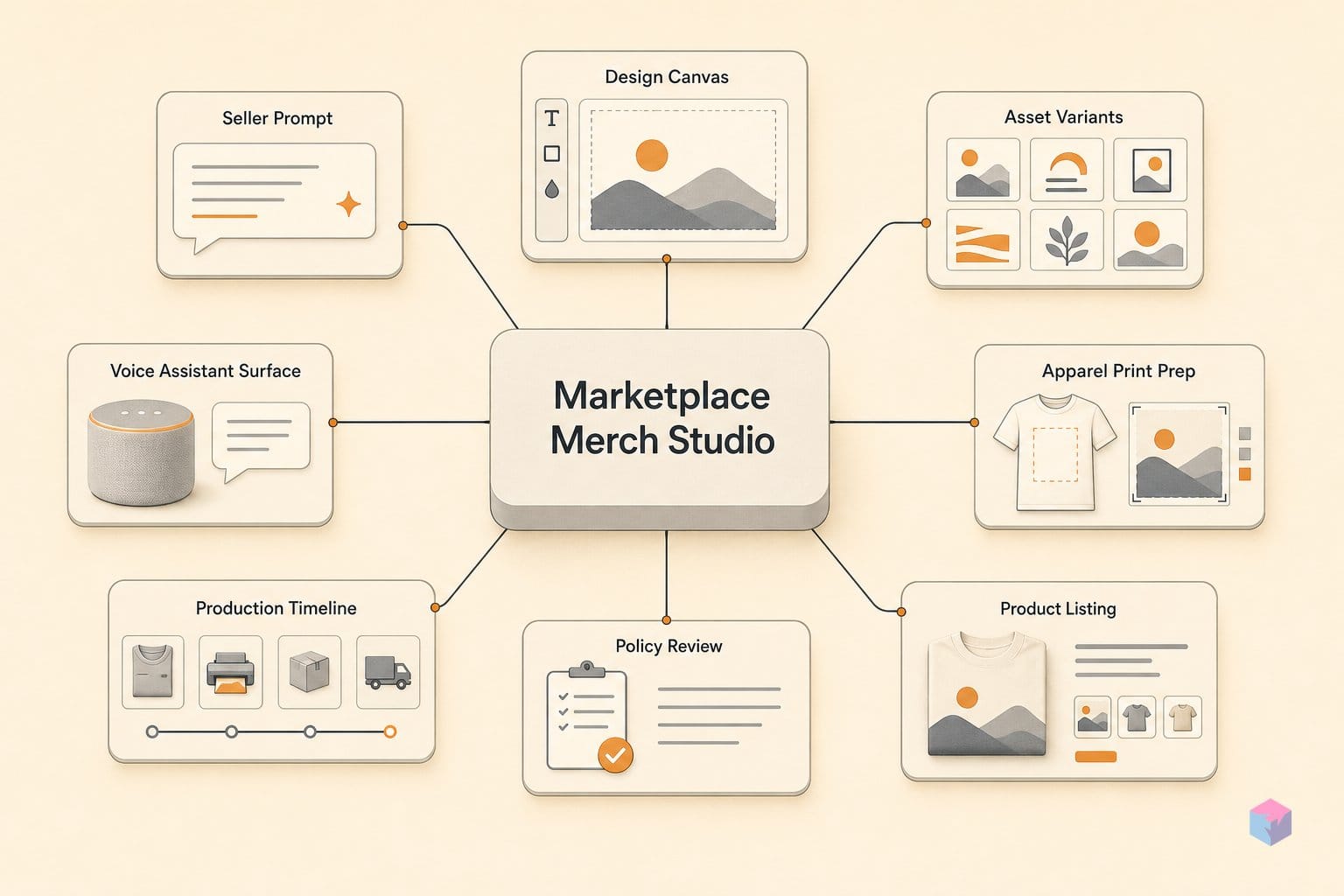
You start by describing a design in plain language — Amazon's own demo prompt is "a sunset over mountains with retro 80s colors" . Tap the Alexa icon in the app's bottom-right, or type "customize" in the search bar and pick the drop-down, and artwork appears "within seconds" . The interface is conversational: you iterate by clicking suggested actions or typing edits until the design holds.
Amazon says the system manages technical details "to make sure your creation has vibrant colors and crisp resolution" before it prints . For developers, that sentence is the whole spec. No DPI target, print dimension, or output resolution is published anywhere — you trust a black-box upscaler to bridge a screen preview and a physical garment. The Verge's hands-on noted the usual AI-image artifacts, including garbled text, surviving into the buyable design .
The distribution mechanic is the underrated part. A share link — sent by group text, social post, or URL — lets friends and family add the same design to their own carts and check out independently . That is a zero-overhead micro-storefront: no listing, no Seller Central account, no inventory, no fulfillment setup. The "store" is one link.
What ships behind that link is a fully consolidated stack — five steps that used to span separate vendors, now collapsed behind one checkout:
| Step | Who runs it | What's exposed to the user |
|---|---|---|
| Natural-language description | Alexa for Shopping | Prompt box + suggested edits |
| AI image generation | Undisclosed model | Preview "within seconds" |
| IP / content screening | Amazon moderation | Block message on rejection |
| Production | Merch on Demand | Nothing — handled end to end |
| Shipping | Amazon Prime | Standard Prime delivery |
Designing stays free; you pay only for the finished item you order . The friction Amazon removed is real — but every layer that determines print quality and rejection behavior sits inside the box, unspecified.
Black Box: Amazon's AI Artwork Has No Named Origin
Amazon has not disclosed which image-generation model produces the artwork behind its new Alexa for Shopping merch feature. The official announcement names no model, no training-data source, and no watermarking policy for printed output . For a launch aimed at the edge of the developer ecosystem, that silence is the story: the layer that decides what gets printed is the one Amazon describes least.
The plausible in-house candidate is Nova Canvas, the image model AWS announced as part of the Amazon Nova family on December 3, 2024, alongside Nova Reel for video . But no source confirms the merch tool runs on Nova Canvas. Treat any specific model attribution as unverified until Amazon says so.
The gaps go beyond the model name. None of the reporting documents:
- Training-data provenance — where the generation model learned, and whether artist work is in it.
- Watermarking — whether printed artwork carries any provenance signal, despite AWS describing watermarking and safety controls for its own creative models .
- Rejection rates and appeals — how often the IP filter blocks a design, and what recourse a buyer has.
- Throughput and resolution specs — no rate limits, no model card, no public API surface.
Quality limits are also absent from Amazon's framing. The Verge's hands-on test found typical AI-image artifacts — generic visual tropes and garbled text rendered onto garments . As The Verge put it after generating shirts, hoodies, and water bottles: the results carried the usual machine-made tells rather than the "vibrant colors and crisp resolution" Amazon advertises .
The contrast with AWS's own documentation is sharp. Nova Canvas at least ships with a model description, stated safety controls, and a watermarking commitment. The consumer merch feature exposes none of that — no model card, no spec sheet, no programmatic access. Developers evaluating whether to build around or compete with this pipeline are working blind on the variables that matter most: what model runs, how it was trained, and how reliably it ships a printable file.
Redbubble, Printful, Bonfire: Amazon Enters Their Turf
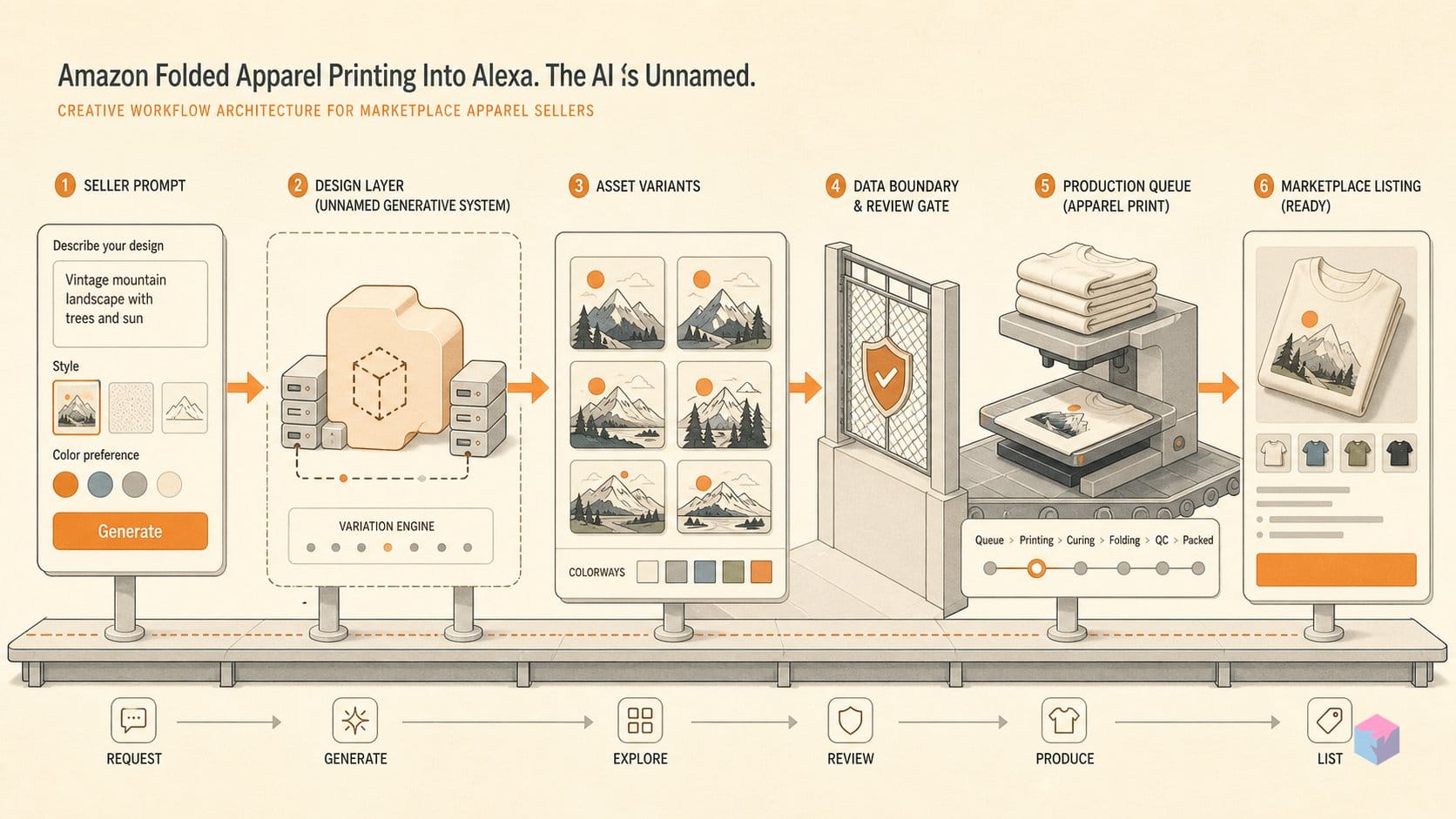
The consolidated stack lands squarely on standalone print-on-demand platforms. TechCrunch names Redbubble, Bonfire, Spring, and Fourthwall as services now facing a more direct Amazon alternative for consumer-created merch, because Amazon bundles design, printing, and fulfillment into a marketplace that already owns purchase-intent traffic . Additional coverage extends the list to Printful, Shutterfly, and Etsy sellers .
Amazon's edge here is structural, not feature-level. A shopper never leaves the surface where they were already buying, and there is no separate account, no design-tool subscription, and no fulfillment integration to wire up:
- Traffic at purchase intent — the design flow lives inside the Amazon Shopping app, so the audience is already in checkout mode rather than discovering a niche storefront.
- Prime fulfillment — manufacturing, shipping, and customer service run end to end through Merch on Demand .
- Zero onboarding friction — no account or setup is needed to generate and order; designing is free, and you pay only for the finished product .
| Dimension | Standalone POD platforms | Amazon Alexa flow |
|---|---|---|
| Traffic source | Self-driven (ads, social, SEO) | Built-in marketplace demand |
| Account required to order | Typically yes | No separate signup |
| Fulfillment | Platform or third-party | Prime via Merch on Demand |
| Per-unit price disclosed | Public price lists | Not yet published |
That last row matters for anyone modeling the threat. Amazon has not published per-unit pricing for these AI-generated items, and no independent tester has produced a like-for-like cost comparison against a Redbubble or Printful equivalent yet . Until that data exists, the competitive claim rests on distribution and friction, not unit economics.
"Amazon folds design tooling into a marketplace with built-in traffic and Prime fulfillment," — TechCrunch, framing the launch as a direct challenge to standalone print-on-demand and creator-merch platforms (source: TechCrunch).
Drop-shipping merch operators are cited as facing the sharpest hit. Their model depended on sitting between a design tool and a marketplace and capturing the spread; a single native stack that handles prompt, print, and Prime shipping removes that arbitrage layer outright .
Amazon Sellers Now Compete With Amazon's Own Merch AI
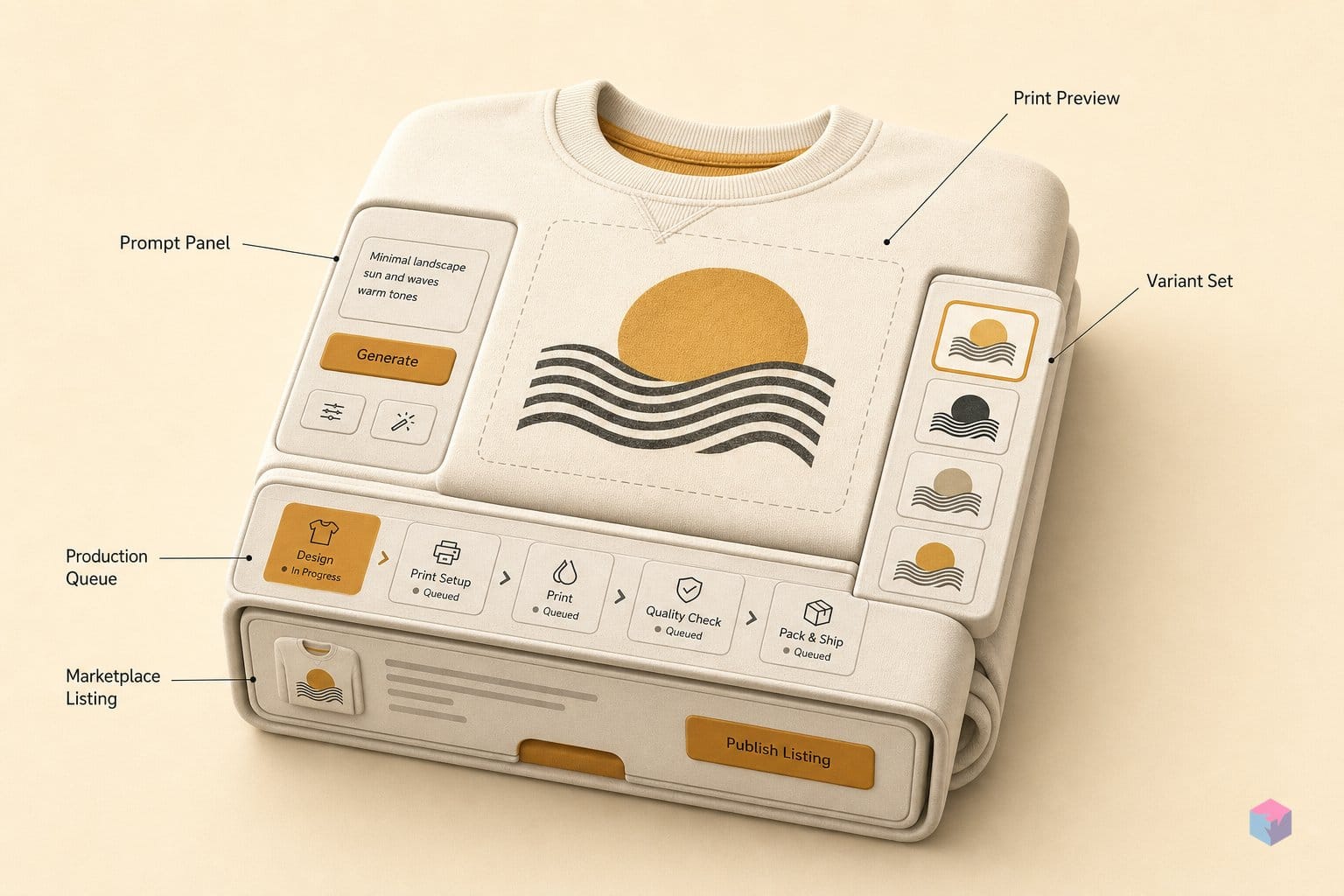
The squeeze reaches Amazon's own marketplace, but unevenly. The Alexa merch flow is a separate program from Amazon Custom, the older seller-facing personalization track — not an upgrade to it. Amazon Custom requires a Professional seller account at $39.99/month plus selling fees, and the seller fulfills orders via Fulfilled by Merchant rather than FBA . The new flow runs on Merch on Demand, with Amazon handling manufacturing and shipping end to end .
That distinction matters because the two programs do different work. Amazon Custom is built for physical configuration the AI flow does not attempt: engraving, embroidery, and multi-surface setups. It supports up to five customizable surfaces with 15 customizations each and up to 100 options per product . The Alexa tool prints a generated graphic onto stock apparel and drinkware — no engraving, no embroidery, no bundling.
So the competitive overlap is narrow but real. For simple AI-graphic shirts and tumblers, independent sellers now share checkout real estate with an Amazon-native offering that carries Prime shipping and zero seller overhead. Where that bypass bites:
- Simple graphic apparel and drinkware — T-shirts, hoodies, tumblers, water bottles — now have a native Amazon path that needs no seller account.
- Complex or handmade goods — engraved, embroidered, bundled, or category-specific products — still sit in the Amazon Custom seller lane the AI flow ignores.
- Overhead asymmetry — Amazon's flow is free to design and Prime-fulfilled; a Custom seller still pays the monthly fee and ships the order themselves.
One mechanic stays undefined: the rights lifecycle of a generated asset. A creator can share a design via group text, social media, or a link so others add the identical item to their own carts . Whether that link eventually hardens into a reusable public catalog listing, or expires after the buyer's order, is not stated — and neither is whether sellers can opt into or out of related traffic .
Where Amazon Stayed Silent on Artist Earnings and Copyright
Amazon shipped the merch feature with no compensation mechanism for the artists whose work likely trained the underlying image model. TechCrunch flags this directly: the launch announced on June 8, 2026 included no revenue-sharing program, no attribution path, and no opt-out for the source artwork that any generative model leans on.
"Artists may take issue with the new tool, given their work likely contributed to the training data behind such image-generating models," — TechCrunch (source: TechCrunch, 2026-06).
What is documented is the filtering on the buyer side, not the rights side. The Verge's hands-on found that a New York Knicks–style test design was blocked for "third-party content concerns," confirming trademark screening runs in at least some cases . Amazon's own post references content rules "around trademarks and copyright," consistent with existing Merch on Demand policy .
That covers what gets rejected. It says nothing about recourse. None of the current sources describe an appeal route, an escalation contact, or any path for a creator who believes a block — or a generated output — was wrong.
The ownership question is the larger gap. No source states who holds rights to a finished design:
- The buyer who wrote the prompt and paid for the item?
- Amazon, which generated, screened, printed, and fulfilled it?
- Neither, leaving AI output in the usual copyright gray zone?
Equally unaddressed: whether a shared-link design can be relicensed, or whether it hardens into permanent, reusable Amazon catalog inventory. The Verge could not confirm either outcome .
Takeaway: The pipeline is live and the trademark filter clearly works, but the rights layer is empty. For developers and creators tracking this, the open items are concrete — model attribution, a compensation or opt-out path, a stated appeal process, and a definition of who owns the output. Until Amazon publishes those, treat the merch tool as a shipped product with an undocumented rights model, and watch its policy pages rather than its marketing for the answers.
Frequently asked questions
Is Amazon's new merch feature for sellers or for consumers?
It is consumer-facing. Any Amazon shopper can use it with no seller account required, accessing it through the Alexa for Shopping flow in the Shopping app or desktop site since the June 8, 2026 launch. Production runs through Merch on Demand, not Seller Central or Amazon Custom. Independent sellers cannot opt into it — they encounter it as a competing native offering on Amazon's own marketplace.
Which AI model generates the merch artwork?
Amazon has not disclosed it. No model card, training-data summary, or watermarking policy for printed artwork has been published . The plausible in-house candidate is Nova Canvas, Amazon's own image model announced December 2024 with documented safety controls and watermarking — but no source confirms its use here. Treat any specific model attribution as unverified.
Can I sell the designs I create through Alexa?
Not as a seller listing. You can share a design via group text, social media, or a link so friends and family add the same design to their own carts and buy it independently . That sharing flow does not create a Seller Central listing. Design ownership and the rights lifecycle of shared AI output are unaddressed in Amazon's documentation, leaving who owns the result an open question.
What products are available at launch?
Twelve apparel and drinkware items: T-shirts, V-necks, long-sleeve shirts, polo shirts, quarter-zips, jerseys, hoodies, sweatshirts, tank tops, raglans, tumblers, and water bottles . Designing is free; you pay only for the finished product, which ships via Prime. Amazon says it plans to expand the catalog over time but gave no timeline, and the feature is U.S.-only as of the June 2026 announcement.
Does this threaten existing print-on-demand platforms?
Yes, for simple AI-generated apparel and drinkware. Amazon is now a direct competitor, with Prime shipping and built-in marketplace traffic as structural advantages over standalone services. Coverage names Redbubble, Bonfire, Spring, and Fourthwall , plus Printful and Etsy custom-print sellers , as facing the most direct impact. More complex handmade, engraved, or embroidered goods remain less exposed.