
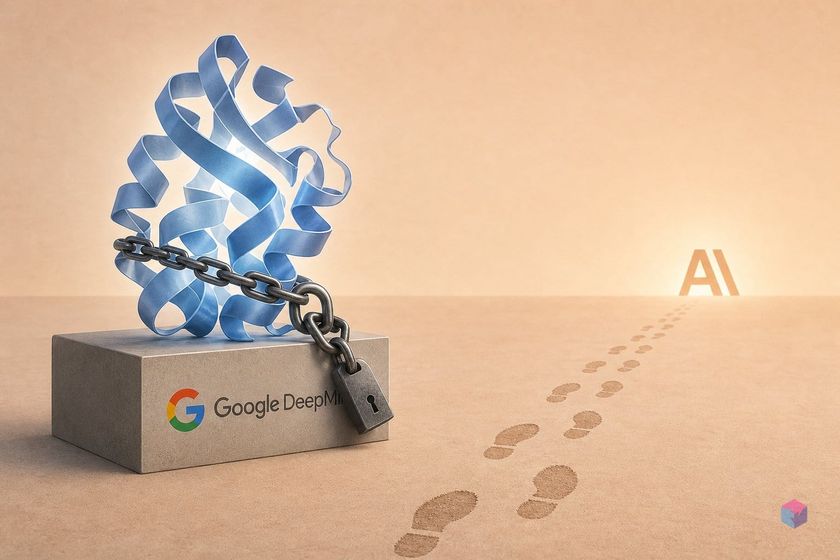
One of AI-for-science's most decorated researchers is changing frontier labs — but the science he is famous for is staying put. The talent moved; the IP did not.
What Is AlphaFold, and Why Did Jumper Earn a Nobel Prize?
John Jumper, co-creator of AlphaFold and a 2024 Nobel laureate in Chemistry, is leaving Google DeepMind to join Anthropic. He announced it on X on June 19, 2026, after nearly nine years at DeepMind . The destination is confirmed; his new role, team, and start date are not. Bloomberg and Business Insider first reported the move the same day .
Quick Answer: John Jumper won half of the 2024 Nobel Prize in Chemistry (shared with Demis Hassabis) for AlphaFold, a model that predicted structures for roughly 200 million proteins and was used by more than two million people across 190 countries by October 2024. On June 19, 2026, he announced he is leaving DeepMind for Anthropic.
In his post, Jumper kept it short:
"After nearly 9 years, I have decided to leave Google DeepMind and join Anthropic (after taking some time to recharge)," — John Jumper (source: TechCrunch)
The Nobel context explains why the move registered. The 2024 Chemistry prize was split: one half to David Baker for computational protein design, the other half jointly to Hassabis and Jumper for protein structure prediction via AlphaFold . AlphaFold2, released in 2020, predicted structures for virtually all of the roughly 200 million proteins researchers had catalogued, and the Nobel committee noted it had been used by more than two million people from 190 countries by October 9, 2024 .
That reach is why the departure carries weight. By 2026, AlphaFold's predictions were credited with accelerating research on malaria vaccines, cancer treatments, and drug-resistant bacteria . Jumper joined DeepMind roughly six months after finishing his PhD and led the AlphaFold team for nearly a decade — a track record that makes the question of what he builds next a meaningful signal, not a routine hire.
Why CASP14 Made AlphaFold2 a 50-Year Milestone in Biology
That track record rests on a single, measurable result: in the CASP14 blind-prediction experiment, AlphaFold2 predicted protein structures at accuracy competitive with experimental methods. The 2021 Nature paper reported a median backbone accuracy of 0.96 Å RMSD95 against 2.8 Å for the next-best method . That gap — roughly a third of the competing error — is what the Nobel committee cited when it credited the structure-prediction breakthrough.
The all-atom numbers tell the same story. AlphaFold2 reached 1.5 Å RMSD95 all-atom accuracy versus 3.5 Å for the best alternative . For context, 1.5 Å is roughly the width of a chemical bond — close enough that predictions become usable for downstream work like docking and mutation analysis, not just visualization.
| Metric (CASP14) | AlphaFold2 | Next-best method |
|---|---|---|
| Backbone RMSD95 (median) | 0.96 Å | 2.8 Å |
| All-atom RMSD95 | 1.5 Å | 3.5 Å |
DeepMind's own CASP14 write-up framed the milestone differently, reporting a median GDT score of 92.4 across targets and describing the result as a solution to a roughly 50-year grand challenge in biology: predicting a protein's 3D shape directly from its amino-acid sequence . A GDT score above 90 is generally treated as competitive with experimental structures.
Why this matters for tracking Jumper: the 2021 Nature paper, on which he was first author and Demis Hassabis senior author , remains the primary scientific citation for the method. The person now joining Anthropic is the named lead author of the result that defined the field — which is the lens for reading what he might build next.
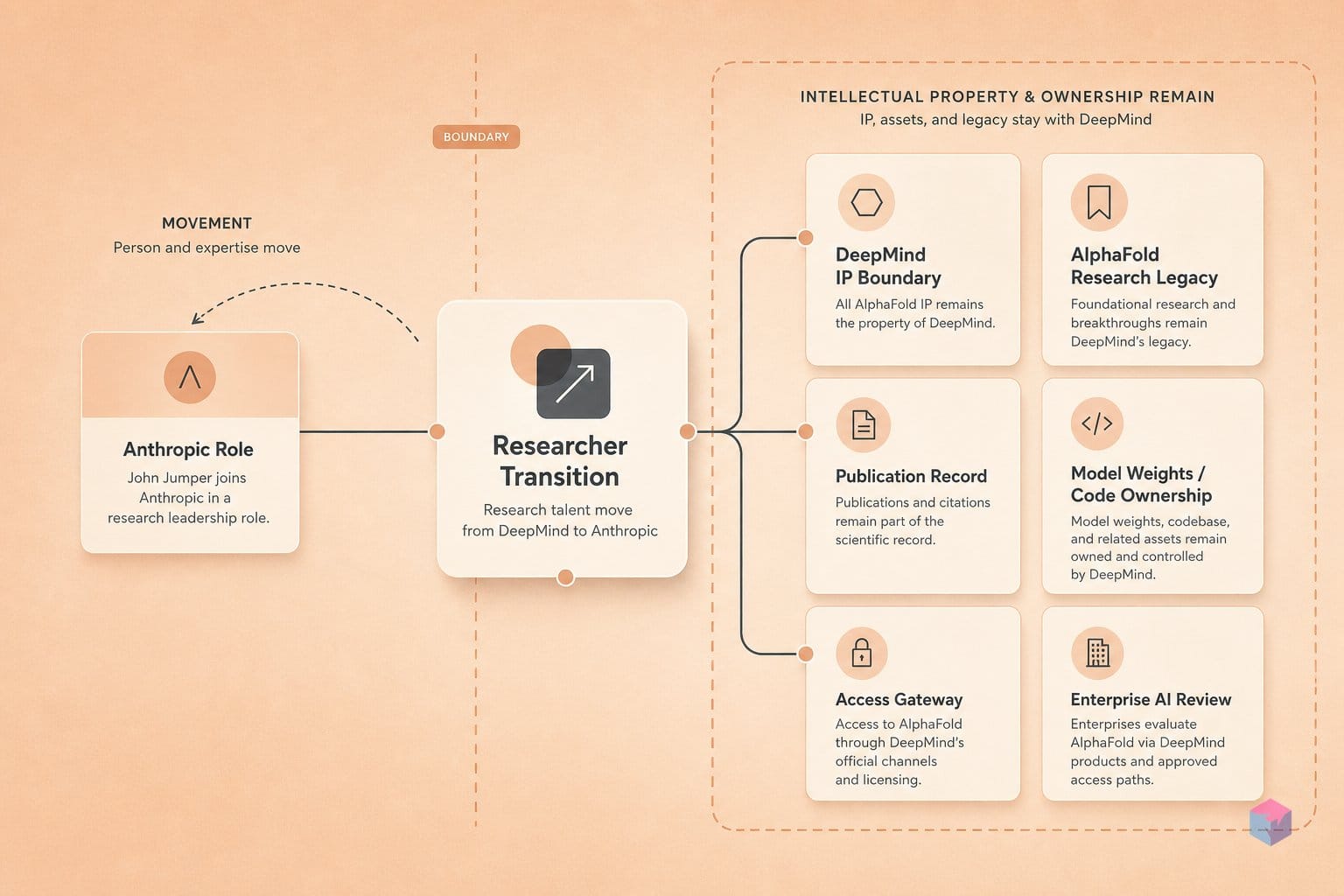
DeepMind Retains the AlphaFold IP. Anthropic Hired the Architect.
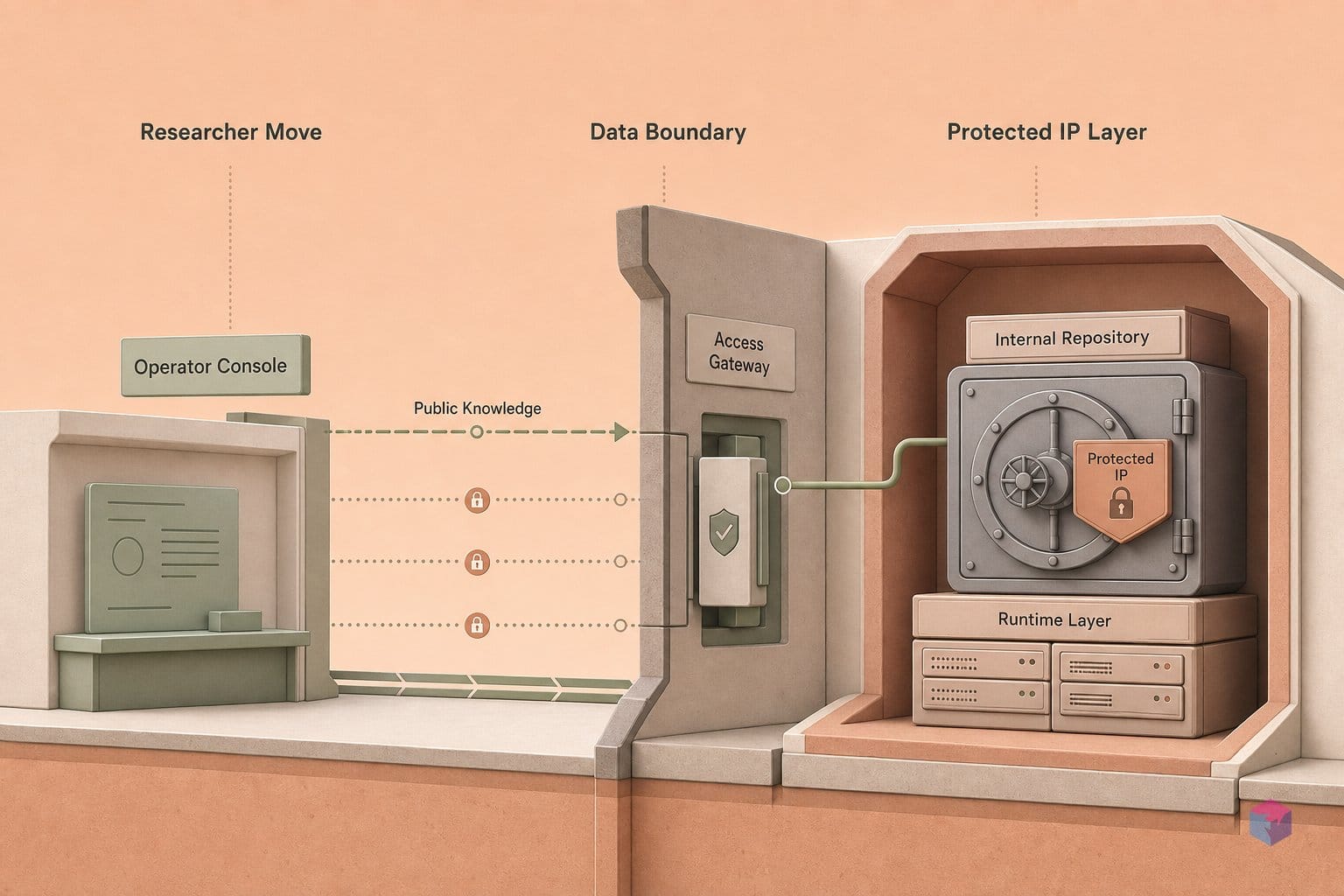
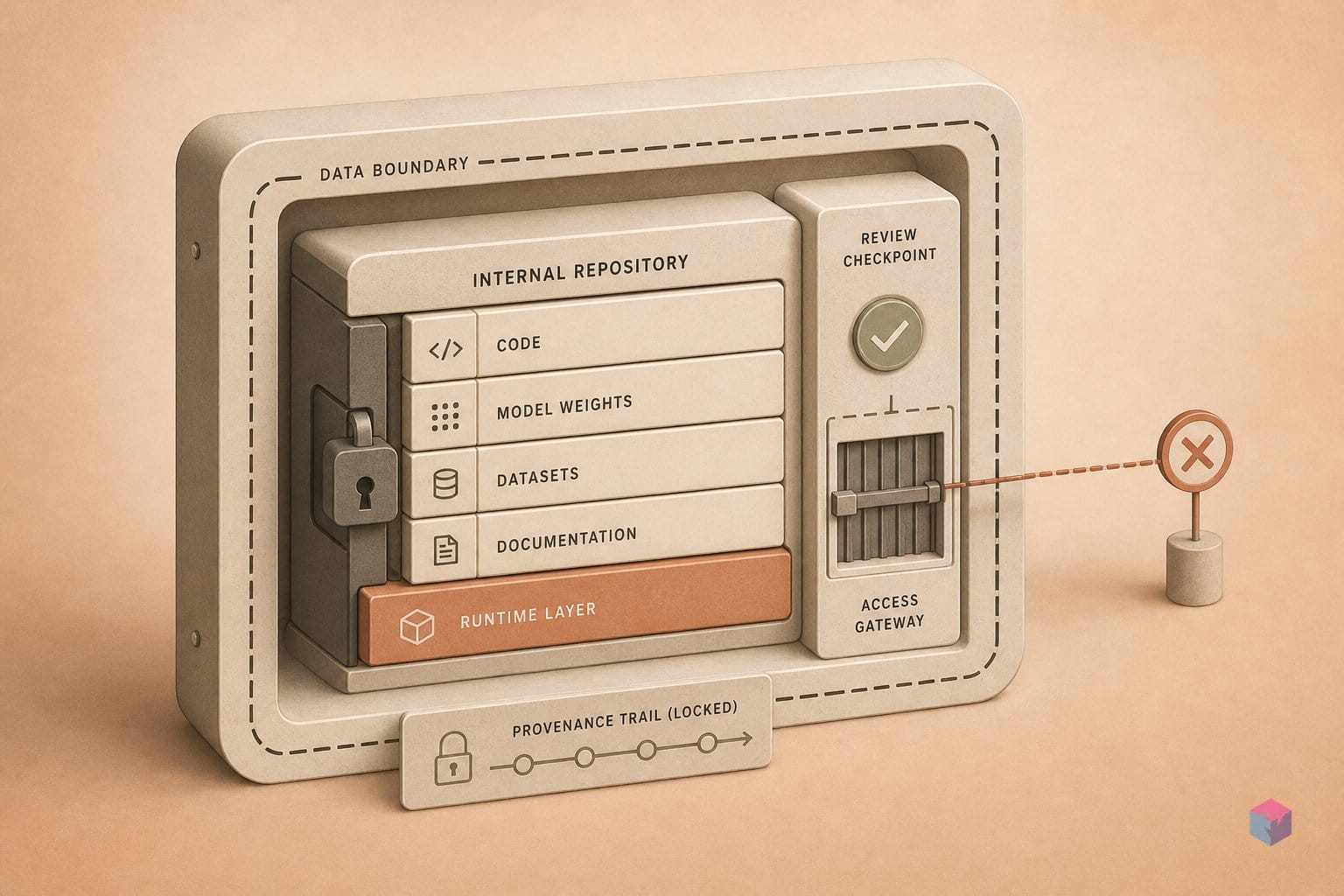
Jumper's move is a personnel change, not a transfer of assets. No codebase, no model weights, no structure database, and no ongoing project follow him to Anthropic. The AlphaFold Protein Structure Database — built by Google DeepMind with EMBL-EBI and released under a CC-BY-4.0 license — stays at DeepMind and remains openly accessible for academic and commercial use .
That database is a substantial downstream asset on its own. It now hosts more than 200 million protein structure predictions covering UniProt broadly . A May 2026 update extended it into protein complexes:
- ~2.2 million high-confidence homodimeric structures
- ~79,000 high-confidence heterodimeric structures
- ~31 million complex predictions available for bulk download
The commercial lineage stays put too. Isomorphic Labs, the Alphabet drug-discovery company built on AlphaFold, continues its work independent of Jumper's departure. Anthropic gains domain expertise and a network — the person who led the team and was named first author on the defining paper. DeepMind keeps every line of code, every structure prediction, and the EMBL-EBI partnership.
For builders evaluating Anthropic's near-term biology capability, that distinction matters. Hiring the architect signals intent and direction, but it does not hand Anthropic a protein-folding stack. Any AI-for-science tooling there starts from Claude and agentic infrastructure, not from a forked AlphaFold.
Anthropic's Bet on Computational Biology in 2026
That starting point looks deliberate. Reporting frames Jumper's hire as part of a broader Anthropic push into AI-for-science during 2026, built on Claude and agentic infrastructure rather than a folding model . The direction is plausible; the specifics are not yet firm.
Derivative coverage — which you should treat as soft until Anthropic confirms it — points to several in-flight efforts:
- A biology benchmark referred to as VirBench, alongside research on AI agents for biological workflows.
- Wet-lab infrastructure and "agents in biology" work attributed to roughly June 2026.
- Partnerships with the Allen Institute and the Howard Hughes Medical Institute.
- A science-focused Anthropic event reportedly scheduled for June 30, 2026 .
None of these carry an official Anthropic source as of June 23, 2026. They rest on secondary, derivative reporting without firm announcement dates, so weight them accordingly. What is confirmed is the hire itself and Anthropic's stated identity: a safety and research company building Claude with a focus on reliable, interpretable, and steerable systems .
The directional signal is clearer than any single program. Anthropic appears to be aiming Claude and agentic tooling at scientific R&D and drug-discovery workflows — a domain historically owned by DeepMind's AlphaFold lineage and Isomorphic Labs. For developers building biology pipelines on Claude, the practical question is whether agentic orchestration, not a structure-prediction model, becomes the layer Anthropic competes on.
Two things to watch: the reported June 30 event, and any subsequent Anthropic blog post that names Jumper's mandate. Until then, treat the science roadmap as intent, not shipped capability.
How Senior Scientists Have Been Moving from DeepMind to Anthropic
Jumper's exit fits a documented one-way drift. SignalFire's 2025 State of Talent Report is cited for the finding that DeepMind engineers were far more likely to leave for Anthropic than the reverse, with one outlet putting the ratio at roughly 11x . Treat that multiplier as soft — it is reported inconsistently across secondary sources, and no primary dataset is linked.
The same report credits Anthropic with about 80% two-year retention, among the highest at frontier labs . For a researcher choosing where to spend the next several years, low churn around them is itself a recruiting signal: stable teams, less rebuild.
But the trend is directional, not uniform. The same week Jumper announced his move, Noam Shazeer — Character.AI co-founder — also left Google, and went to OpenAI rather than Anthropic . Senior talent is in motion across the whole frontier, not flowing to a single destination.
| Researcher | Prior affiliation | Destination | Reported |
|---|---|---|---|
| John Jumper | Google DeepMind (AlphaFold lead) | Anthropic | Jun 19, 2026 |
| Noam Shazeer | Google / Character.AI co-founder | OpenAI | Same week |
The table is illustrative, not a census — these are the two named moves in current reporting, and they already point to different labs. For developers reading hiring tea leaves, the takeaway is narrow: a credible aggregate flow toward Anthropic exists, but a single marquee hire does not prove a flood, and the 11x figure should not be quoted as hard data.
What Anthropic Has Kept Quiet About Jumper's Appointment
Here is the gap worth naming: Anthropic has confirmed almost nothing about how it will actually use its highest-profile science hire. Jumper's own post on X stated only that he will leave Google DeepMind and join Anthropic "after taking some time to recharge" . Destination and a planned break — that is the entire confirmed scope.
What has not been disclosed, as of June 23, 2026:
- Title and team — no role, no org, no reporting line.
- Research mandate — AI-for-science, core model work, interpretability, safety, or product is all unconfirmed.
- Start date and compensation — both undisclosed; he takes time off first .
There is still no Anthropic newsroom post and no DeepMind blog announcing the hire. The most authoritative on-record statement remains Alphabet's, on June 22, confirming the departure and thanking Jumper for his contributions to its science and AI work — and nothing further.
So separate the solid from the speculative. Confirmed: the departure, the destination, the 2024 Nobel record, and Jumper's leadership of AlphaFold . Everything else — whether he builds a new biology org or touches core models at all — is inference until Anthropic posts officially. For builders watching this space, the practical move is to treat the hire as a directional signal, not a roadmap, and wait for the title before assuming the mission.
Frequently asked questions
What is AlphaFold, and why is John Jumper significant to it?
AlphaFold2 is DeepMind's protein structure prediction model that maps an amino acid sequence to a 3D structure with near-experimental accuracy. John Jumper led the team that built it and was first author on the 2021 Nature paper, which reported a median backbone accuracy of 0.96 Å RMSD95 versus 2.8 Å for the next best method. The 2024 Nobel Prize in Chemistry went jointly to Jumper and Demis Hassabis for protein structure prediction [Nobel, 2024].
Does Anthropic inherit any AlphaFold code or IP by hiring Jumper?
No. Hiring Jumper transfers his expertise and credibility, not intellectual property. The AlphaFold codebase, the ongoing model work, and Isomorphic Labs' commercial efforts stay at DeepMind. The AlphaFold Protein Structure Database — built with EMBL-EBI and offering more than 200 million predictions under CC-BY-4.0 — also remains in place; in May 2026 it added about 2.2 million homodimeric and 79,000 heterodimeric high-confidence structures.
What will John Jumper do at Anthropic?
Unknown as of June 23, 2026. In his announcement, Jumper said only that he is joining Anthropic after taking time to recharge. Neither he nor Anthropic has confirmed a title, team, start date, compensation, or research mandate — whether AI-for-science, core models, safety, or product. Treat the move as a directional signal, not a roadmap, until Anthropic posts officially.
Is the DeepMind-to-Anthropic talent migration a documented trend?
Partly. SignalFire's 2025 State of Talent Report is cited for finding that DeepMind engineers were far more likely to leave for Anthropic than the reverse — roughly 11x by one outlet's reading, with Anthropic holding about 80% two-year retention. The multiplier is reported inconsistently across secondary sources, so treat it as directional, not precise. The same week, Character.AI co-founder Noam Shazeer also left Google — but for OpenAI, not Anthropic [TechCrunch, 2026-06].