
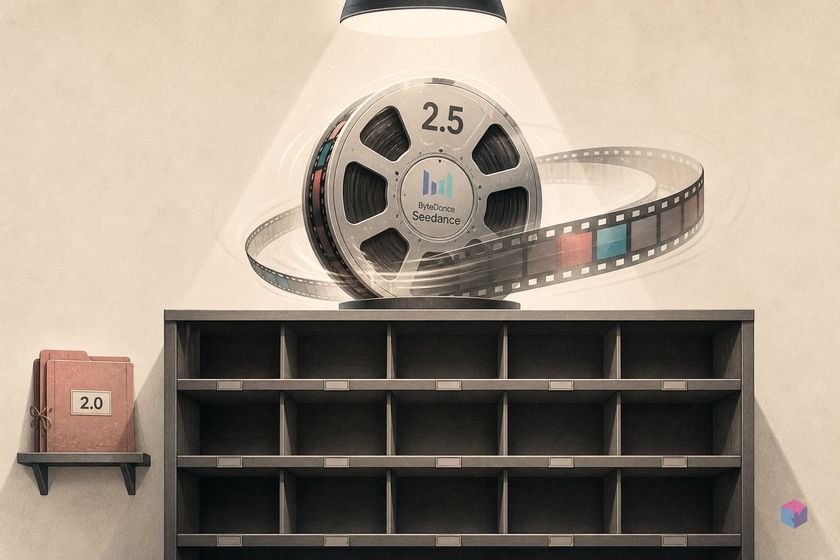
ByteDance used its Volcano Engine FORCE conference in Beijing to announce Seedance 2.5, a video model that reportedly renders a single 30-second clip in one pass. The catch for anyone building on it: as of today, none of that exists in ByteDance's own documentation.
How Much of Seedance 2.5 Can You Independently Verify?
Short answer, as of June 23, 2026: almost nothing. There is no Seedance 2.5 model card, no API model ID, no arXiv preprint, and no benchmark score from ByteDance's own channels . The Seed model page still presents Seedance 2.0, and the Seed blog index lists no 2.5 launch entry .
Every headline spec traces to a single event — the FORCE keynote — relayed through secondary tech press. That includes the 30-second native clip, up to 50 multimodal reference inputs, and a claimed ~20% gain in prompt adherence . No independent benchmark, peer-reviewed report, or primary model card backs any of those numbers yet .
Here is the documented-versus-reported split, which is the only honest way to read the announcement right now:
| Artifact | Seedance 2.0 (documented) | Seedance 2.5 (reported) |
|---|---|---|
| arXiv model card | Submitted April 15, 2026 | None |
| Official launch entry | Feb 12, 2026 on Seed blog | None |
| Clip length | 4–15 seconds | ~30 seconds (claimed) |
| API model ID / pricing | Published | Not disclosed |
So treat Seedance 2.5 as reported-but-unconfirmed. ByteDance describes an early-July 2026 rollout via Volcano Engine, reportedly already in global enterprise beta . That launch — with release notes, a model ID, and testable output — is the next real verification checkpoint. Until then, the 30-second claim rests on conference coverage, not artifacts you can run.
Seedance 2.0: What the arXiv Model Card Describes
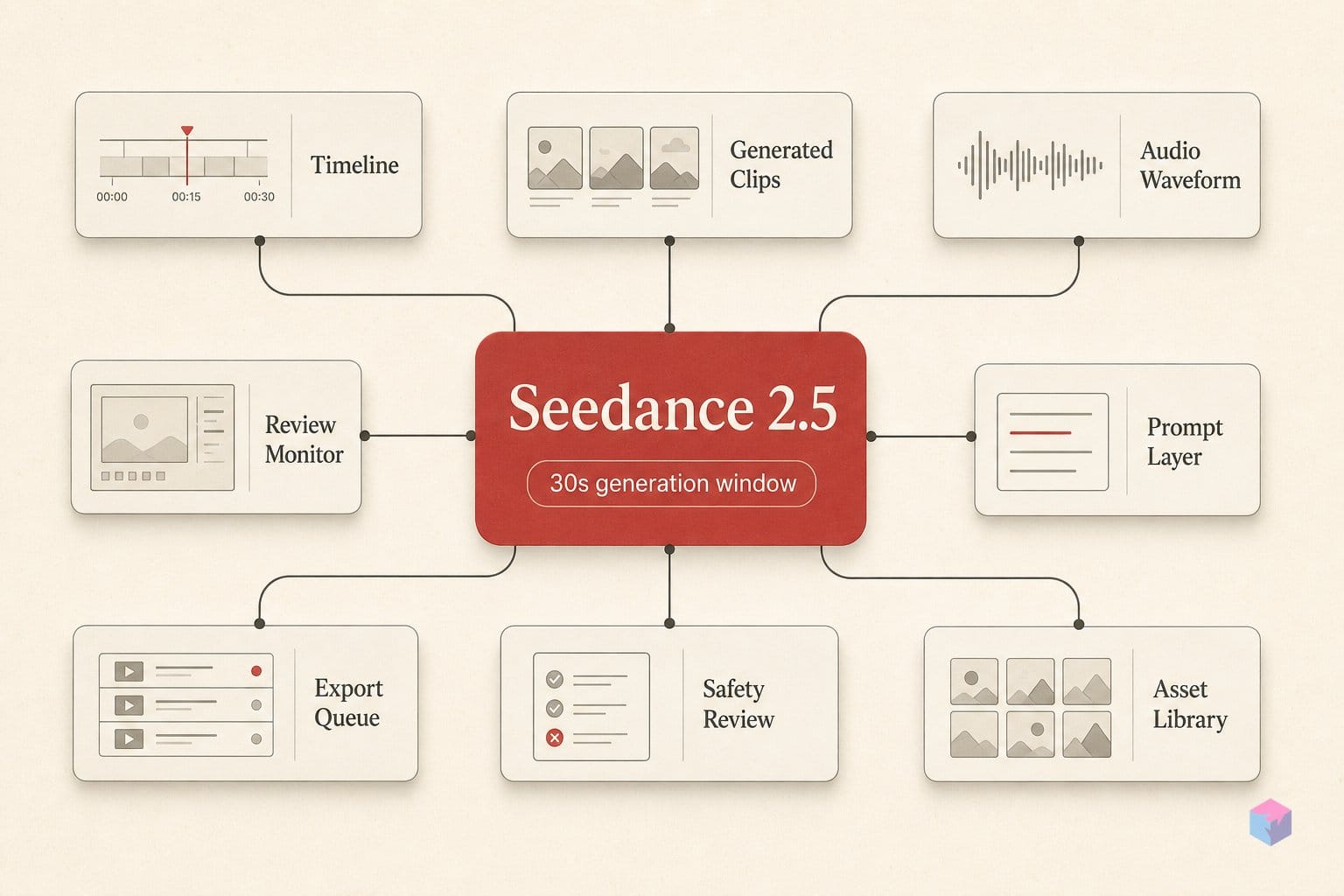
That checkpoint matters because the verifiable baseline is Seedance 2.0, not 2.5. ByteDance's Seed blog lists "Seedance 2.0 Official Launch" on February 12, 2026 , and the technical detail comes from an arXiv model card submitted April 15, 2026 by Team Seedance and 170 coauthors . This is the document with concrete, citable specs — the kind of artifact 2.5 still lacks.
Per that model card, 2.0 is a unified multimodal audio-video architecture: it takes text, image, audio, and video as inputs and produces direct audio-video output of 4 to 15 seconds, natively at 480p and 720p . The reference budget is where directing happens.
| Spec | Seedance 2.0 (documented) |
|---|---|
| Input modalities | Text, image, audio, video |
| Output length | 4–15 seconds |
| Native resolution | 480p, 720p |
| Reference slots | Up to 3 video clips, 9 images, 3 audio clips |
| Low-latency variant | Seedance 2.0 Fast |
| Benchmark | Internal SeedVideoBench-2.0 |
Two caveats for developers. First, evaluation runs on ByteDance's internal SeedVideoBench-2.0 — there is no external leaderboard entry, so the scores are vendor-reported . Second, distribution is through Dreamina and Doubao, not a TikTok integration, with launch coverage describing clips up to 15 seconds carrying audio and multimodal prompting .
Hold that 15-second ceiling in mind: it is the documented number the reported 30-second one-shot would have to roughly double.
No Stitching at 30 Seconds: Ad Assembly Without Seams
A native 30-second clip would matter because it crosses the line from fragment to finished unit. Today's field tops out short: Seedance 2.0 generates roughly 15-second clips , and Google's Veo 3.1 outputs in the 4-to-8-second range . To fill a standard 30-second spot, a producer stitches two to four separate generations into one timeline.
Thirty seconds covers most of the short-form commercial work that actually ships:
- Social ads (Reels, Shorts, TikTok in-feed) that run 15–30 seconds.
- App store promo videos and feature teasers.
- Product demos and brand sizzle cuts.
At that length, a single pass is a complete draft. Anything shorter is a piece you still have to assemble — and assembly carries costs the spec sheets rarely mention.
Stitching is where the seams show. Joining independent generations introduces visible cuts at the boundaries, audio that drifts out of sync across segments, and an extra round of post-processing to color-match, retime, and mask the transitions. Each clip is generated blind to the others, so motion and lighting rarely line up on their own.
Eliminating that step changes the economics of short-form content. One reported generation pass would replace the multi-clip editorial chain — generate, trim, match, splice, fix — for the most common ad length. The reported 2.5 figure roughly doubles the documented 15-second ceiling to about 30 seconds, with scene changes and tempo shifts inside that single span . If it holds under the July launch, the seam-removal step disappears, not just the second render. That "if" is doing real work: the 30-second claim still rests on conference coverage, not a model card.
50 References vs. 4: How Directing Complexity Jumps
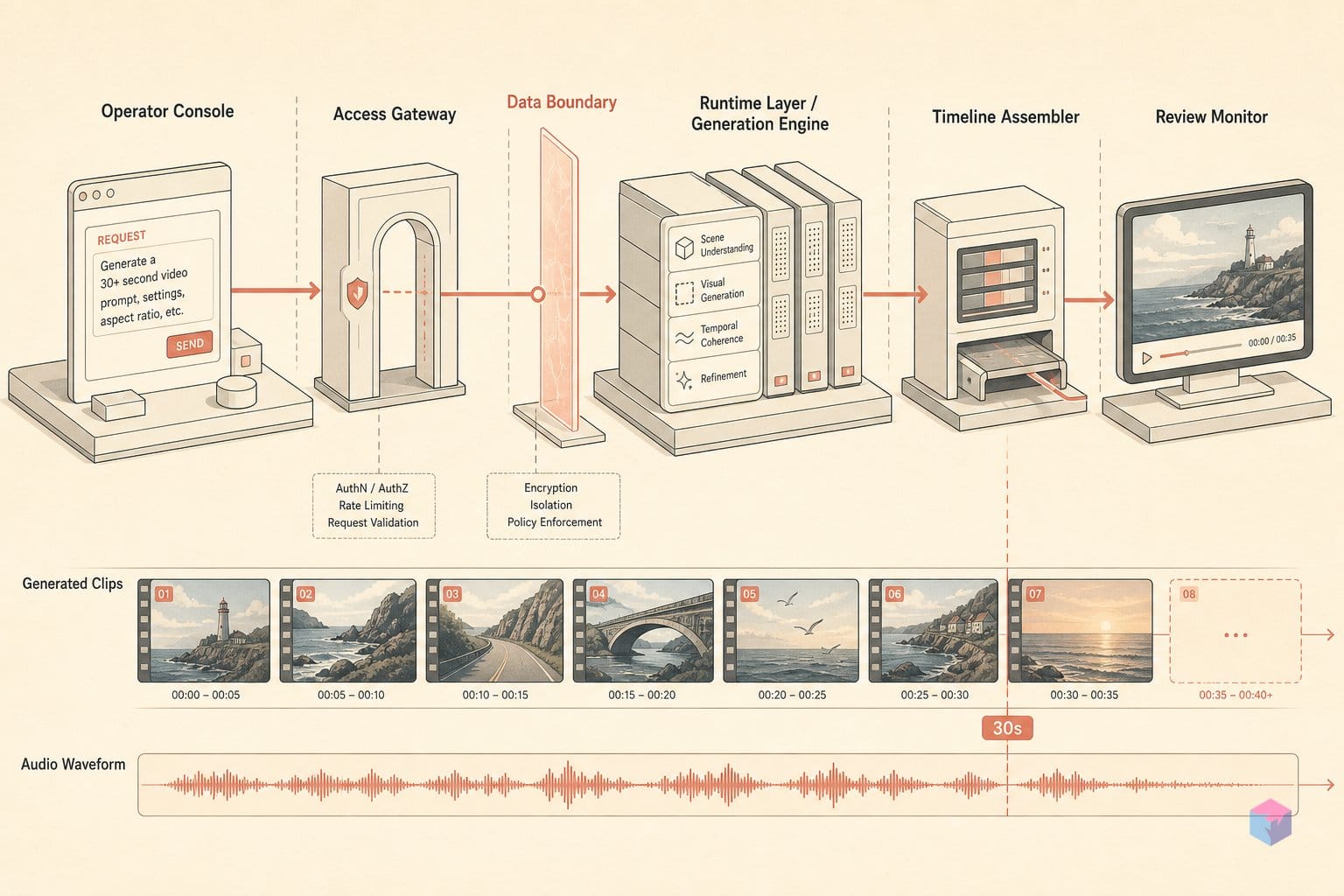
The reference budget is where 2.5's reported jump is largest. Seedance 2.0's documented architecture accepts 15 reference slots total — up to 3 video clips, 9 images, and 3 audio clips on its launch platform . The June 23 conference coverage describes 2.5 raising that to roughly 50 simultaneous "full-modal" inputs, spanning images, audio, style guides, and 3D models .
For a developer wiring up a generation pipeline, the slot count is the controllability ceiling. More references mean fewer things the model invents and more it is held to. At 50 inputs, a single pass could in principle bind together the assets a campaign already owns:
- A brand kit — logo, palette, typographic style guide — as visual anchors.
- A voiceover track supplied as audio reference rather than re-synthesized.
- A 3D product mockup driving geometry and camera framing .
That collapses what is today sequential compositing — render, then layer brand and audio in post — into one generation step. It is the same structural argument as the 30-second claim: combine stages rather than stitch outputs.
The caveat carries over too. The 50-input figure is entirely conference-attributed; no technical paper or ablation study supports the architecture claim, and ByteDance's primary channels still document only 2.0 . Treat the number as a marketing spec until a model card lands. The calibration check at the July launch is to compare the real slot count against Runway Gen-4 and Kling 2.0, so the "50" sits next to peer ceilings rather than standing alone.
Subject-Swap and Scene Blocking: Beyond Simple Text-to-Video
The 2.5 editing story moves the model past one-shot text-to-video into reusable variation and pre-render planning. The headline capability is subject-swap: keep a source clip's motion, camera path, and lighting intact while replacing only the subject . For a product ad, that means shooting one approved master and re-skinning the hero object per market — a localization workflow that today requires re-rendering or re-shooting each variant.
Paired with that is a 3D "white-box" preview: a low-fidelity spatial blocking draft a team validates before committing full render compute . The point is cost control — confirm composition, framing, and timing cheaply, then render once. Reporting also frames a multimodal synthesis step that fuses a brand kit, voiceover, and a 3D mockup into a single clip .
These tools arrive as part of a suite, not a standalone video model. At the FORCE conference ByteDance also described Seedream 5.0 Pro (image) and Seed-Audio 1.0 (audio), alongside a Doubao 2.1 Pro LLM . The framing is a full generation-to-edit stack rather than a single tool.
The same caveat from the length and reference claims applies here: every editing capability is conference-reported. No API surface, parameter names, or SDK documentation has appeared, and ByteDance's primary channels still publish only Seedance 2.0 . Until a model card or release notes land, treat subject-swap and white-box blocking as a roadmap, not a shipped feature set.
IP Exposure After Seedance 2.0's Likeness Controversy
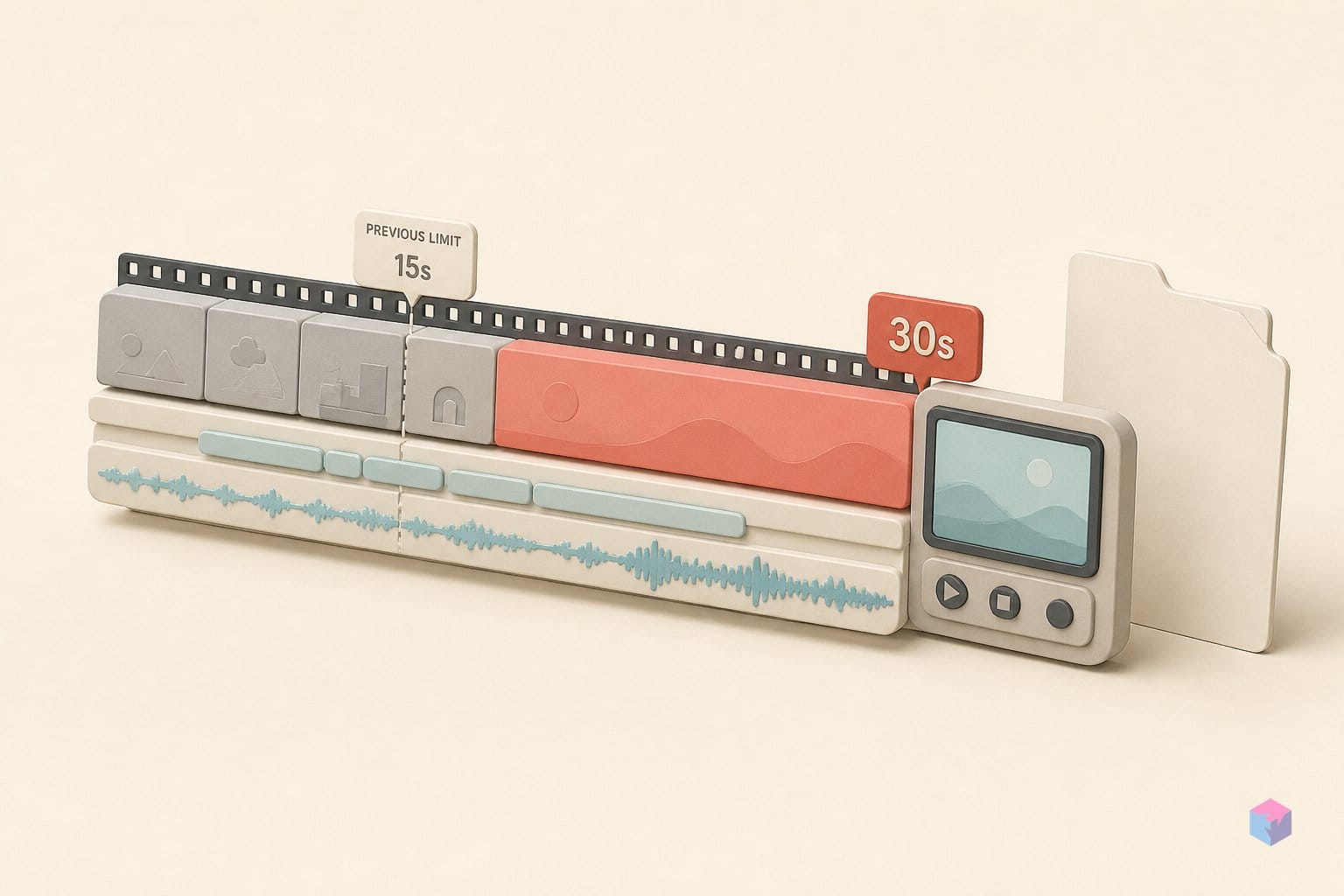
Seedance 2.5's commercial appeal collides directly with an unresolved rights fight. Netflix accused ByteDance of generating unauthorized derivative works from its catalog through Seedance and demanded the tool exclude its titles, according to a letter reported by Business Insider . For any team weighing 2.5 for paid work, the legal surface matters as much as the feature list.
The pressure followed Seedance 2.0's viral celebrity-likeness and copyrighted-character outputs. ByteDance said it would strengthen safeguards after studios objected, per The Verge . Hollywood studios, SAG-AFTRA, the Motion Picture Association, and U.S. lawmakers were all named among those raising objections.
ByteDance's FORCE answer was a licensing play. It announced an AI copyright and commercialization platform, with director Stephen Chow as an early collaborator, letting users build authorized secondary versions of his classic clips across Douyin and Qianchuan. Volcano Engine president Tan Dai said same-day creations topped 10,000 .
"Same-day creations exceeded 10,000," said Tan Dai, president of Volcano Engine at ByteDance (source: AIbase).
For developers, that authorized-derivatives lane addresses one rights holder, not the catalog of works your prompts might reproduce. The exposure to watch in 2.5:
- Likeness filtering: whether 2.5 blocks recognizable faces and characters by default, or leaves it to the prompter.
- Documented terms: whether commercial-use rights and indemnity appear in writing, not just conference framing.
- Provenance: whether outputs carry usable attribution for downstream takedown defense.
Until 2.5's terms address these in print, treat any commercial Seedance output as carrying unquantified IP liability — the safeguards remain a stated intent, not a documented control.
What to Check at the July Launch
At the reported early-July 2026 Volcano Engine launch , four checks separate confirmed product from conference framing. Start with primary sources: as of June 23, 2026, ByteDance's own channels still show only Seedance 2.0, with no 2.5 model card, API ID, price, or 30-second spec .
- API model ID: watch for a documented Seedance 2.5 model ID on Volcano Engine, and a
seed.bytedance.com/en/seedance2_5page mirroring the current/seedance2_0URL . - Independent benchmarks: look for a technical preprint with reproducible methodology, like the Seedance 2.0 arXiv card filed April 15, 2026 — not the claimed ~20% prompt-adherence figure read off conference slides .
- Reproduction: whether creators and independent evaluators produce native 30-second clips with no visible seam artifacts.
- Pricing and geography: compare enterprise-beta terms against Seedance 2.0, ByteDance's stated market reference , and confirm non-China API access.
The takeaway: until a model ID, a methodology, and a clean 30-second reproduction all land, Seedance 2.5 is a credible roadmap signal, not a shippable dependency. Re-verify at launch before building against it.
Last updated: 2026-06-23. Reviewed against ByteDance primary sources, which list only Seedance 2.0 as of this date.
Frequently asked questions
Is Seedance 2.5 available through an API right now?
No. There is no official API, model ID, or pricing for Seedance 2.5 as of June 23, 2026. ByteDance described an early-July 2026 enterprise beta via Volcano Engine, reportedly open to global enterprise testers at announcement . Monitor seed.bytedance.com and Volcano Engine docs after the stated window before integrating.
How does Seedance 2.5 differ from Seedance 2.0?
Seedance 2.0 is publicly documented; 2.5 is not. Per its arXiv model card, 2.0 generates 4–15 second clips, supports four input modalities (text, image, audio, video), and accepts up to 3 video, 9 image, and 3 audio references . Conference coverage says 2.5 extends single generations to roughly 30 seconds and up to 50 reference inputs . Both 2.5 figures rest on event reporting only, with no official model card.
Can Seedance 2.5 truly generate a 30-second clip without stitching?
Unconfirmed. A seamless native 30-second clip was claimed at the FORCE conference on June 23, 2026, but ByteDance's official Seed page still describes only Seedance 2.0 with a 15-second ceiling . Independent reproduction is pending the July launch. Seam-detection tests in creator communities — looking for tempo or lighting discontinuities at clip boundaries — will be the first practical signal.
Why did ByteDance skip version 2.1?
Reporting says ByteDance jumped directly from 2.0 to 2.5, skipping a planned 2.1 . No official explanation was given. The conference framing positions the version gap as a capability step large enough to warrant the jump, but treat that as vendor narrative rather than a documented rationale until release notes appear.
What are the IP risks of using Seedance outputs commercially?
They are material and unsettled. Following Seedance 2.0's launch, Netflix accused ByteDance of enabling unauthorized derivative works and demanded removal , and ByteDance said it would strengthen safeguards after studio objections . Teams using Seedance for branded content should review output-filtering policies — especially for talent likeness and fictional characters — before the 2.5 terms are published.